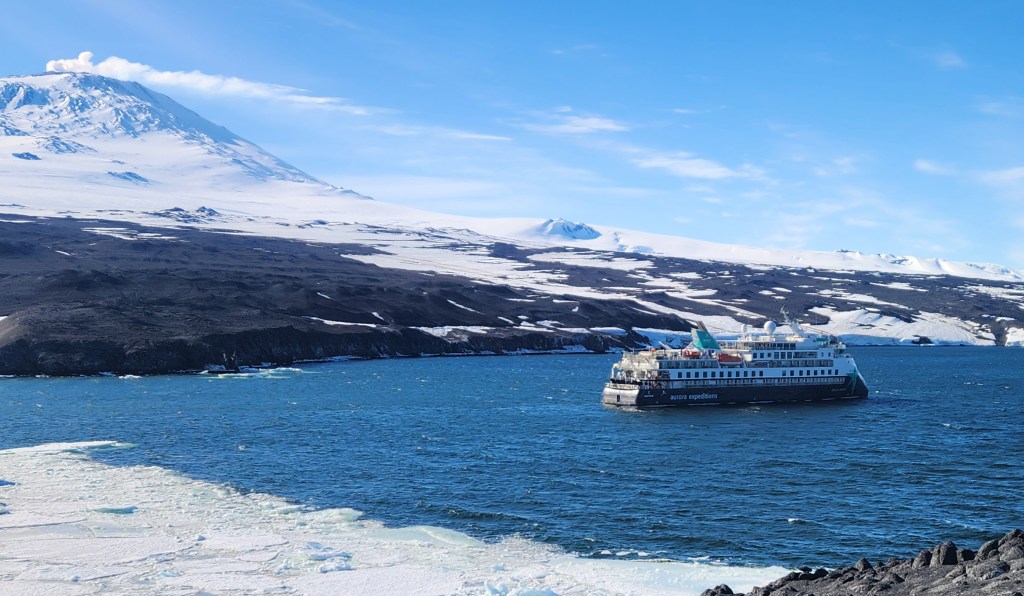
Last night the Mawson made its way well into McMurdo Sound and we awoke to spectacular scenery.
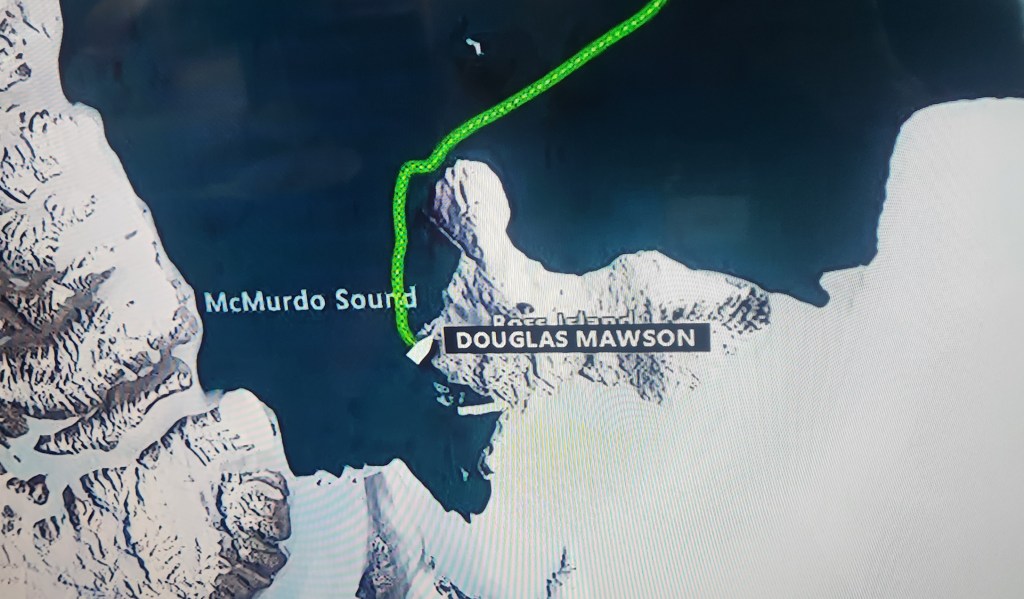
The guides launched the Zodiacs and in we went, weaving our way through narrow passages in the ice. Once ashore we walked across a volcanic moonscape that reminded me of the lava fields on the Big Island of Hawaii.
Here is where Sir Ernest Shackelton in 1908 began his second try at the Pole, this time on the Nimrod. We hiked up about half a mile to the site where he built his hut and wintered over before striking out for the Pole the next summer.
Lester, Leonard and I made it up and into the hut.
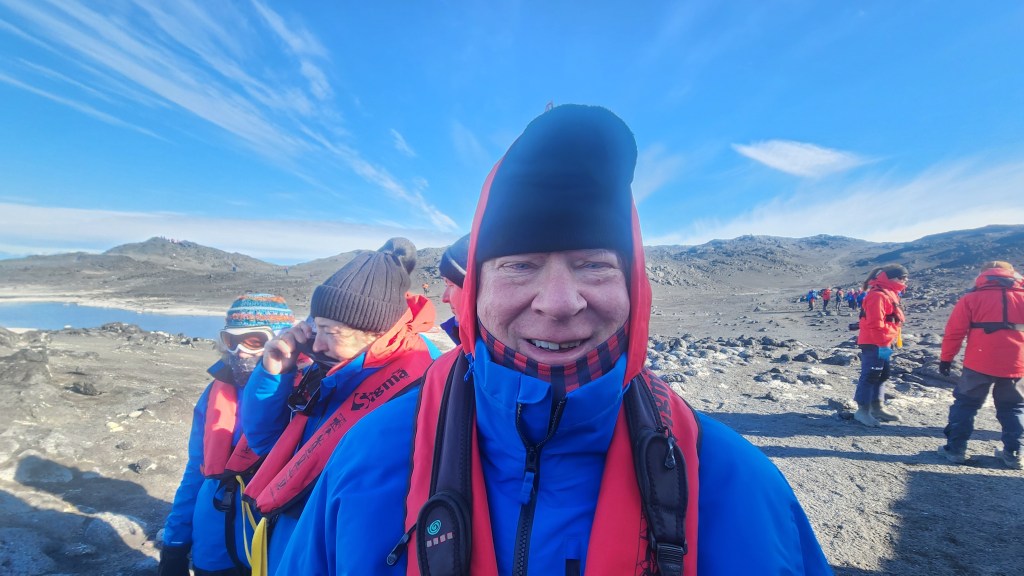
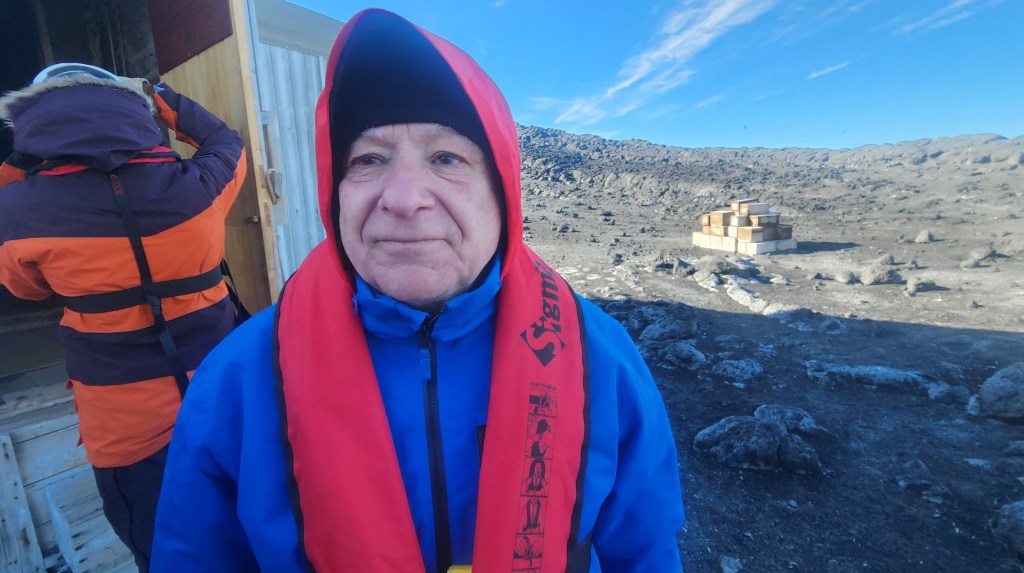
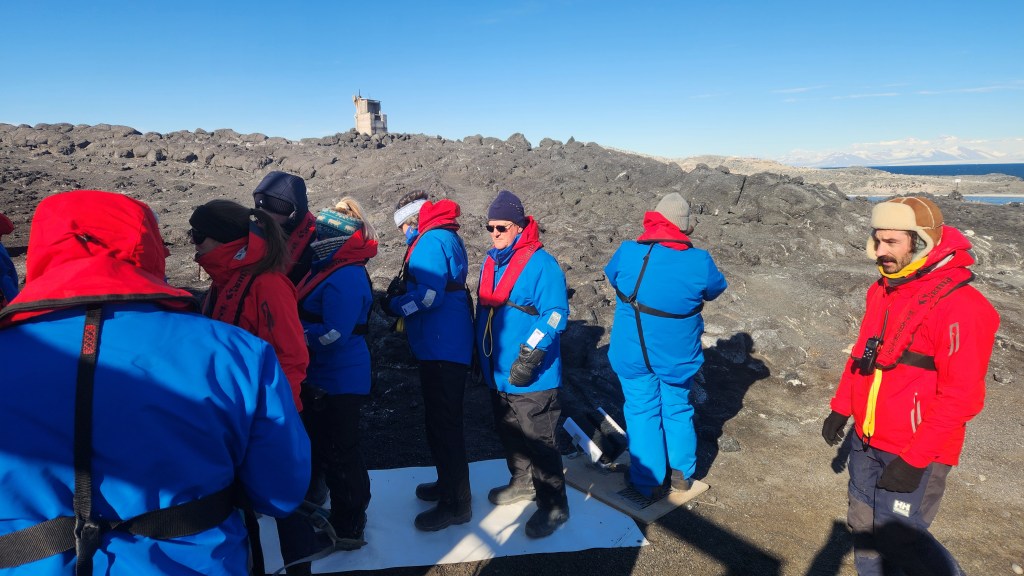
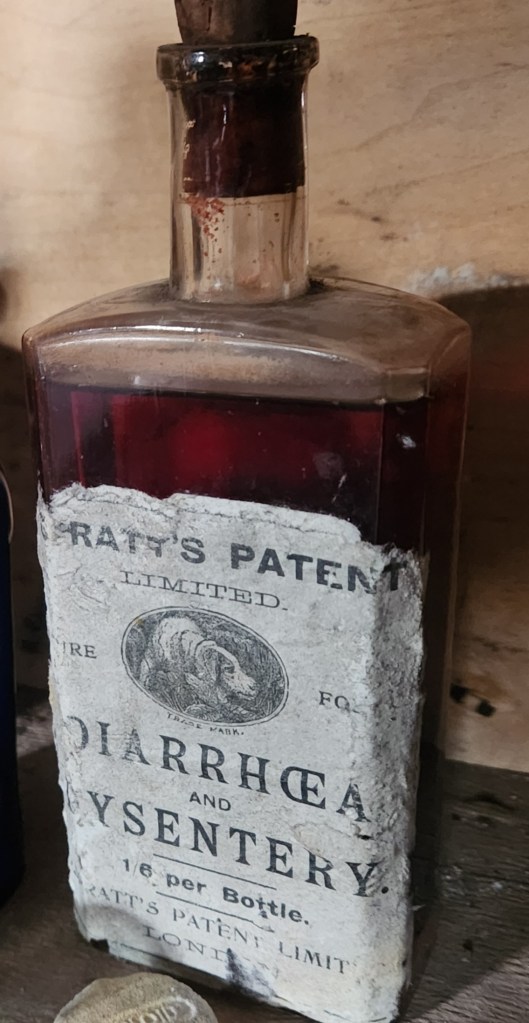
New Zealand’s Department of Conservation spent years removing many items from the hut, restoring and remediating damaged items, rebuilding the hut, and then placing the items right back where they found them. We entered 8 at a time with an 8 minute limit in the hut for each group. My favorite is the bottle of disentary medicine.
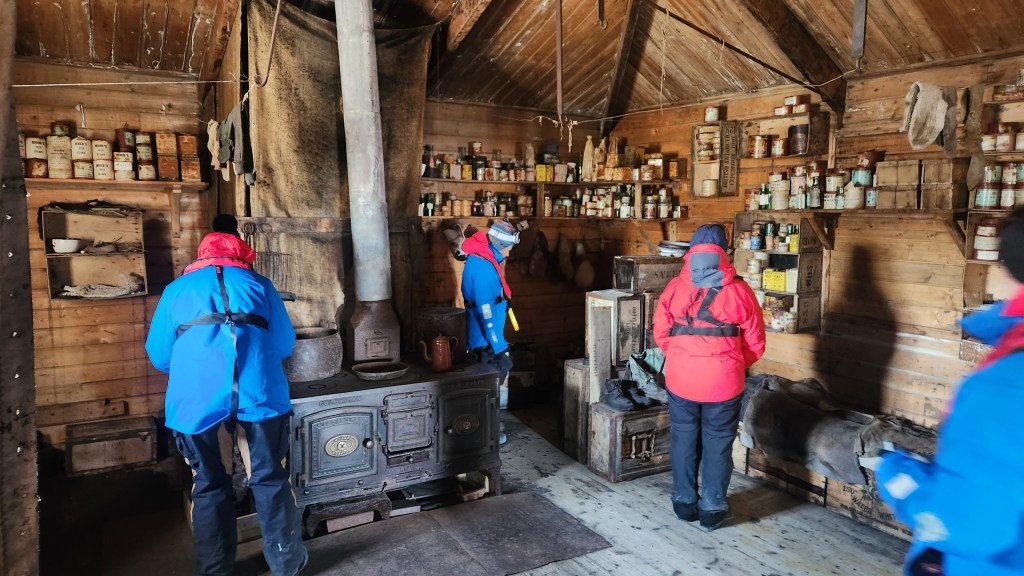
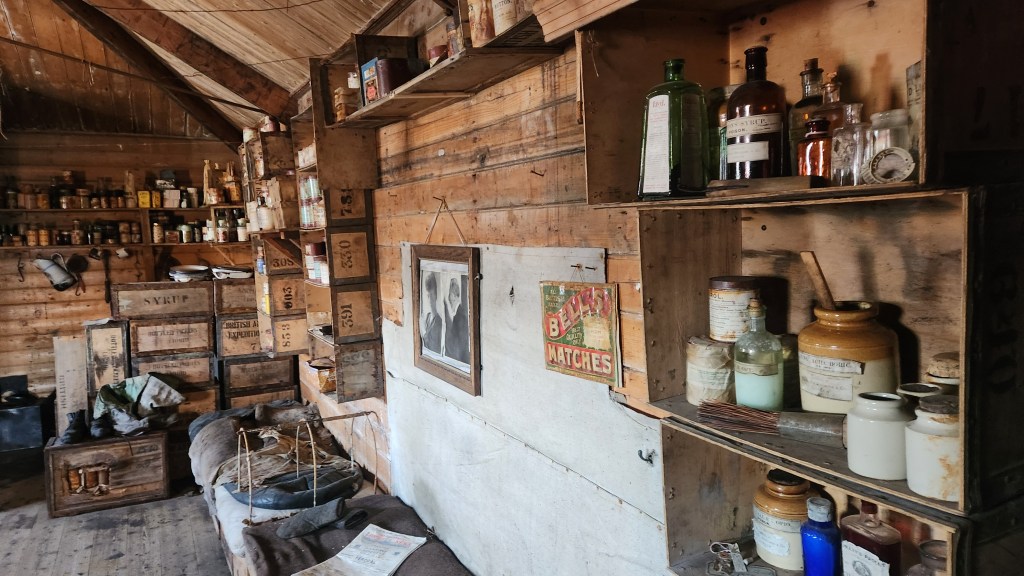
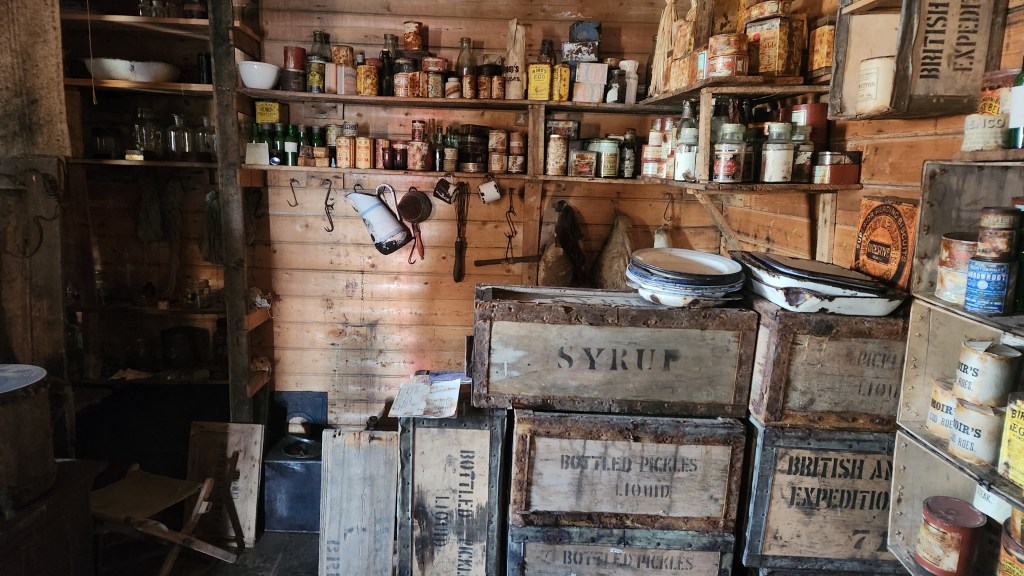
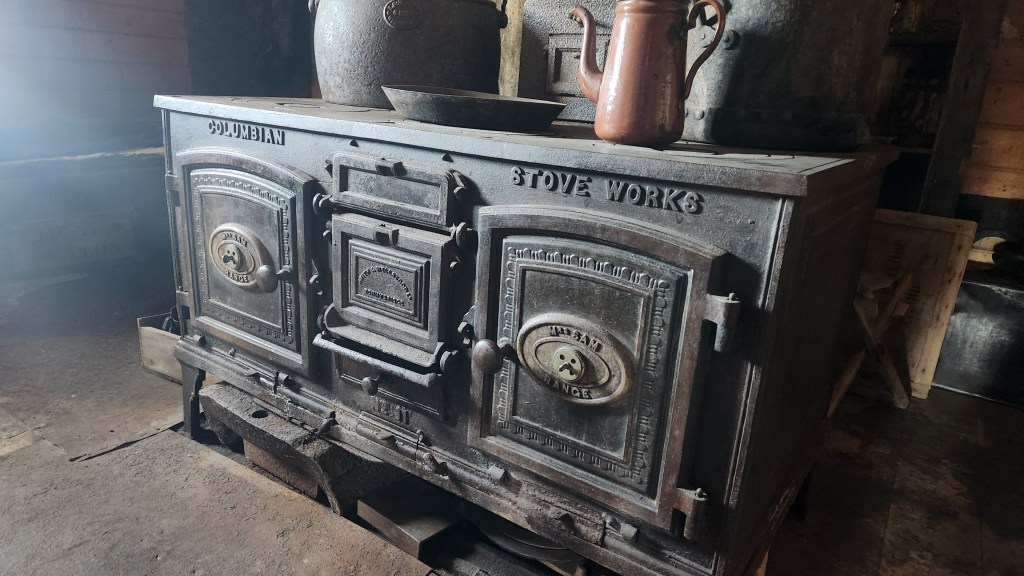
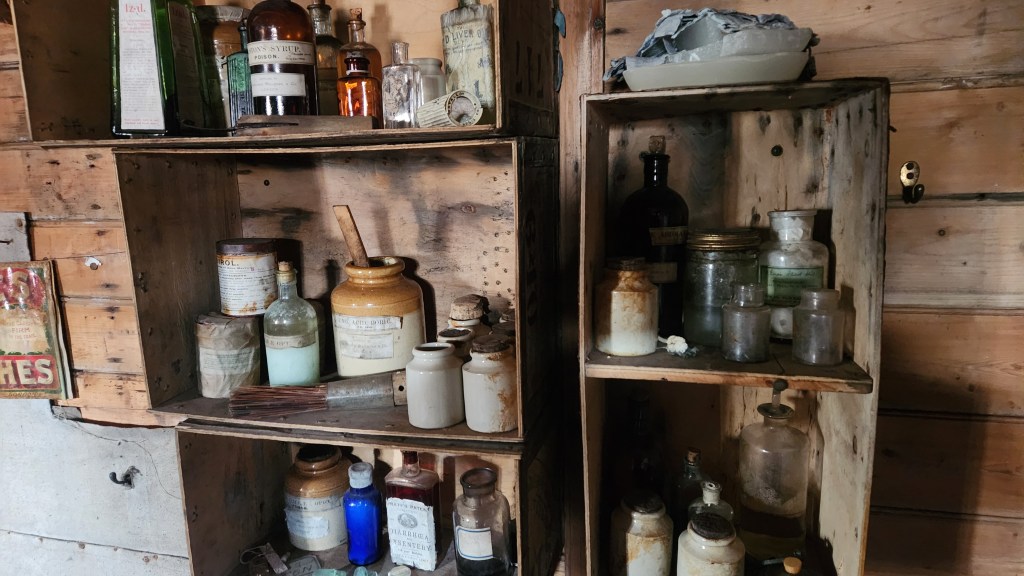
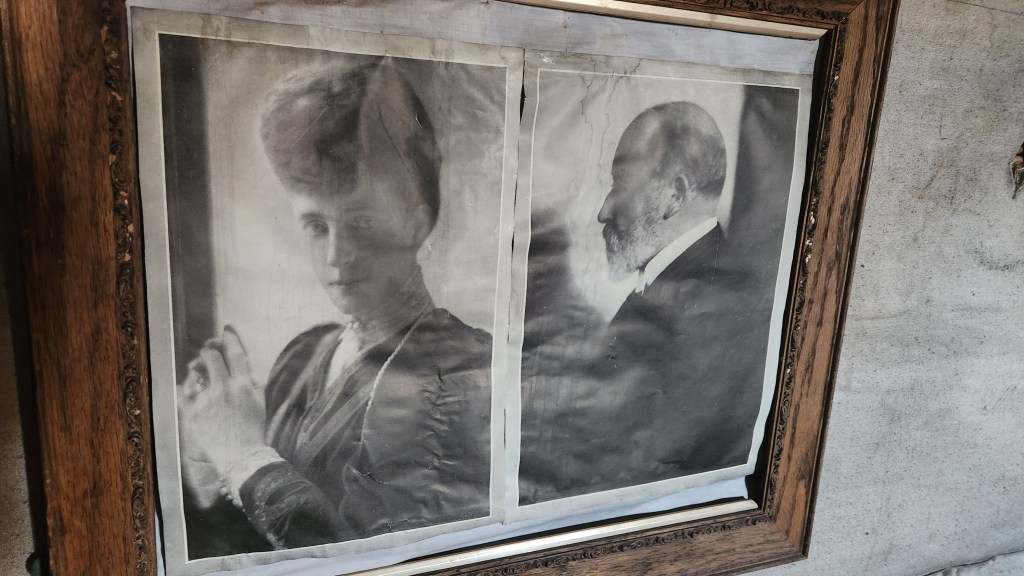
Photos of King Edward VII and Queen Alexandra hung in a prominent spot.
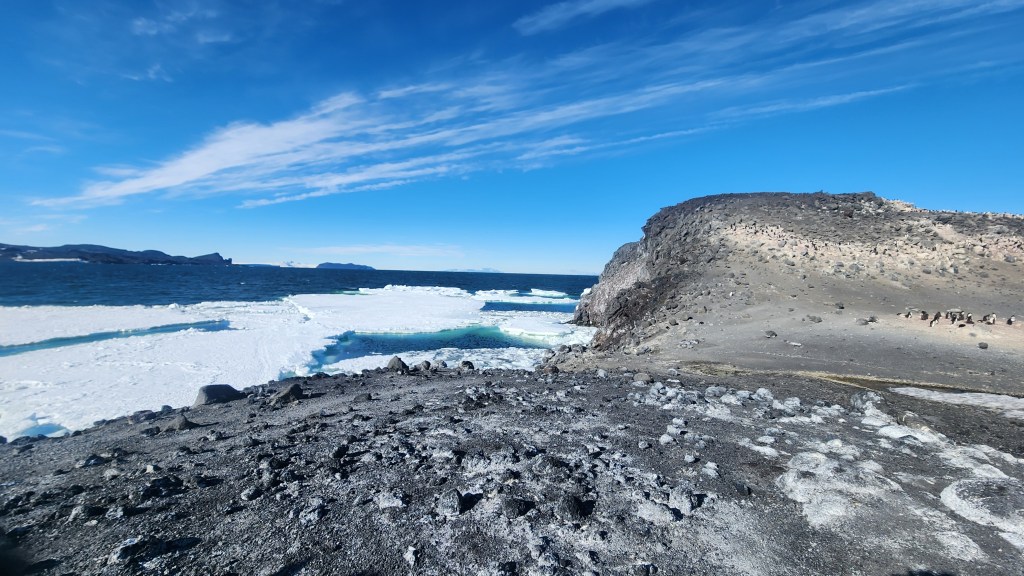
Following our interlude en hut we hiked up a short hill of volcanic sand for great views over the Sound.
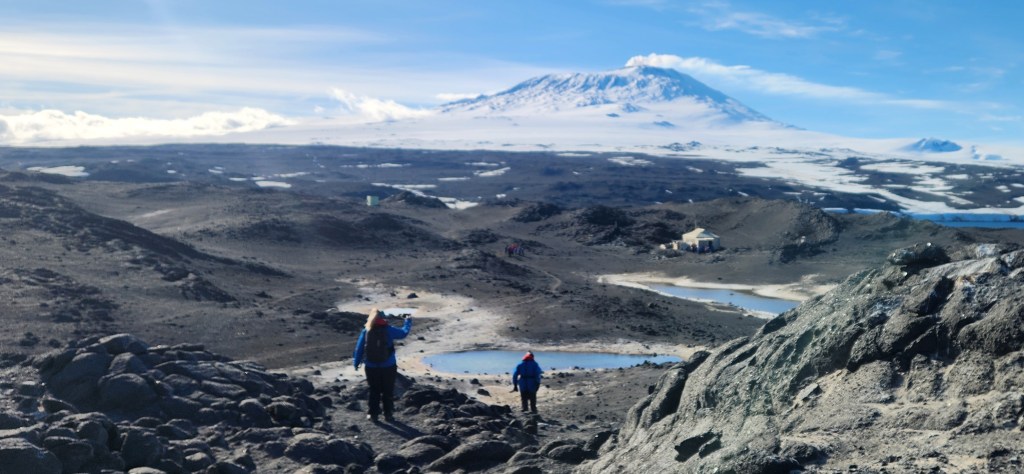
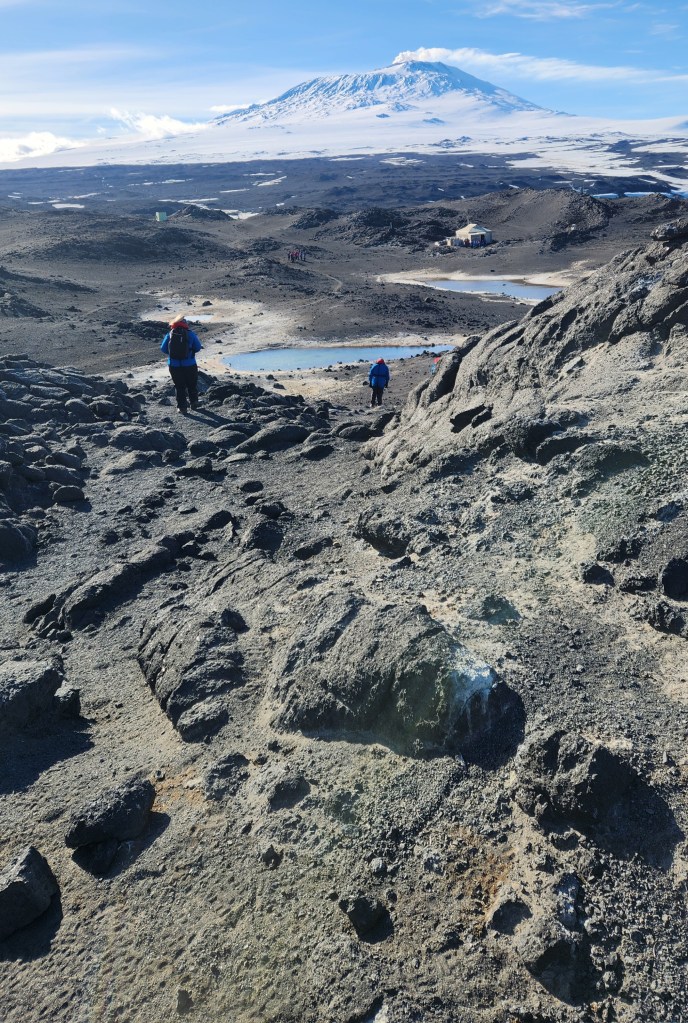
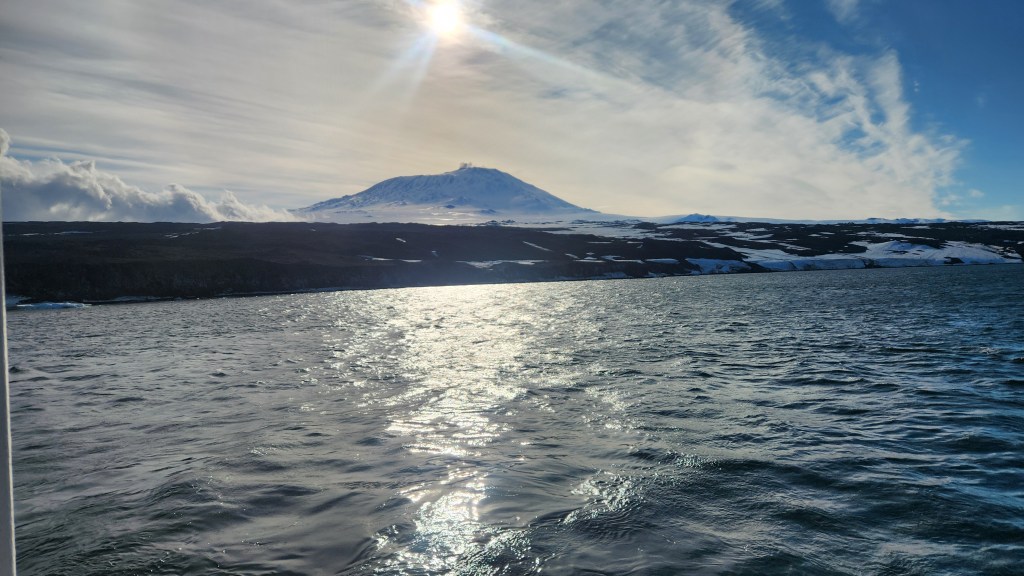
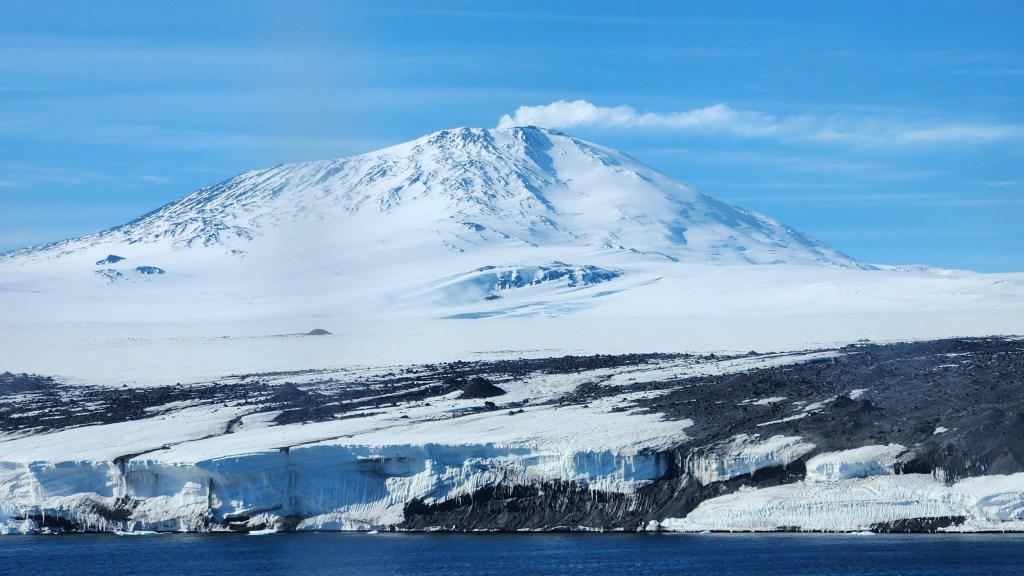
Mount Erberus, a major feature of Ross Island (remember him?), is the southernmost active volcano in the world here at 77 degrees S latitude. Note the steam issuing from the top.
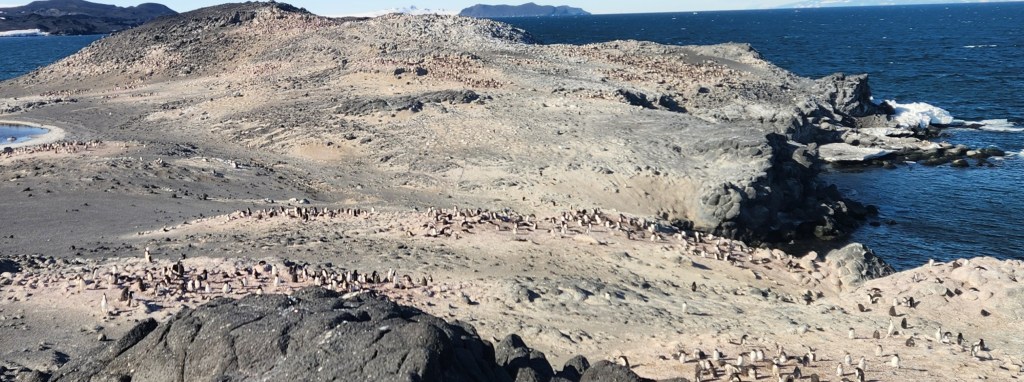
Of course we encountered a number of cute Adelie Penguins, although a fraction of the numbers found earlier.
Then it was back down to the landing area, into the Zodiac and back to the ship.
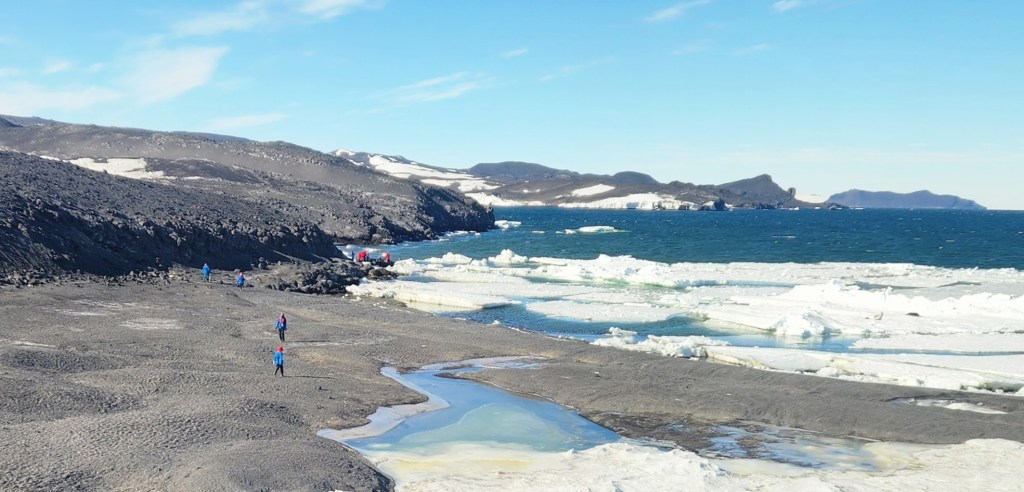
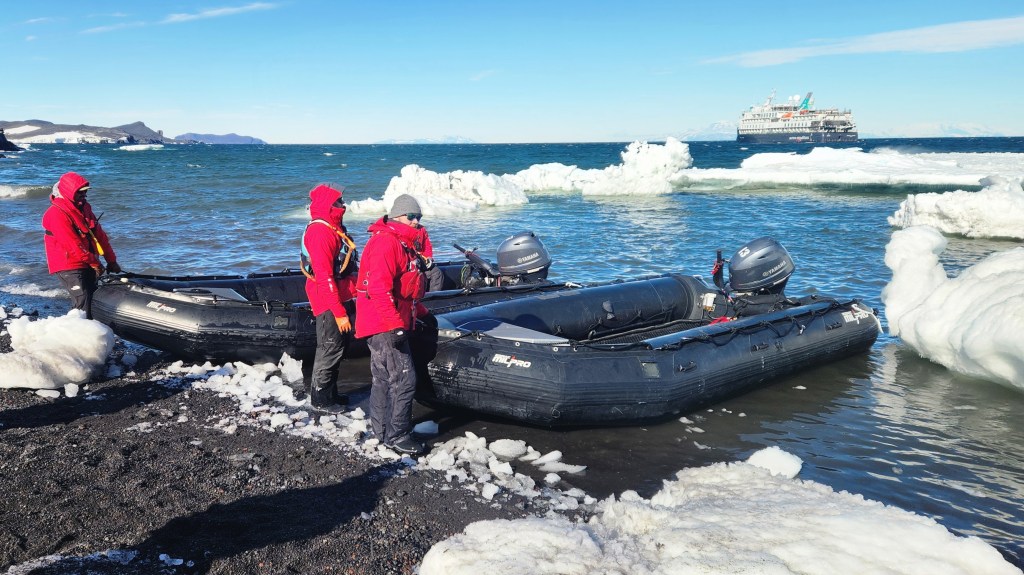
The steady 30 mph wind had whipped up the seas making for a bouncy ride back. We bucked into a big wave and the spray soaked all of us on the boat. Helpfully, a wave shot the boat up to deck level just as I was stepping off.
The zodiac ride really took the starch out me, so I’m foregoing the afternoon excursion into Robert Falcon Scott’s hut at Cape Evans.
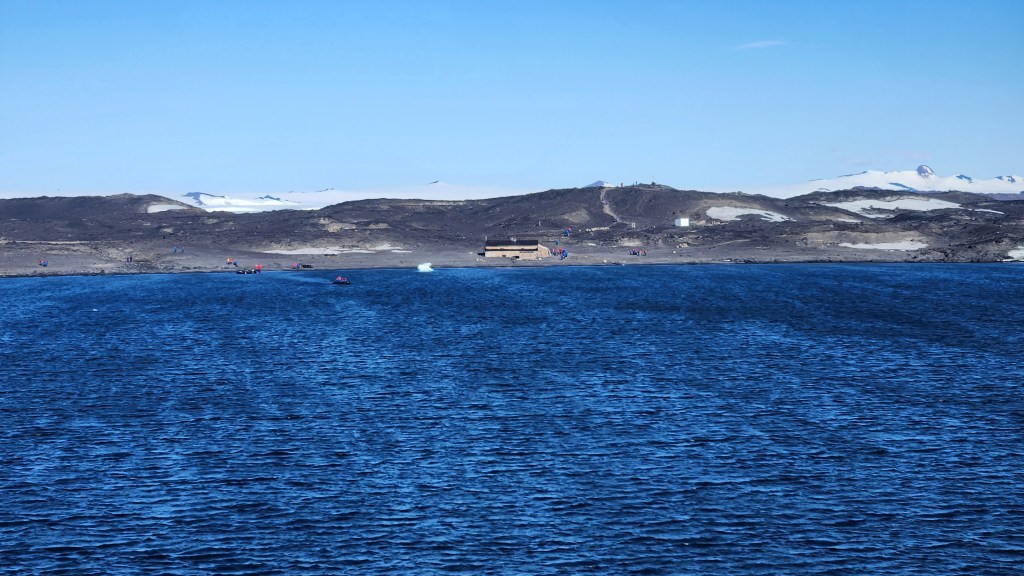
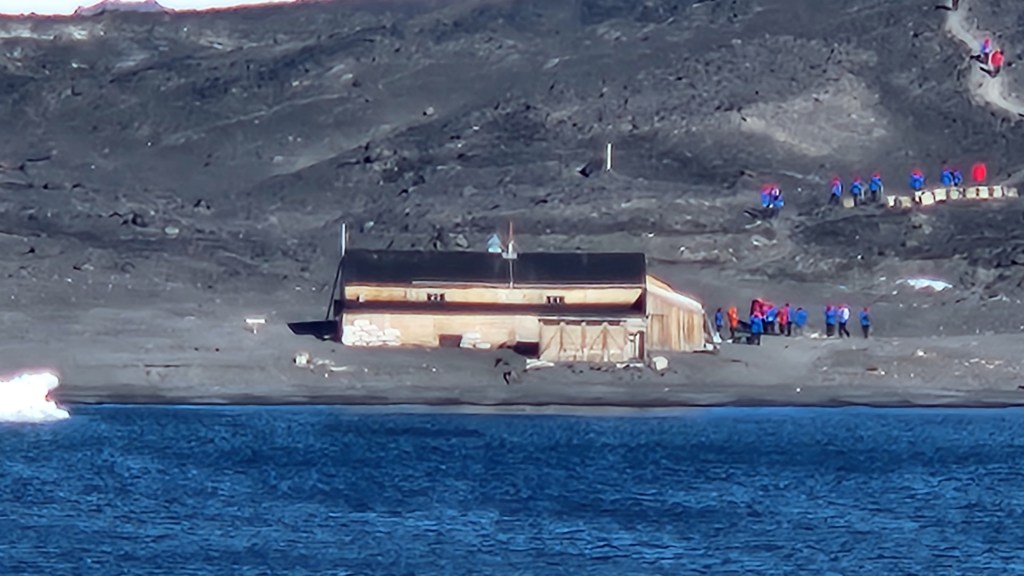
Shackelton and Scott became bitter rivals. Scott had sent Shackelton back home part way through Scott’s 1901 Discovery expedition citing his illness from scurvy, and extracted a promise that Shackelton would not use McMurdo Sound as his base of operations on future expeditions. However, necessity forced Shackelton to use McMurdo, and Scott was furious.
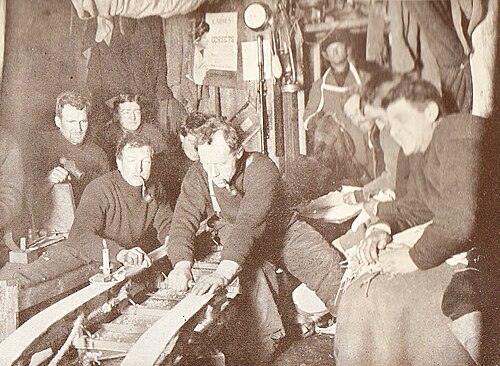
Shakelton got closer to the Pole, 88.5 degrees S latitude or about 287 miles from the target, than anyone before him before turning back while his team still had sufficient food to survive the return trip. Here they are on Christmas Day.
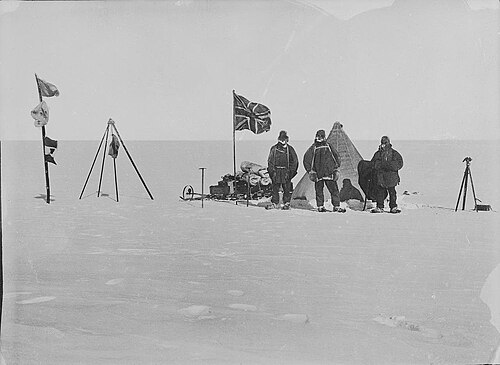
Douglas Mawson, after whom our ship is named, came along as expedition physicist. He was to lead Australia’s most famous expedition some years later.
Shakelton was a national hero and took to the lecture circuit. Of course, his most famous expedition was on the Endurance. Unlike Scott, Shakelton brought all of his men back alive from all of his trips.
Scott and three of his men died a miserable death in a freezing tent on their return trip from the Pole. They got there a few weeks after Roald Amundsen, a Norwegian, became the first to reach the Pole.


 Kenway Goes South
Leave a reply to dturbow Cancel reply