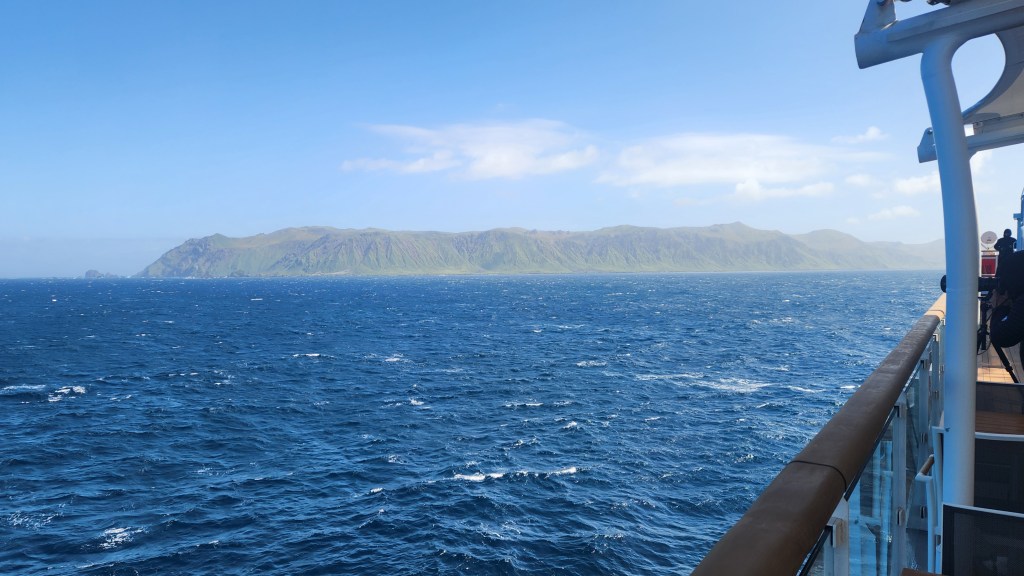
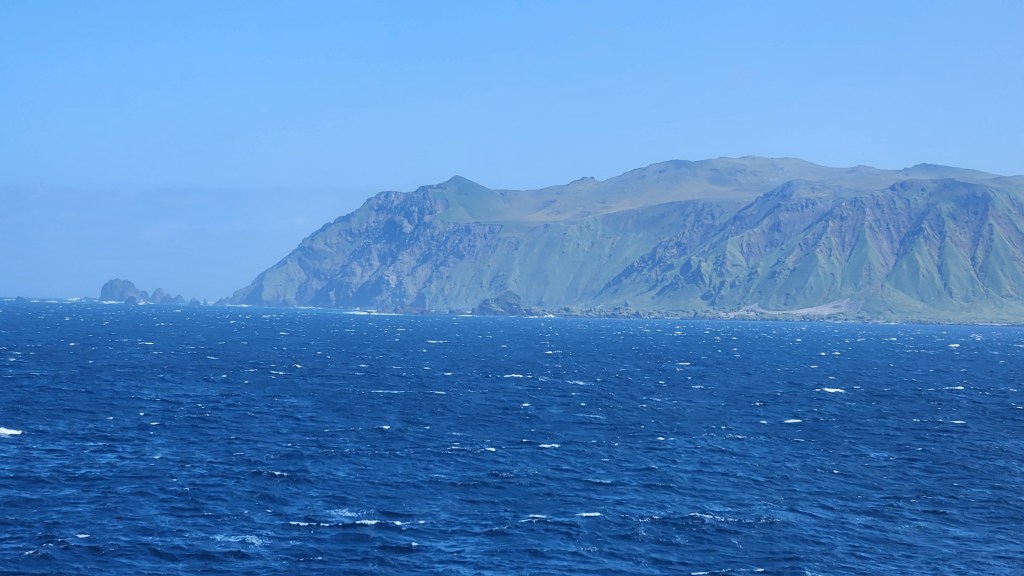
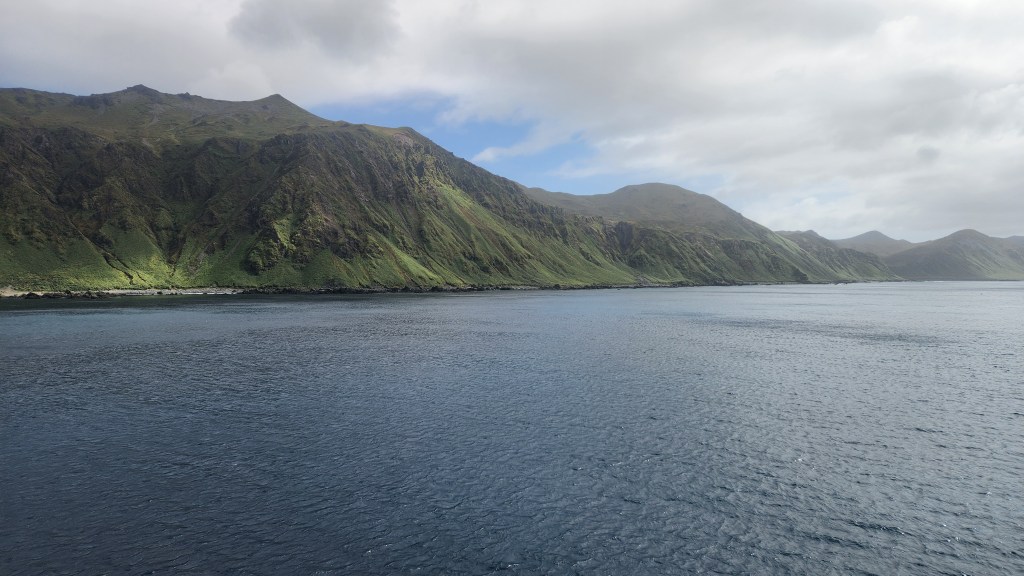
After many days at sea we raised Macquarie Island around noon today.
The last few days and nights we experienced high seas and lots of rocking and rolling. Going up the 5 flights of stairs separating us Deck 3 denizens from the Observatory Lounge on Deck 8, one tends to pause waiting for the ship to surge the right way effectively taking 100 pounds of of one before scampering up a set of steps. The ship’s elevator gets taken offline in rough seas so there’s exercise to be had moving between floors.
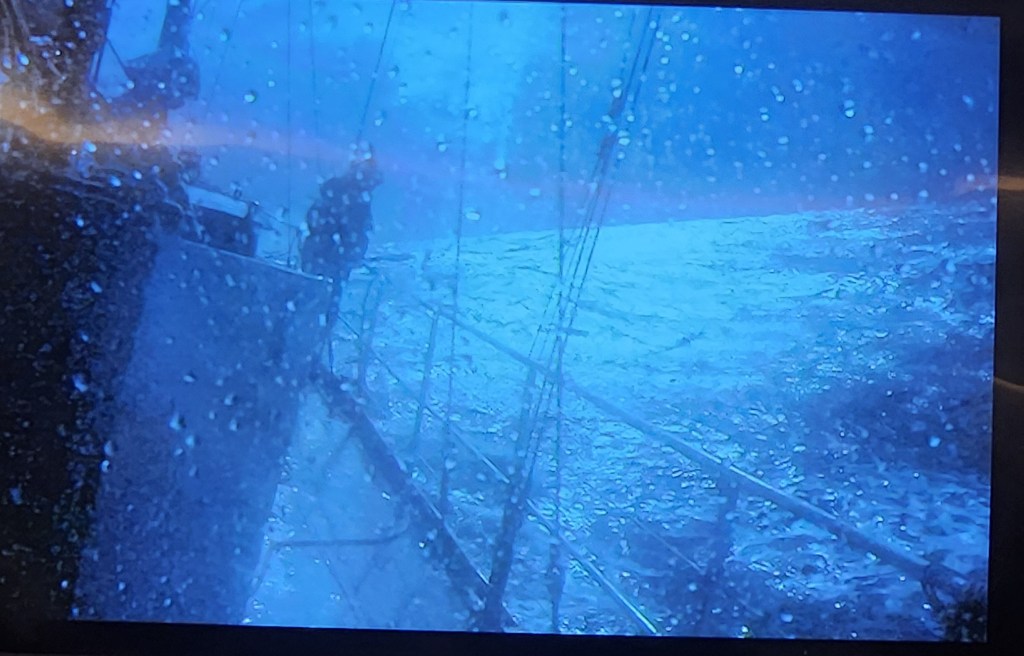
We’ve had some excellent presentations by expedition staff on various topics. One guy crewed on a 45 footer that sailed through pack ice taking some nutcases to the Ross Sea to climb Mt Minto which is about 12 000 ft. They sailed through a blizzard with wind that twice submerged the mast
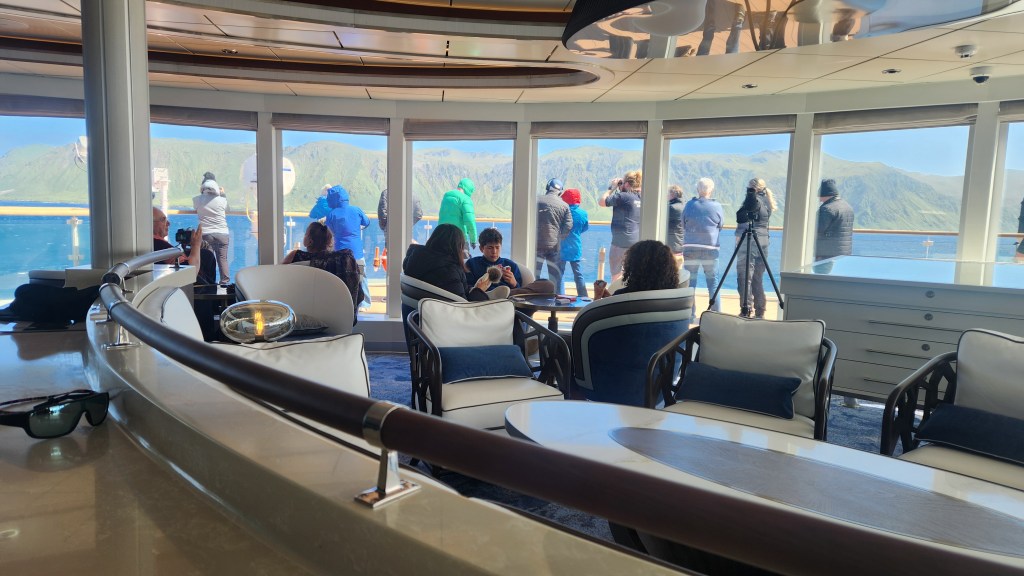
The excitement of seeing land once again brought a throng topside.
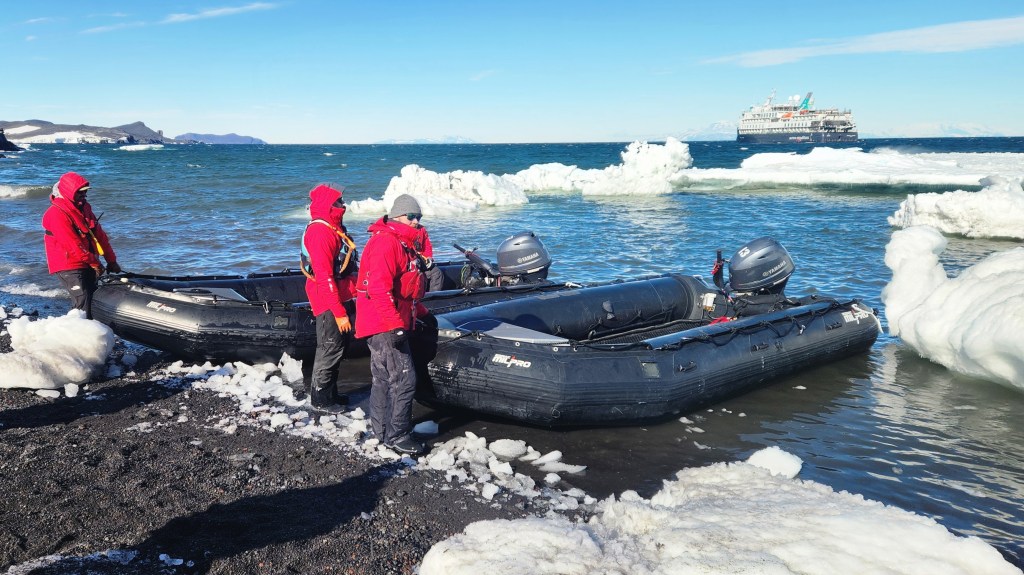
We suited up and hit the beach under bright sunny skies well in the lee of the island so no huge waves on the way in or out.
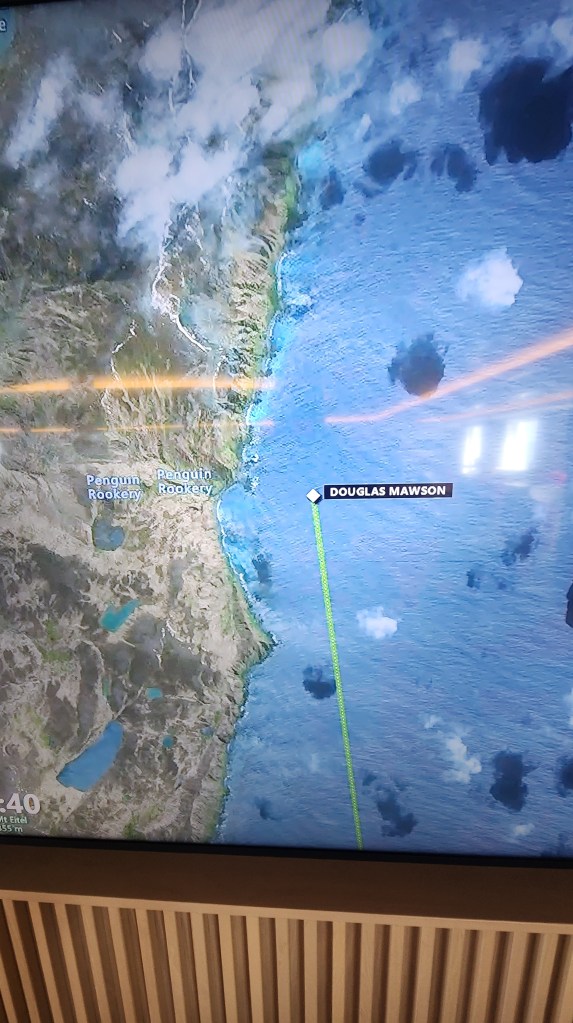
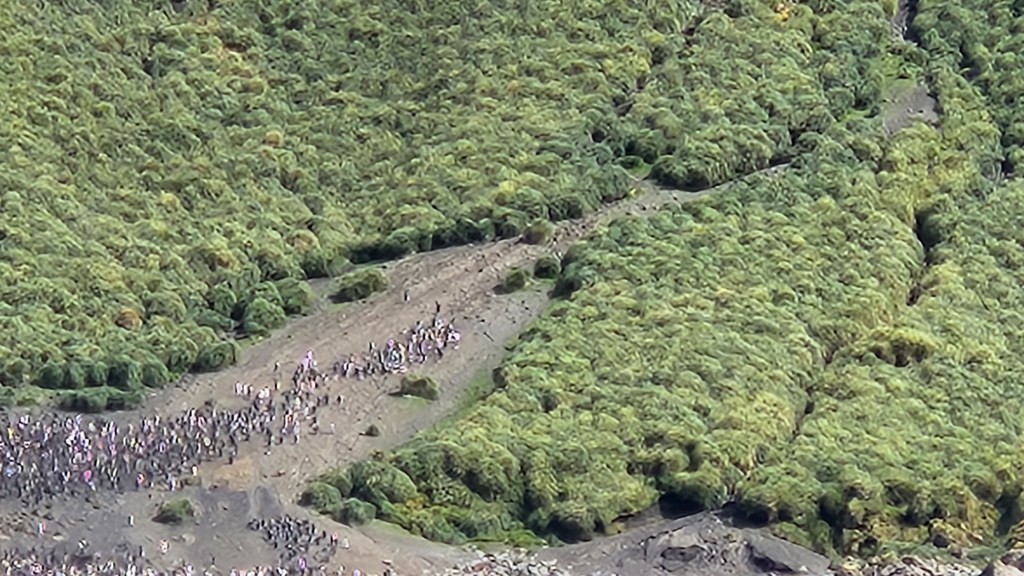
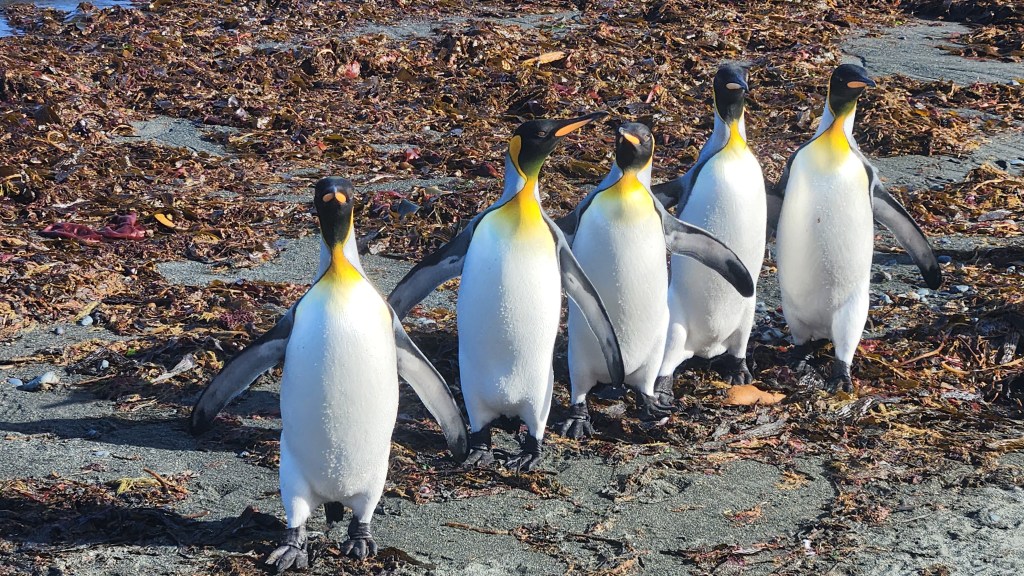
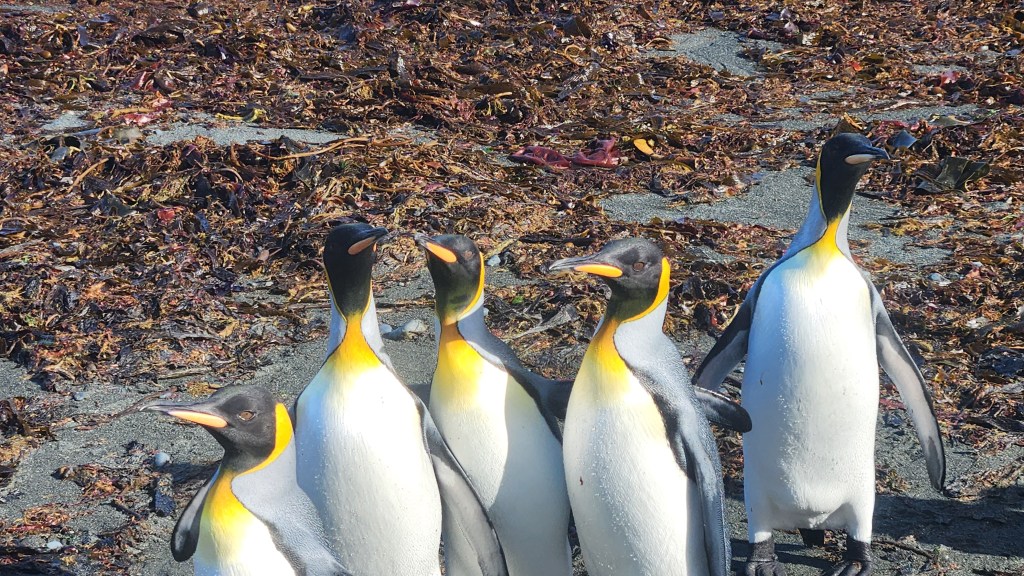
Macquarie Island has the only Royal Peguin colony in the world and the scenery is striking made more so by a successful pest eradication
My cellphone battery croaked shortly aftertaking these shots. I begged Leonard to send me some of his but he said he was tired so nothing doing.
I’ll have it charged right up for tomorrow’s early morning trip to the isthmus on the northern end of the island.
With winds steady at 50 or so the seas really built up last night. Down on the lowest deck in “steerage,” our cabin stewards swung the metal cover shut over our lone porthole. We were advised this step needed to be taken as a precaution against a powerful wave smashing the thick, and I mean thick, glass through we we had been peering now and then.
The absence of natural light in our cabin has Lester reminiscing about days spent holed up in various snow caves.
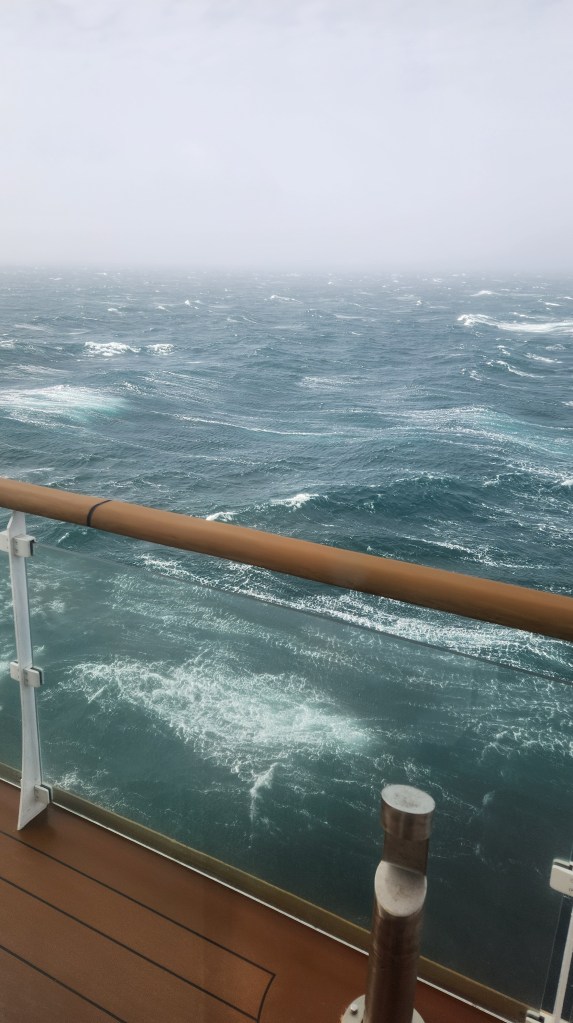
Again I didn’t get far trying to capture photographically the drama of the huge waves boiling along. What had, at bedtime, been a quartering sea astern was by breakfast time this morning, hitting us squarely on the beam, sending passengers and crew lurching from side to side as announcements over the ship’s PA urged us to keep a hand on a railing as we moved about.
Shortly after I had settled with a thump into a chair in the bar area I heard from the dining room a pile of dishes hit the deck with a resounding crash accompanied by muted screaming.
LIning up later for the breakfast buffet I noticed the wait staff grasping the dishes tightly.
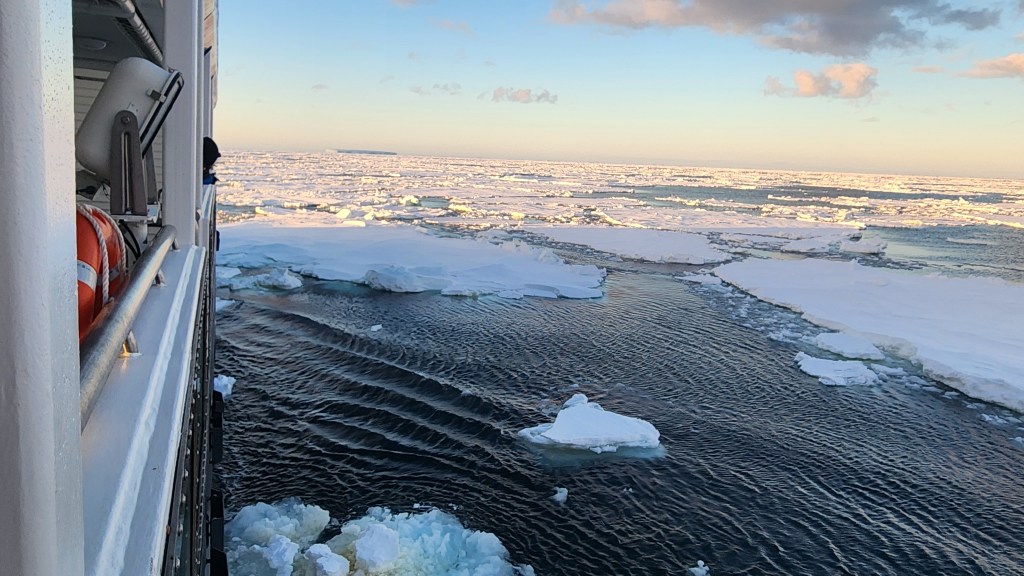
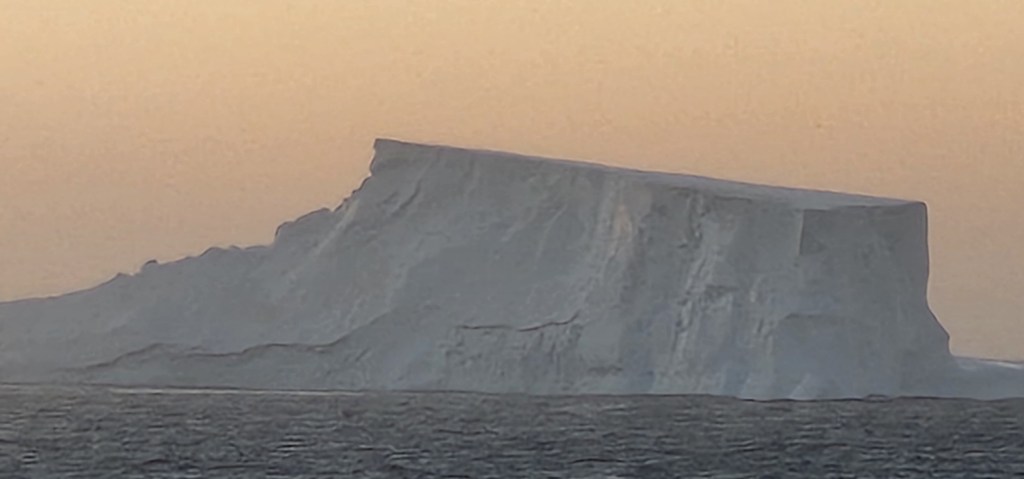
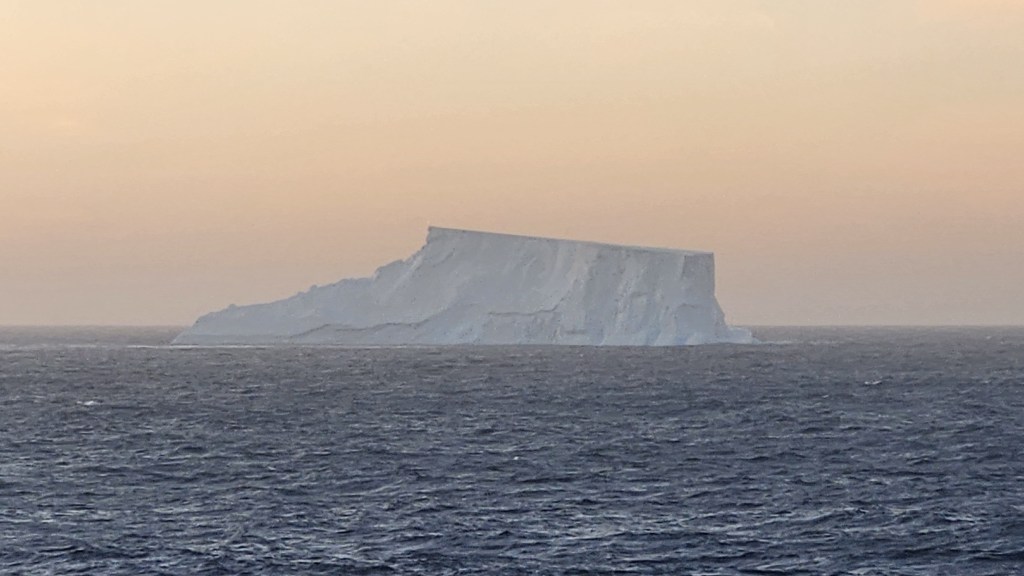
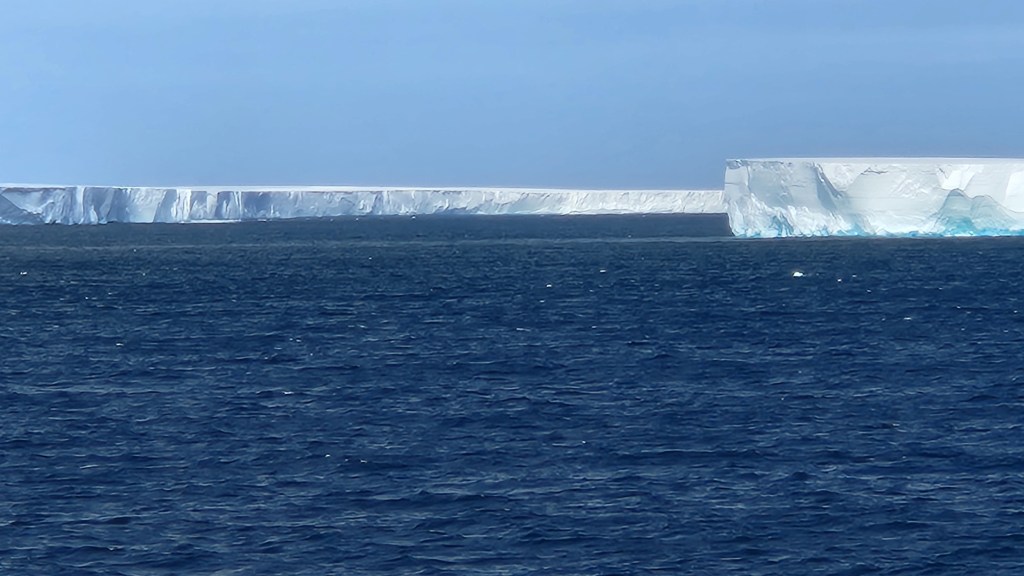
Seas calmed a bit by lunchtime. We began retracing our path through the pack ice and again marveled at the giant icebergs that had seceded from Ross’s Ice Shelf.
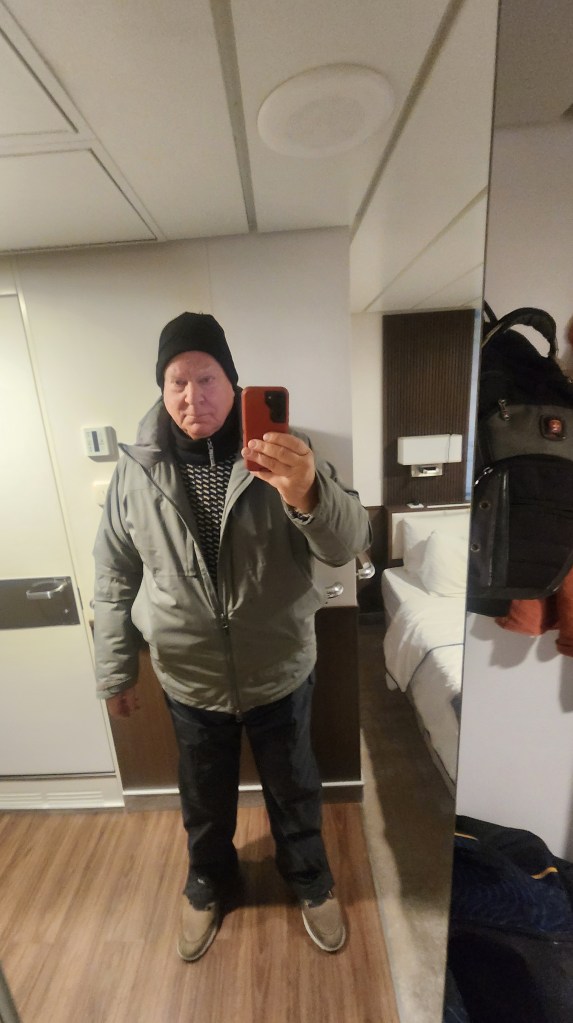
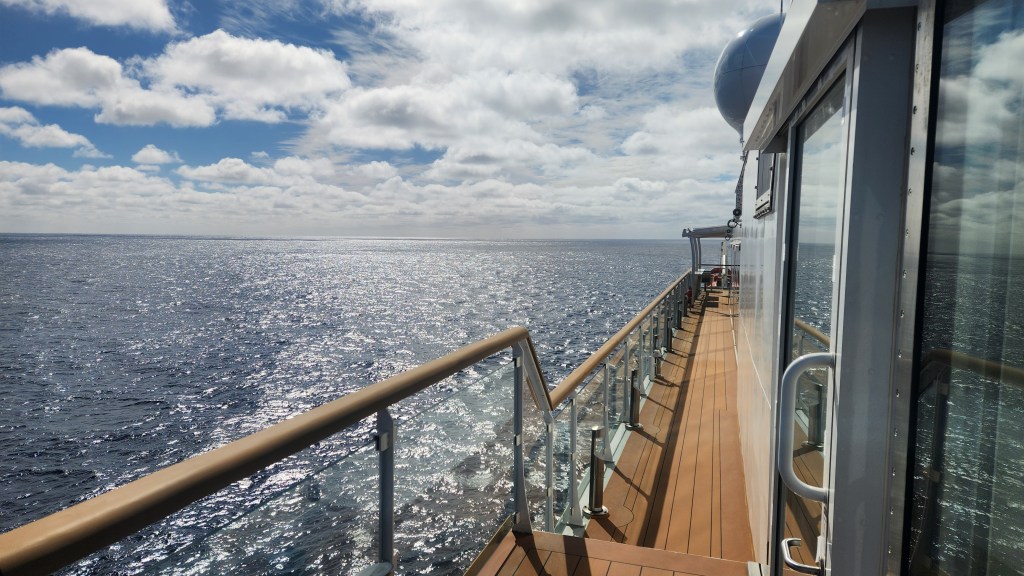
I decided to take a turn around the deck and pulled on “the pads” as it’s about 30 with a mighty wind.
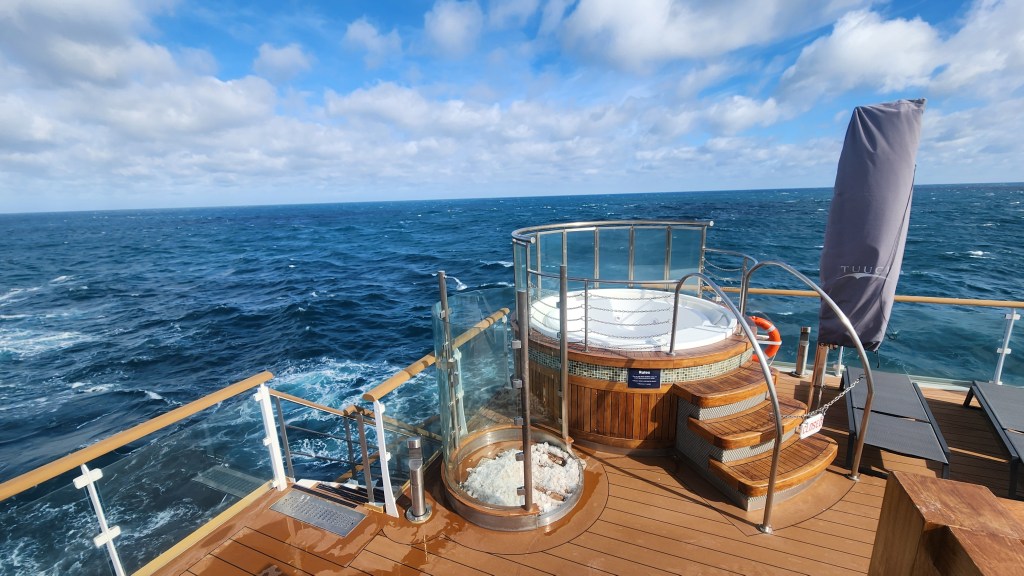
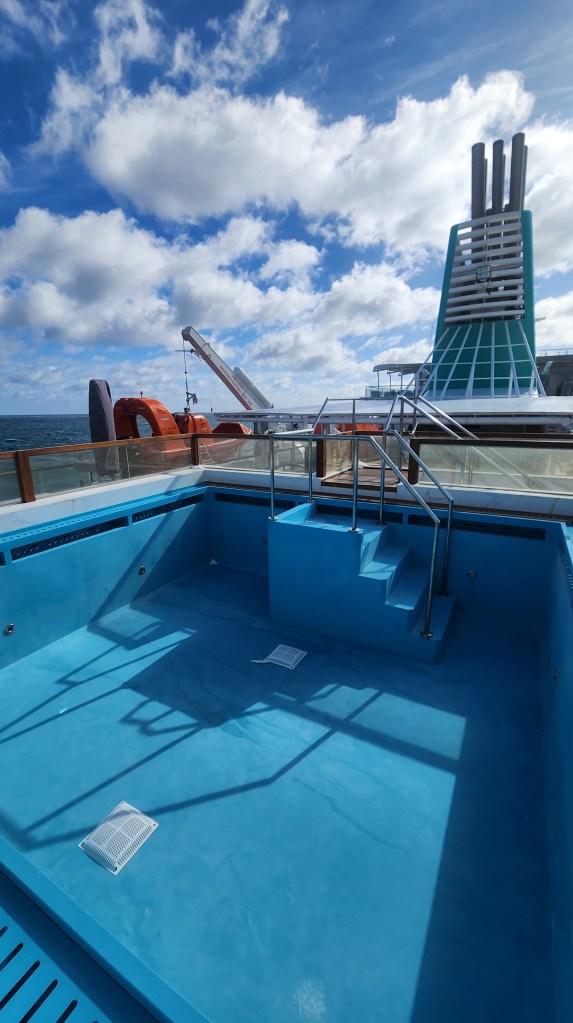
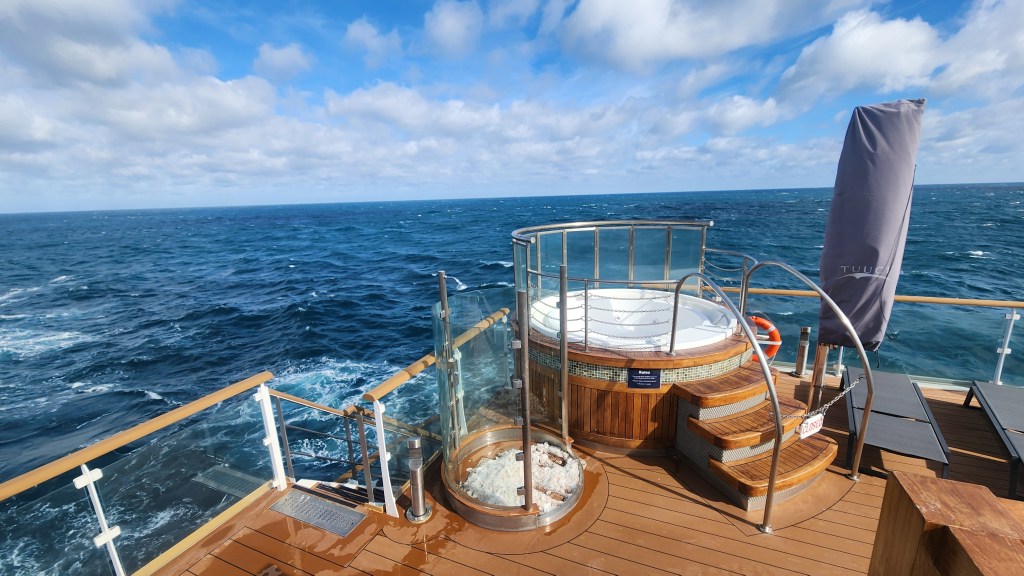
Not much action around the pool and no one stepping into the snow at the outdoor showers. Hot tubs likewise were empty.
One of the above pictures is a repeat I know, but as I am without any sons in law I’ll be dipped if I can figure out how to get rid of it.
I finished my brief topside transit trying to make my way around the front of the bridge after paying my respects to those operating the ship. A Venturi effect really supercharged the wind, reminding me of standing at the top of Gooseye Mountain with a fierce wind holding my body up at about a 30 degree angle to the ground. But the sun was out and all was well.
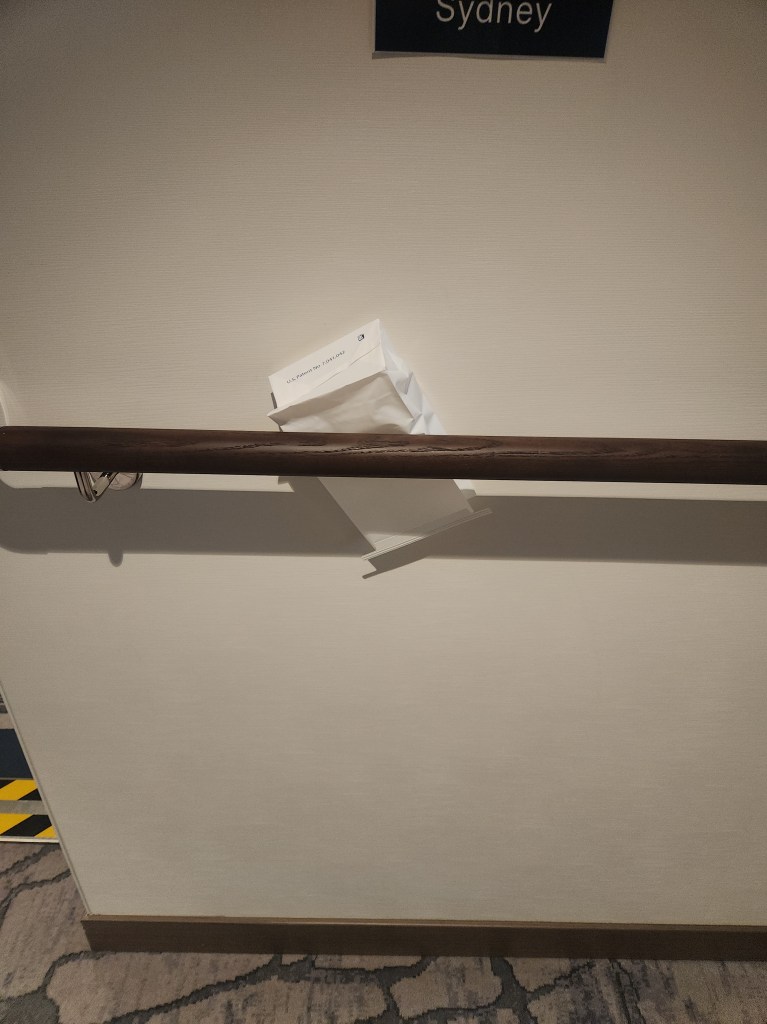
Plan A was to continue along the Ross Ice Shelf for further exploration, but plans changed over night. Winds gusting to 70 have whipped up the seas and we spent the night rolling heavily from side to side. As before, when the rocking and rolling really kicks in, elevator service is discontinued and the staff quietly positions these bags here and there throughout the ship in case one is, shall we say, indisposed coming or going from one’s cabin.
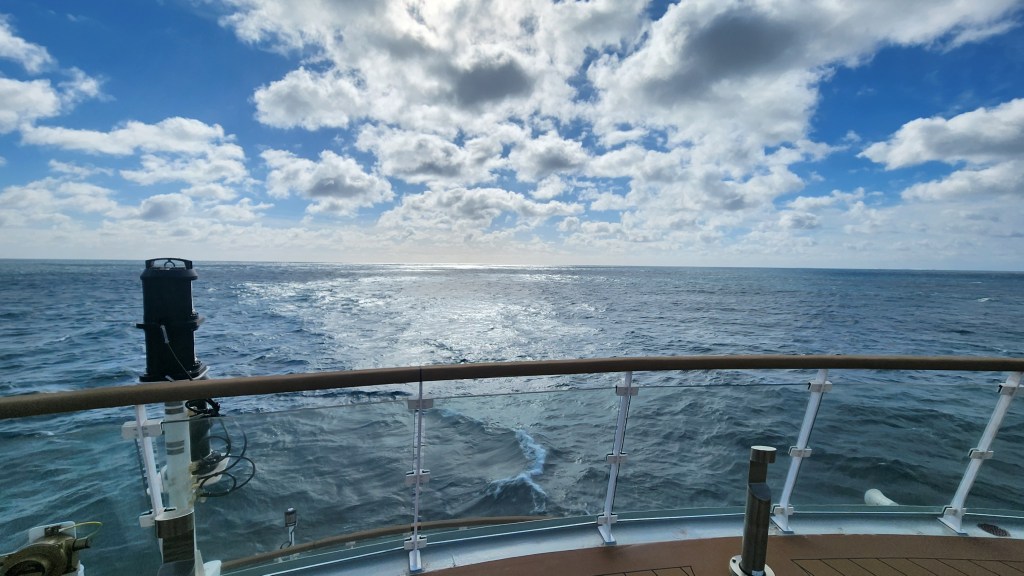
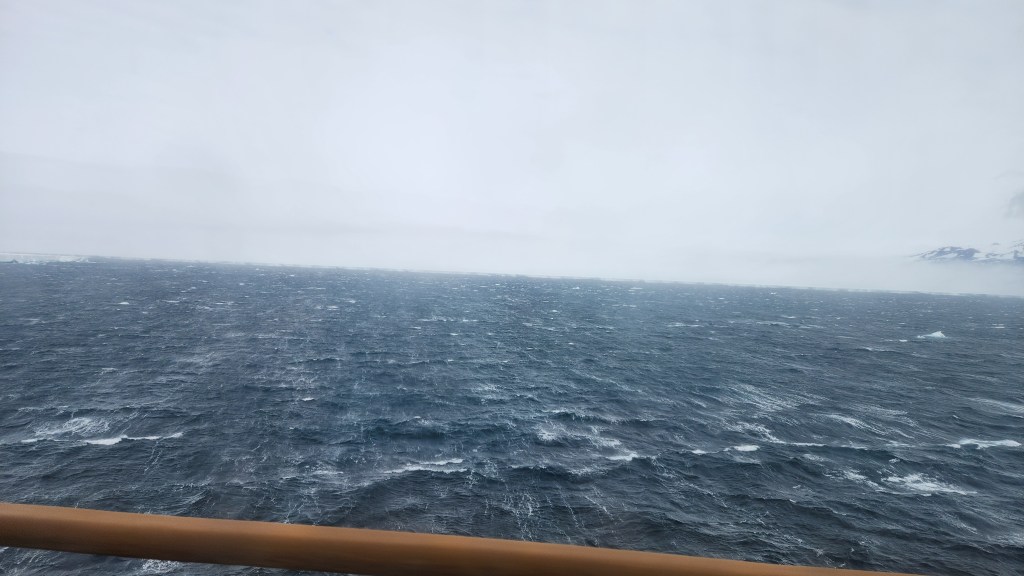
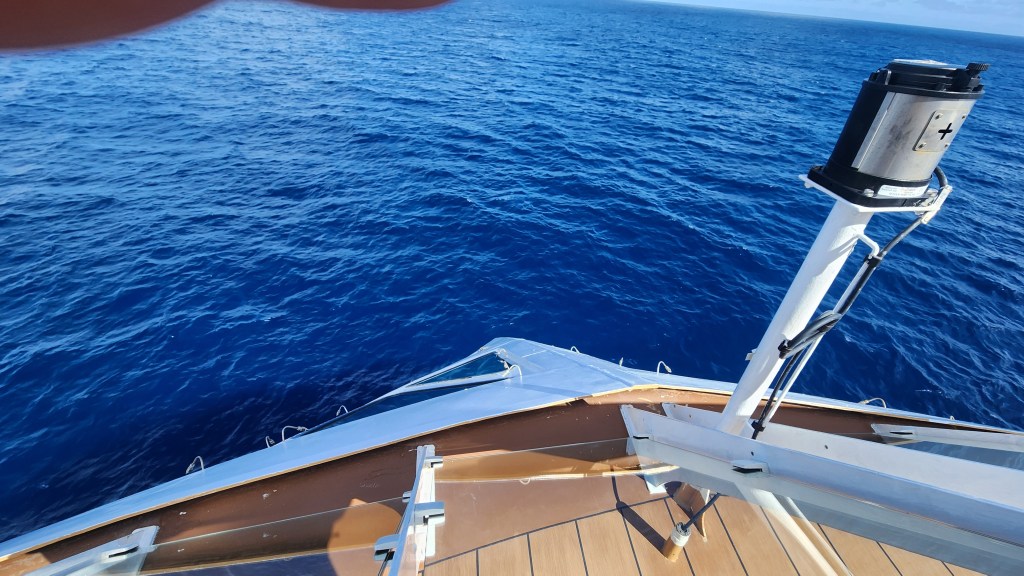
The seas have indeed been heavy duty, and I’ve been trying to get the camera to capture the huge swells.
They gathered us together this morning and explained that the ship’s captain considered it unsafe to try to proceed up the west shore of the Sound as we would be looking at 70 mph winds after which we would have to pass through the thickening pack ice. The ship cannot deploy its stabilizers in icy conditions,so the pitching and rolling would have been really something.
Long story short, we have wrapped up the Antarctic piece of the cruise and will be about four days at sea heading back north. They are hoping to acquire the permits necessary for us to pay a visit to Macquarie Island, a subAntarctic Island undulating with interesting birds,etc.
With a day “in hand,” we may visit either The Snares or Dusky Bay in the so-called Fjordlands of southwestern NZ.
The numerous guides aboard have delivered a number of interesting lectures on seals,birds, historical issues, etc., and yesterday was no exception.
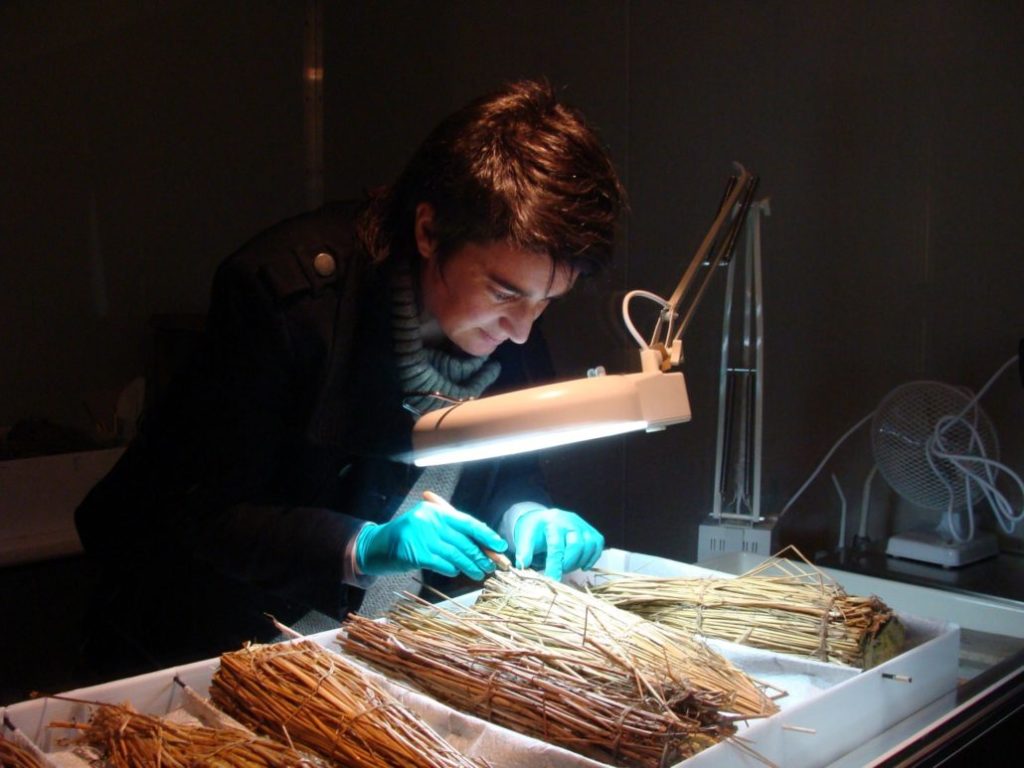
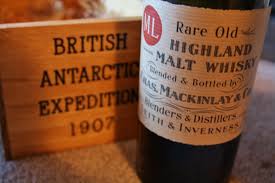
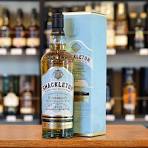
A young lady employed by the New Zealand Antarctic Heritage Trust lectured on a most interesting subject. It seems that a portion of the supplies Shackelton arranged for his 1907 Nimrod Expedition included a few cases of scotch and brandy.
In 2010 as part of the Trust’s hut restoration efforts Trust employees spent days chipping through the huge chunk of ice under Shackelton’s hut. There they excavated three cases of scotch and two of brandy.
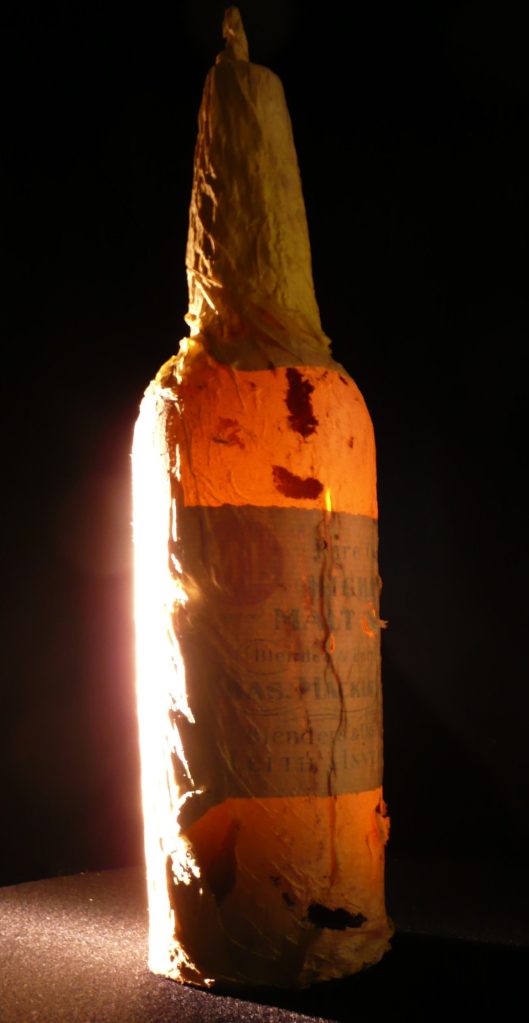
The scotch was kept in its state of refrigeration and a case was sent back to NZ for further handling. There three bottles, still wrapped in their original paper and straw wrappers, were gradually thawed.
It seems the whiskey was distilled in 1907 by Mackinlay’s, a brand now owned by Whyte and Mackay. The owner of W and M flew the bottles in his private jet to back to Scotland where experts at his distillery and the Scotch Whiskey Research Institute (who knew?) analyzed rhe contents.
It seems the scotch had been seasoned in American White Oak sherry casks and flavored by Orkney Islands peat.The distillery’s master blender then proceeded to recreate the whiskey with its original taste.
Today, Shackelton’s Whiskey can be purchased in its modern recreation with a portion of all sales going to support the Antarctic Heritage Trust.
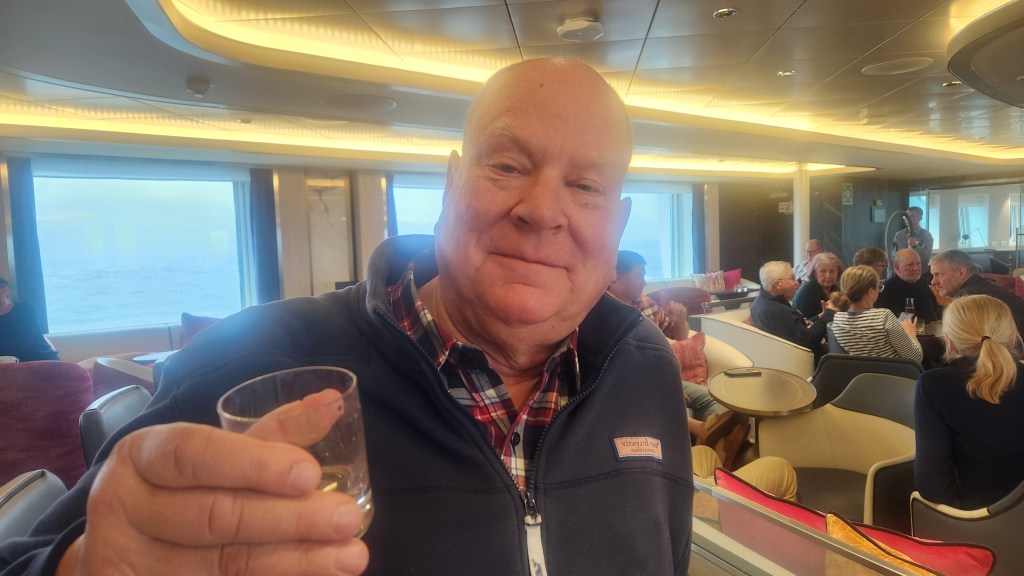
Small samples were handed out after the talk, and I’m telling you Shackelton could pick ’em.
I asked whether anyone had taken a good pull on the actual scotch as excavated. She allowed as how rhe master blender probably took a sip but no after action report was available as to its taste. Sigh.
On January 28, 1841 James Clark Ross, mentioned in a few earlier posts, sited what we now call the Ross Ice Shelf, initially referred to as the Great Ice Barrier. Ross was trying to identify a water passage that would allow him to sail the Erebus and the Terror through to the Pole, but the Shelf stopped him cold. “It was an obstruction of such character as to leave no doubt upon my mind as to our future proceedings, for we might with equal chance of success try to sail through the Cliffs of Dover.”
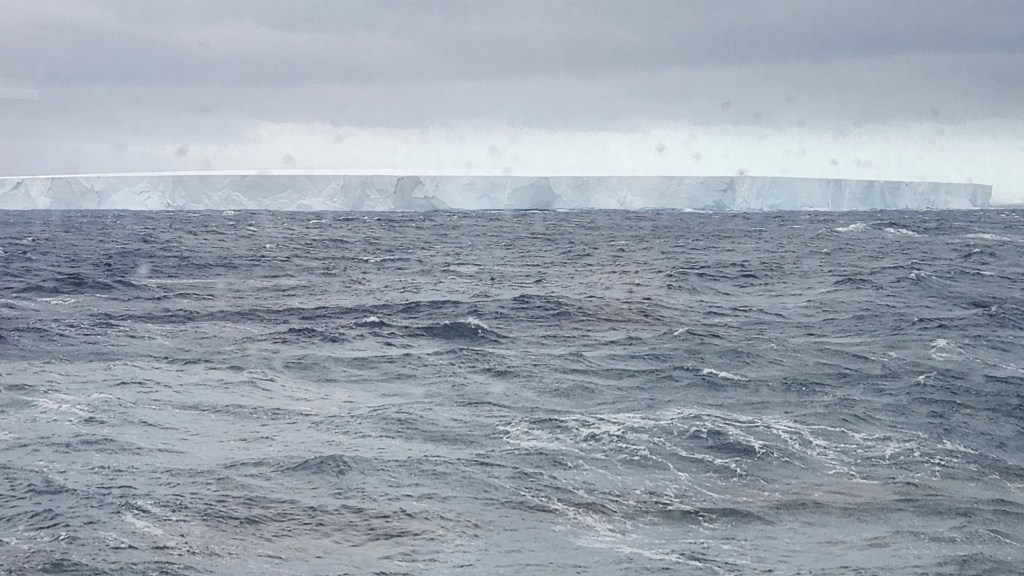
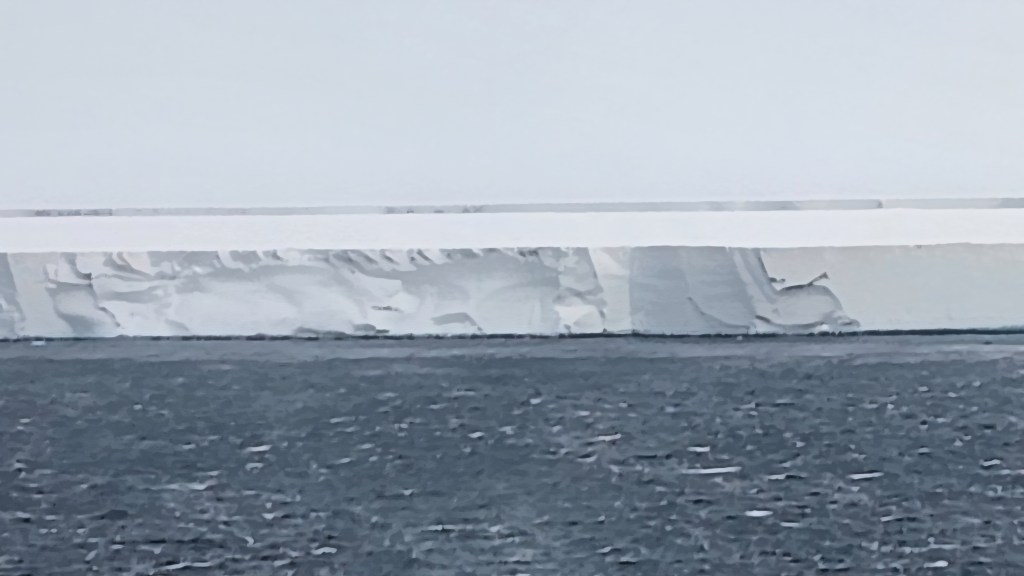
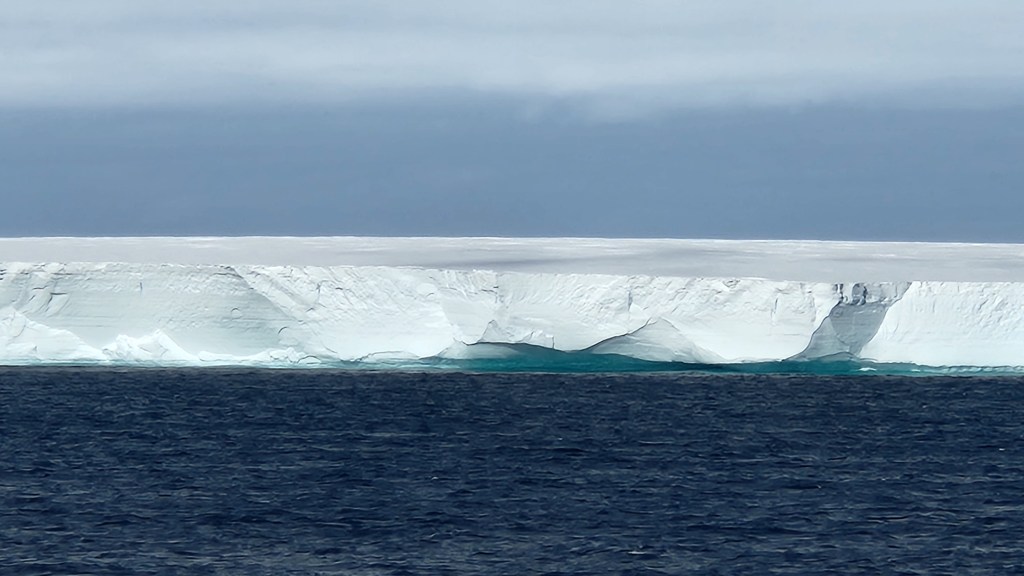
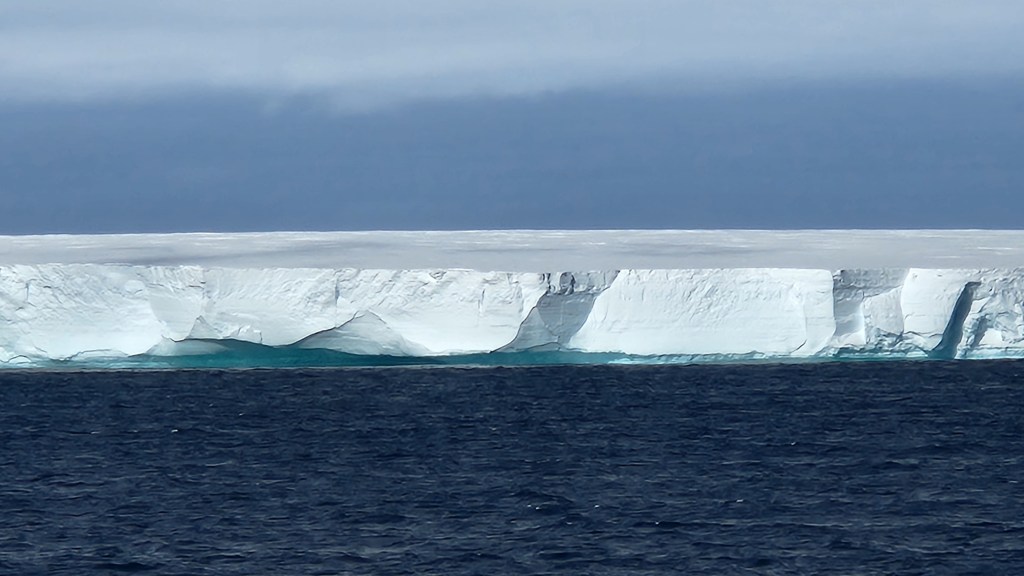
The Shelf is in fact an enormous floating mass of ice the size of France, about 200,000 square miles and 600 miles long. You can see why his namesake Shelf put Ross in mind of Dover’s chalk-white Cliffs.
The Shelf is quite dynamic as it drains the west Antarctic Ice Sheet while moving out to sea at about 5 to 10 feet a day. A “calf” the size of Belgium busted off some years ago.
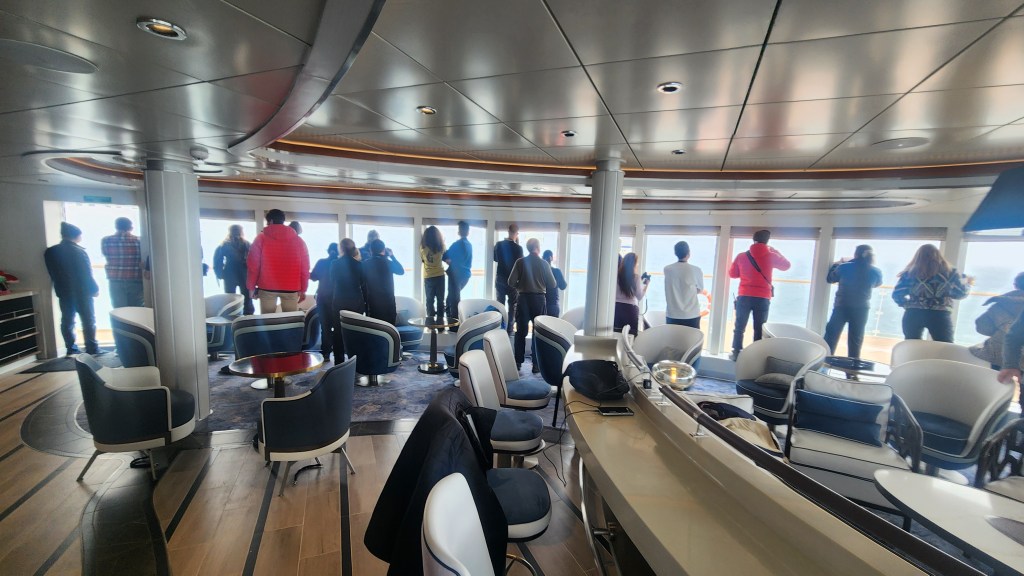
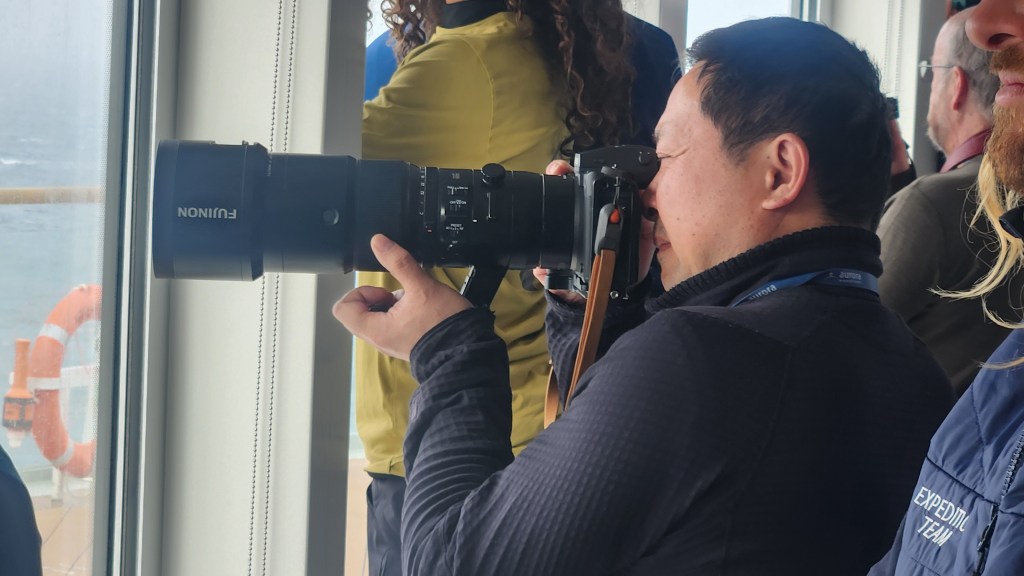
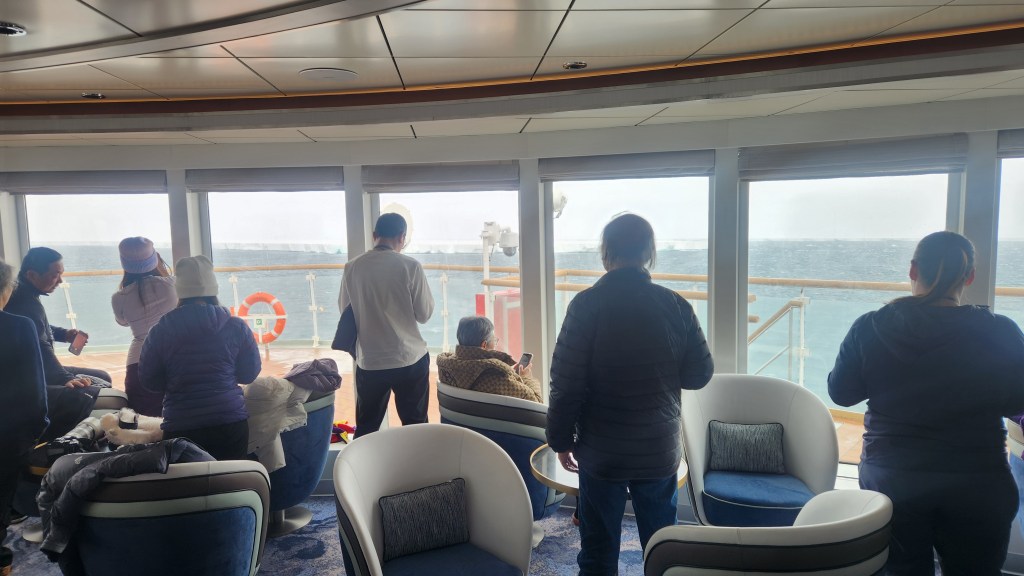
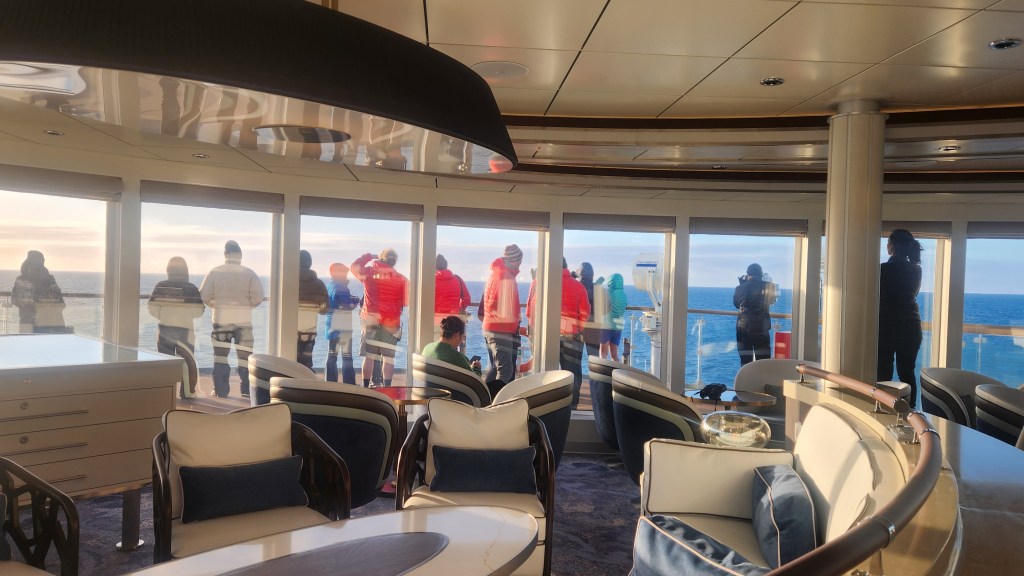
We’ve been taking this in from the Deck 8 Observation Lounge high above the water. An announcement over the PA aboard of a pod of Orcas at one o’clock brought a stampede up here, many with giant bazooka lenses.
I saw a dorsal fin and several spouts but nothing that I could capture with the camera.
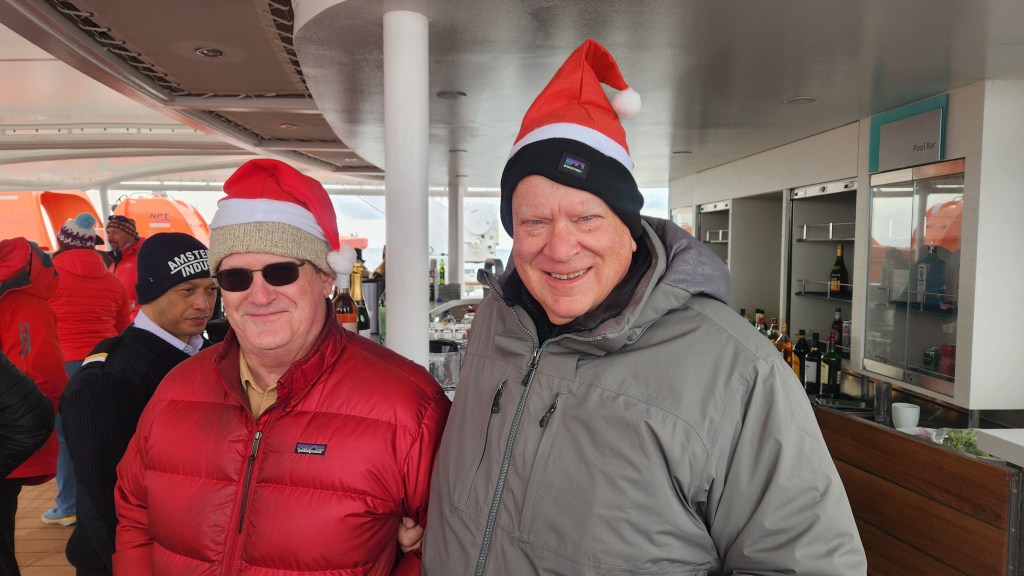
We had fairly calm seas midday and the Mawson organized a barbecue on the back deck. I slipped on my fleece pants, wind pants, fleece shirt, fleece jacket, down inner coat and a down outer coat and woofed down a salad and a hotdog with Lester. Blaring disco music drove us back indoors as soon as we finished.
By mid afternoon winds had freshened to 70, the captain closed the outside decks and the ship began to buck and roll. I wouldn’t have lasted 20 minutes in this on the Alison P.
This marks our furthest distance south at about 77.5 S latitude – earlier today we were quite close to McMurdo Station.
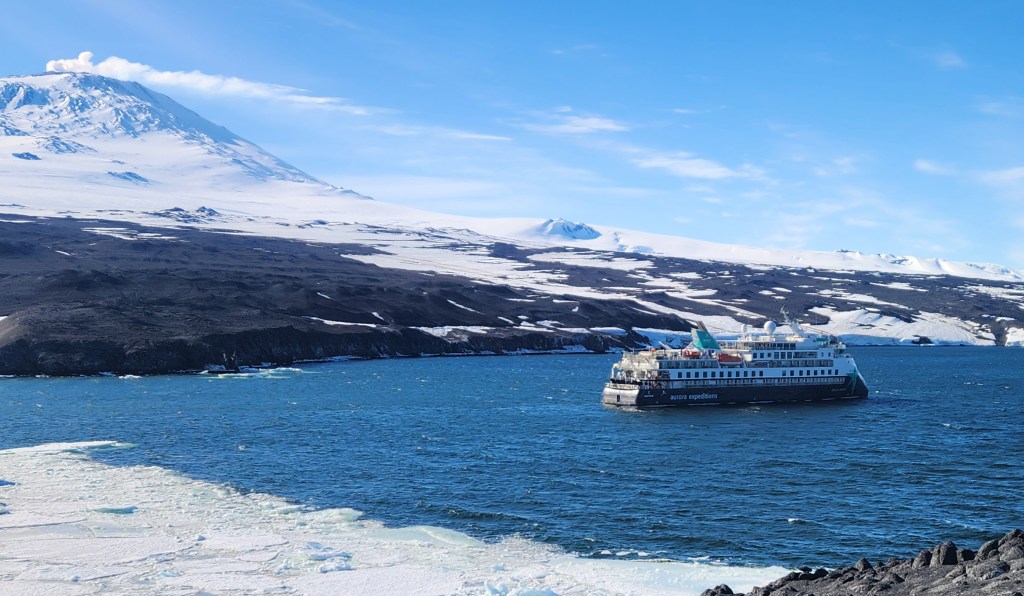
Last night the Mawson made its way well into McMurdo Sound and we awoke to spectacular scenery.
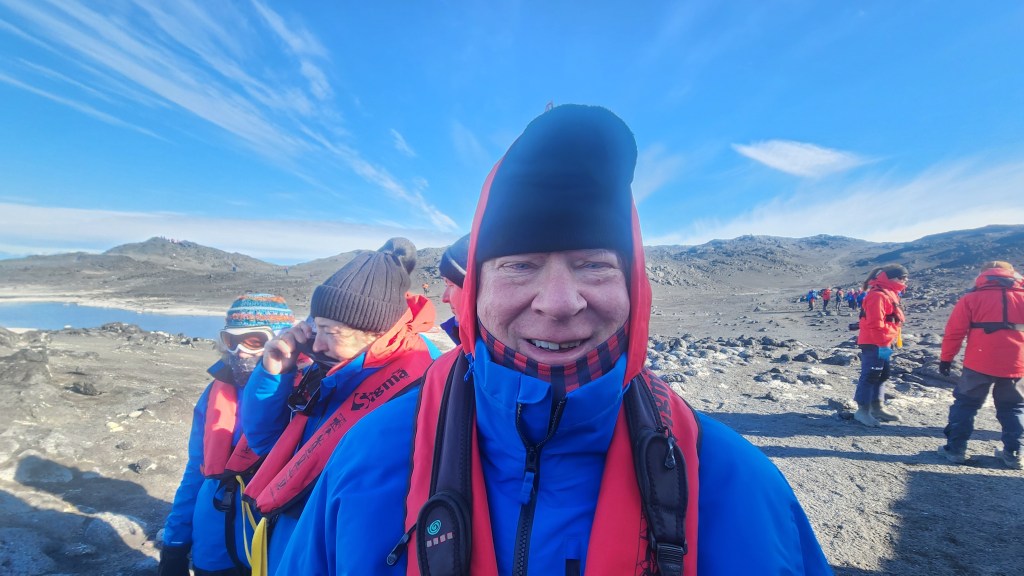
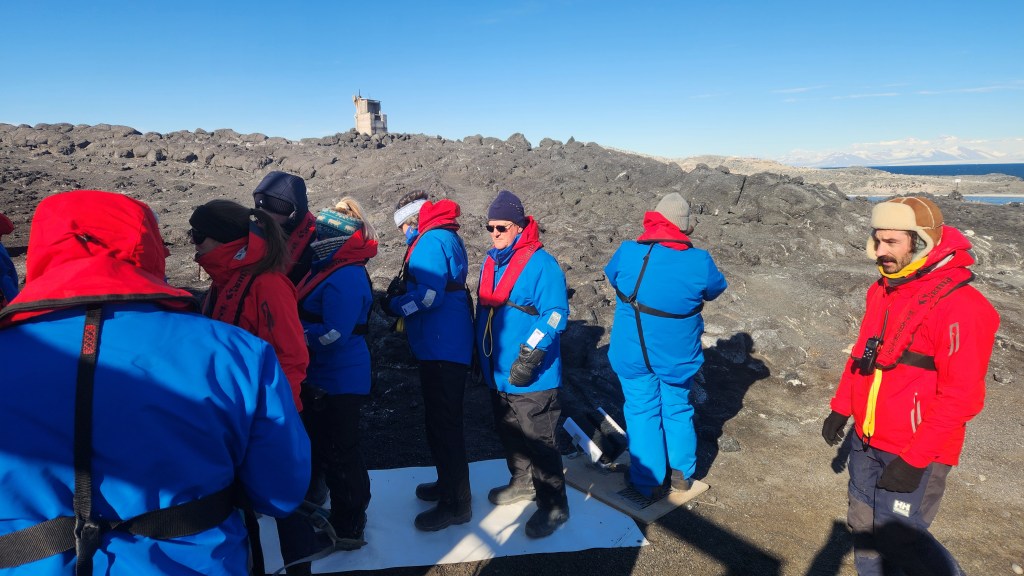
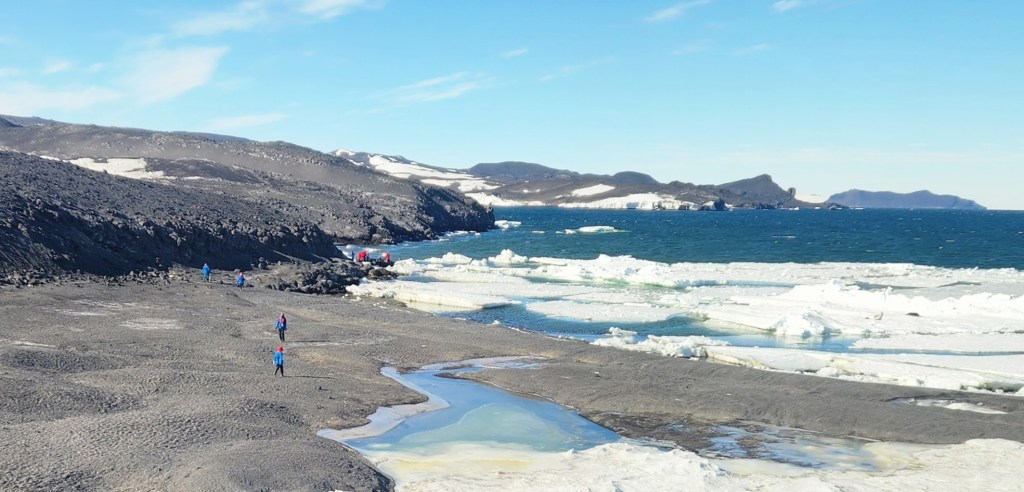
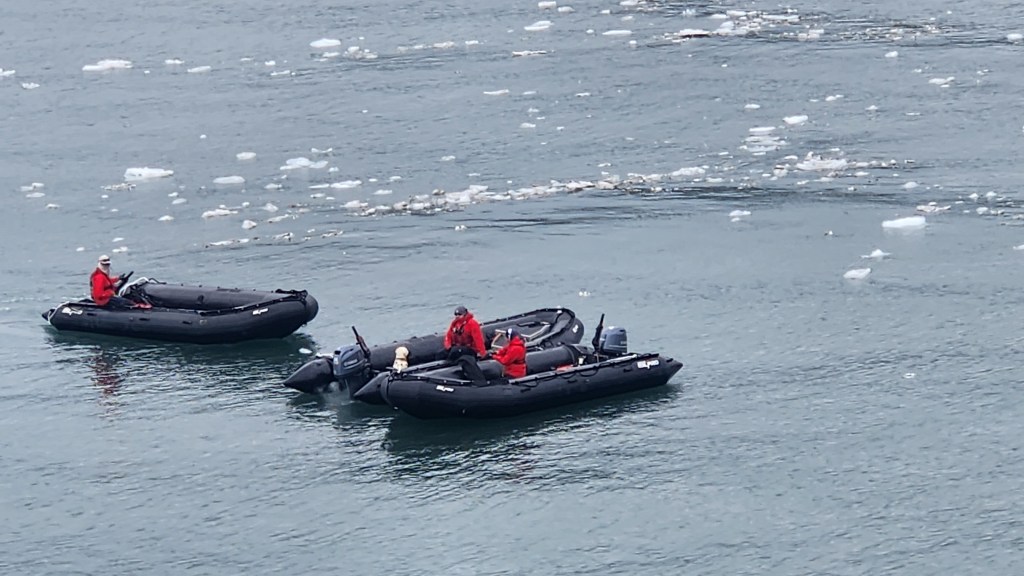
The guides launched the Zodiacs and in we went, weaving our way through narrow passages in the ice. Once ashore we walked across a volcanic moonscape that reminded me of the lava fields on the Big Island of Hawaii.
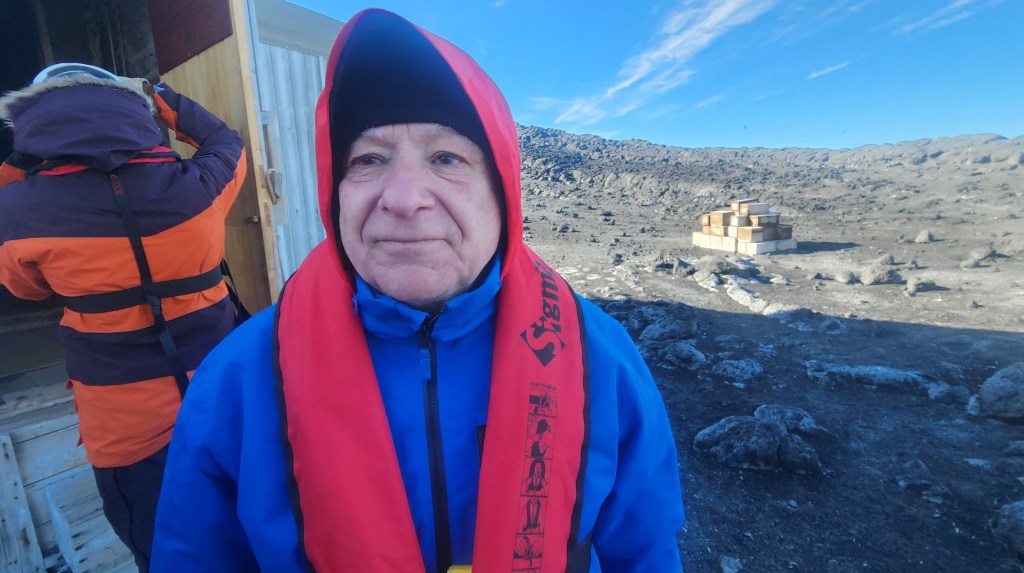
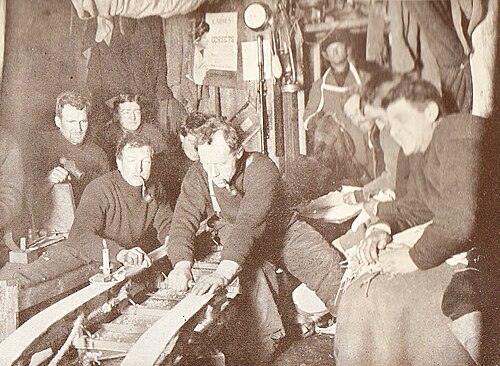
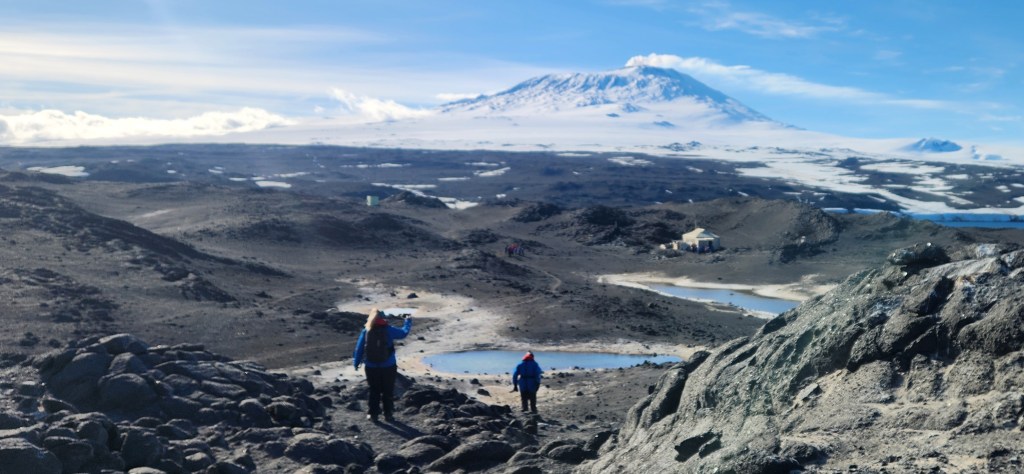
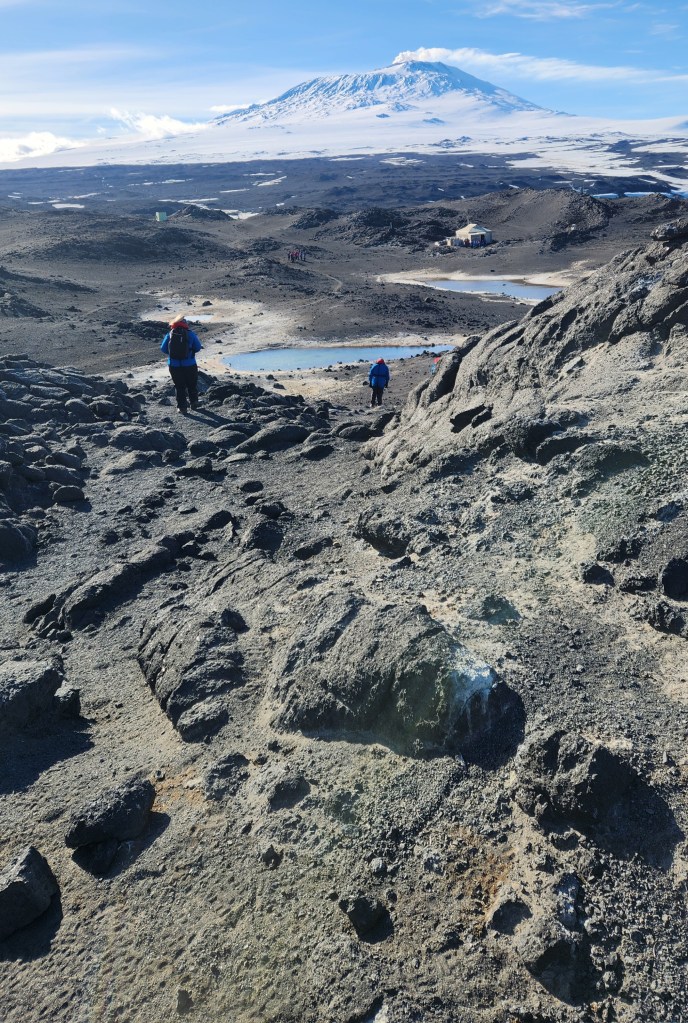
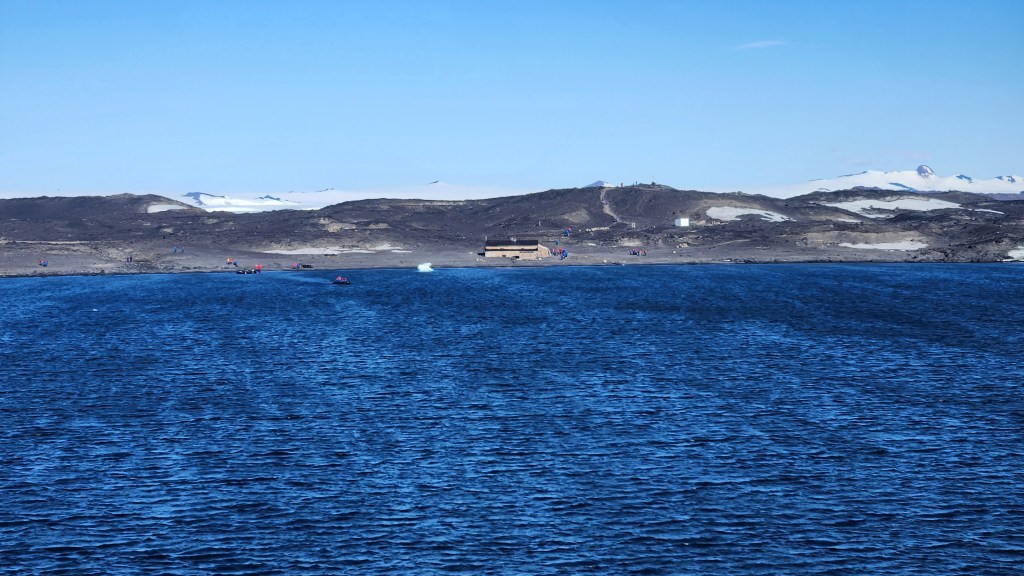
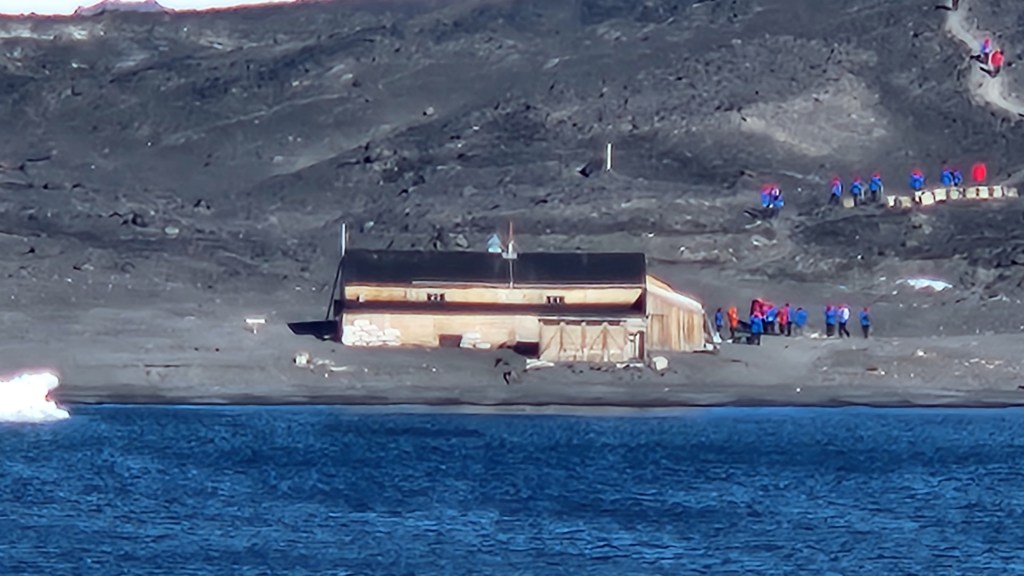
Here is where Sir Ernest Shackelton in 1908 began his second try at the Pole, this time on the Nimrod. We hiked up about half a mile to the site where he built his hut and wintered over before striking out for the Pole the next summer.
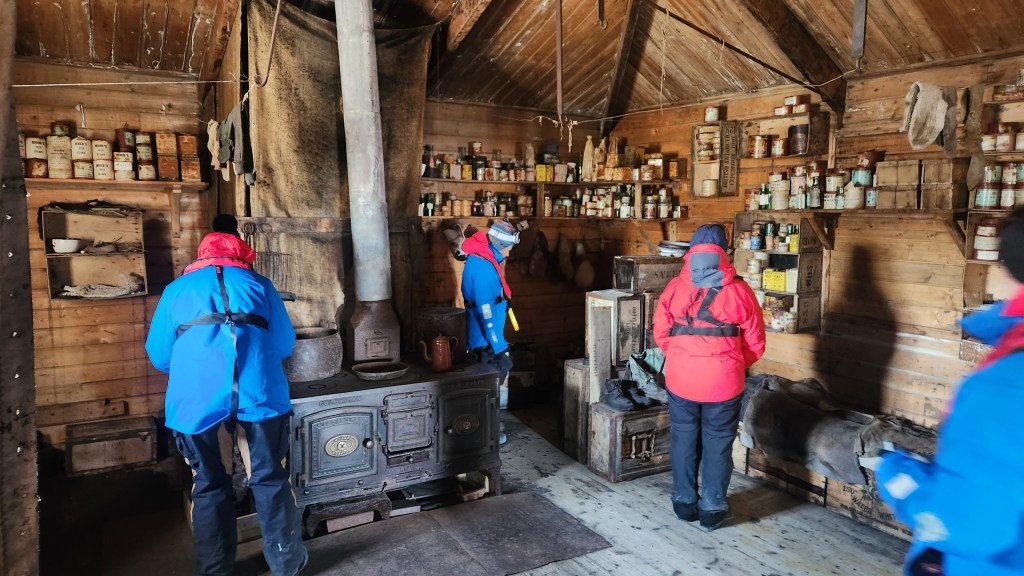
Lester, Leonard and I made it up and into the hut.
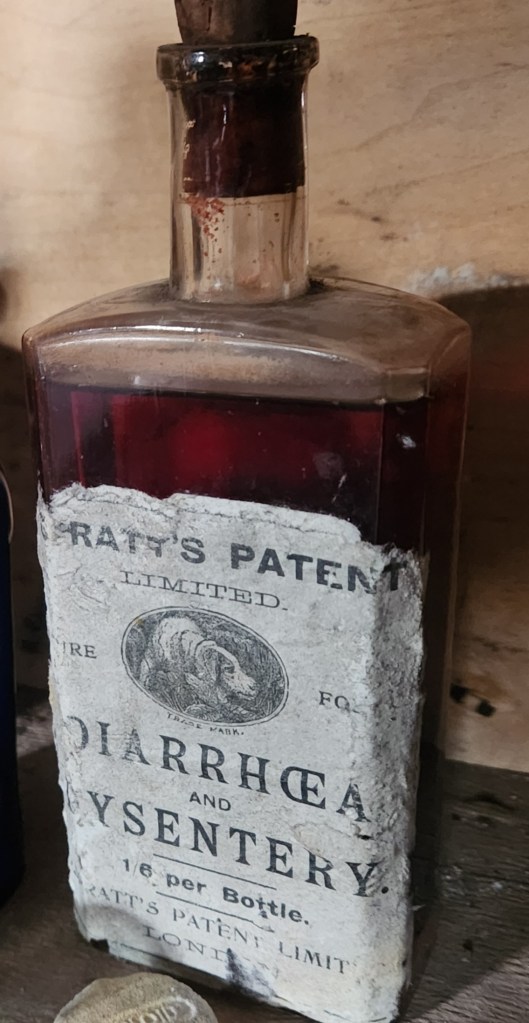
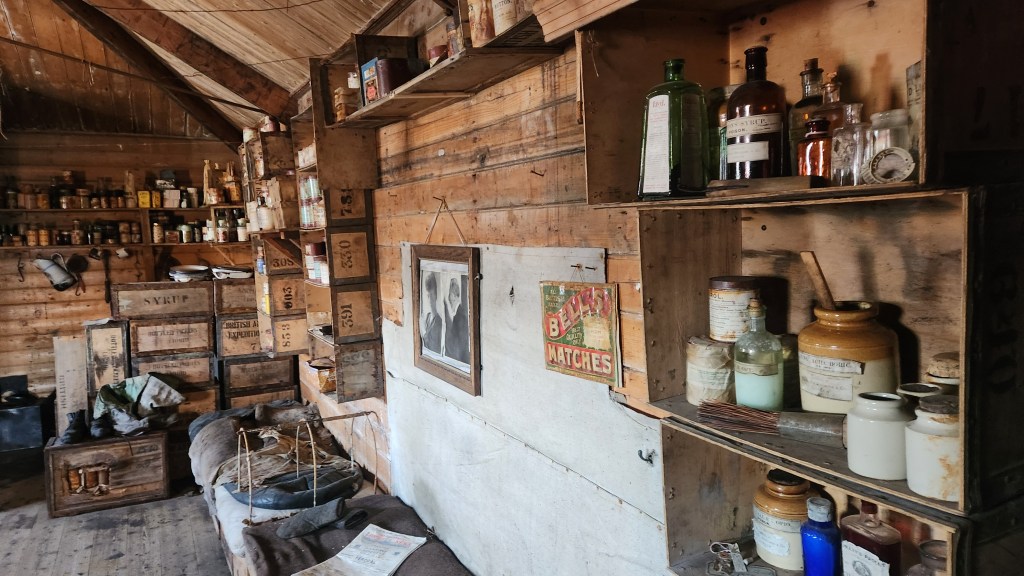
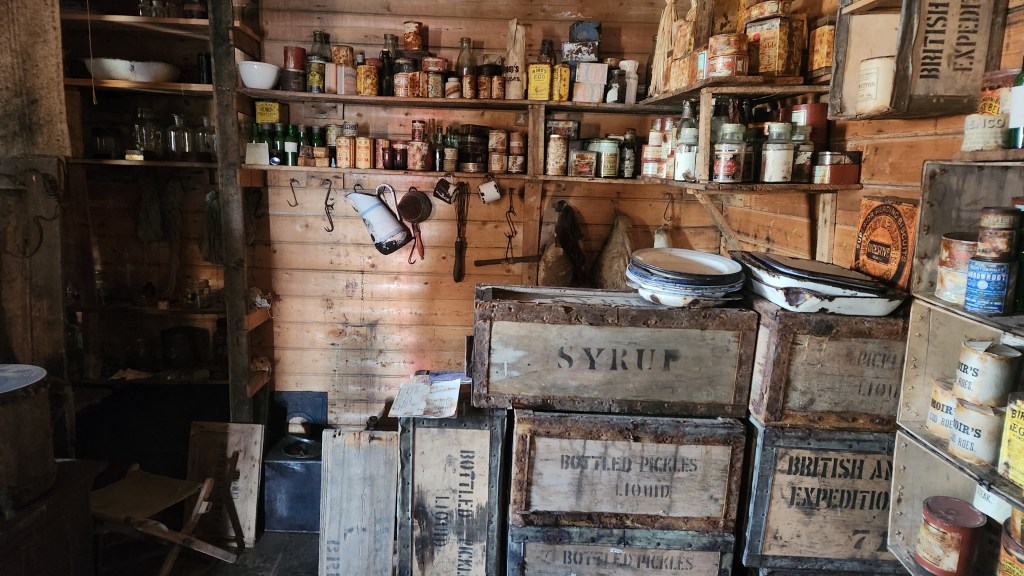
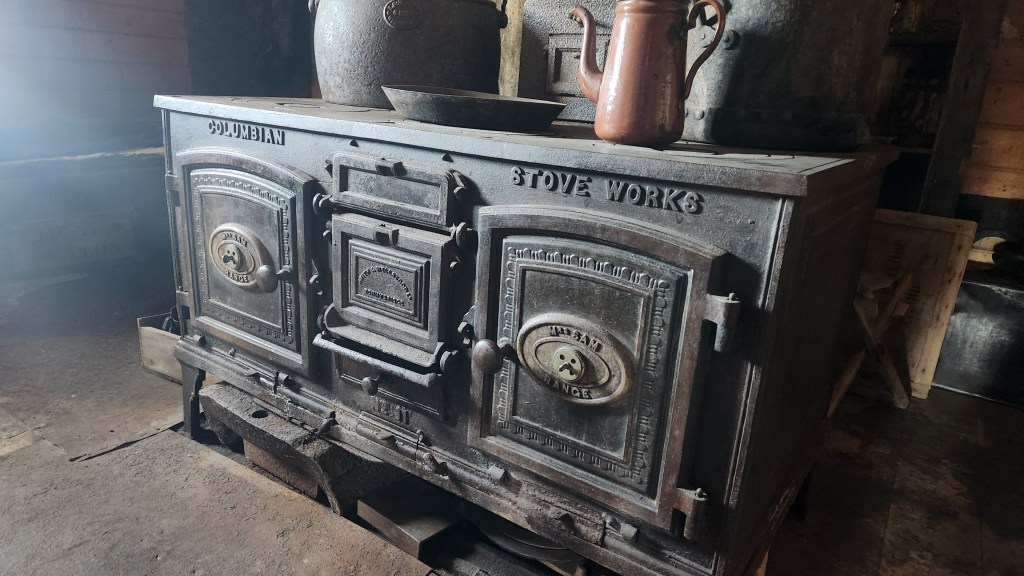
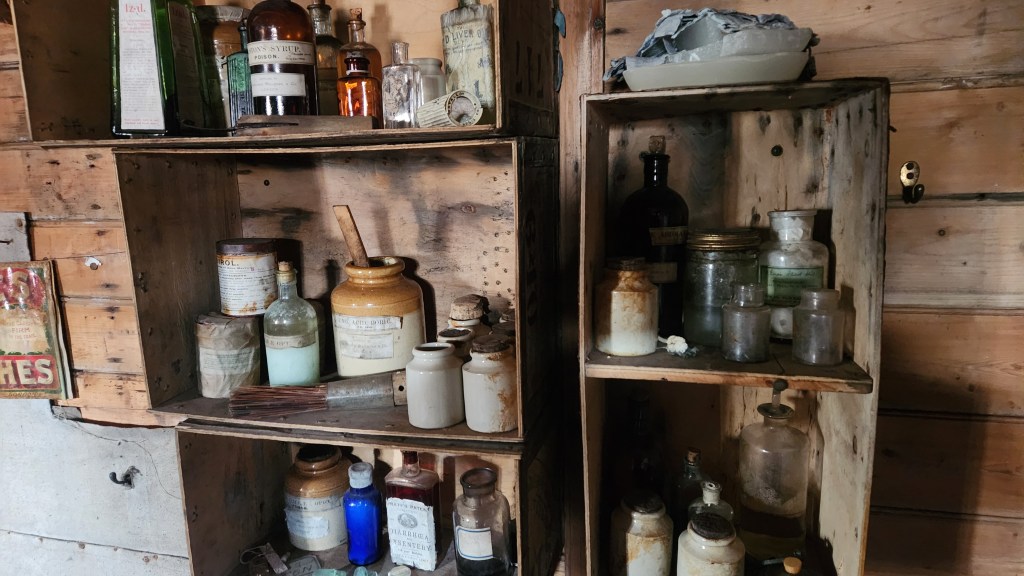
New Zealand’s Department of Conservation spent years removing many items from the hut, restoring and remediating damaged items, rebuilding the hut, and then placing the items right back where they found them. We entered 8 at a time with an 8 minute limit in the hut for each group. My favorite is the bottle of disentary medicine.
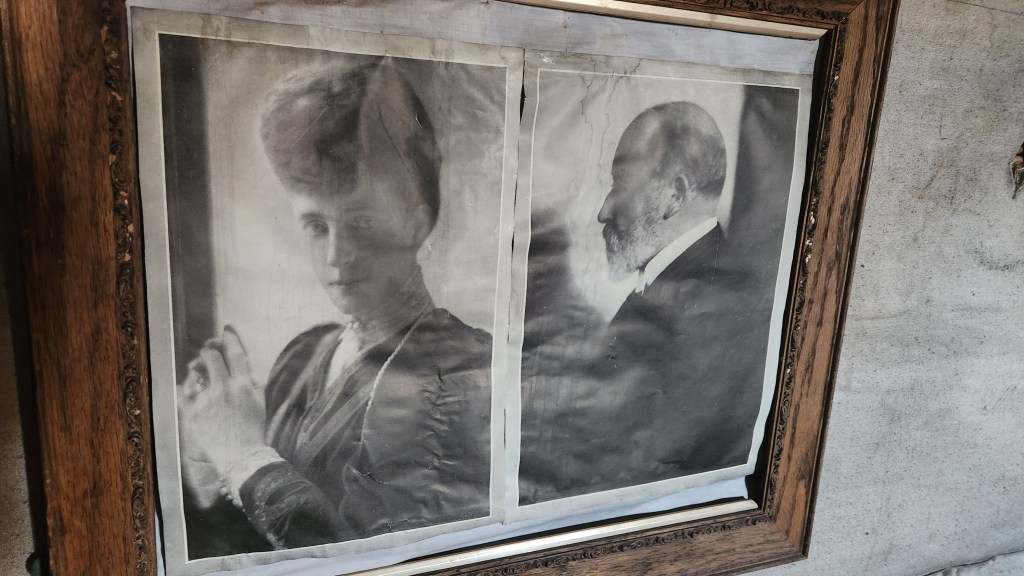
Photos of King Edward VII and Queen Alexandra hung in a prominent spot.
Following our interlude en hut we hiked up a short hill of volcanic sand for great views over the Sound.
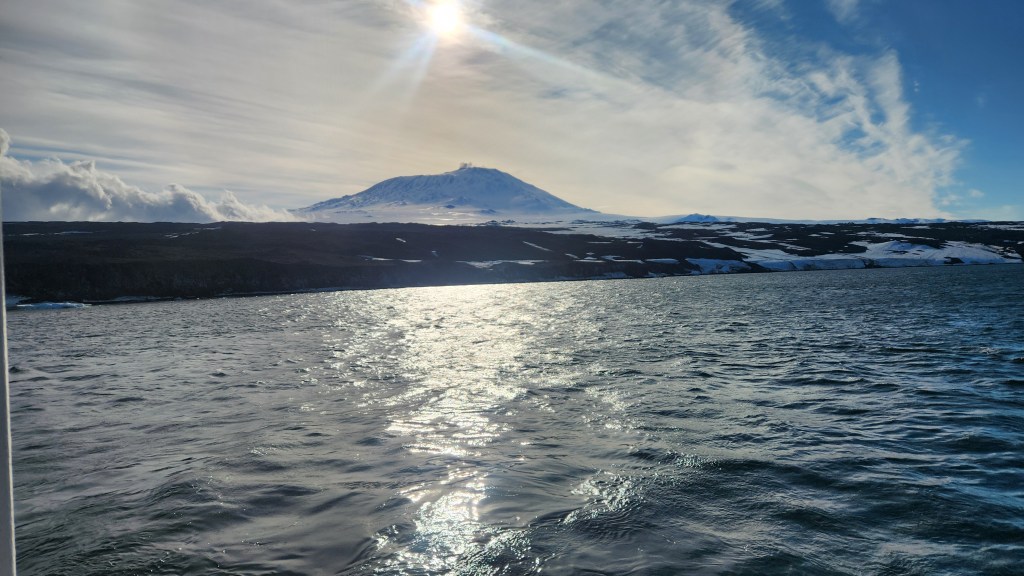
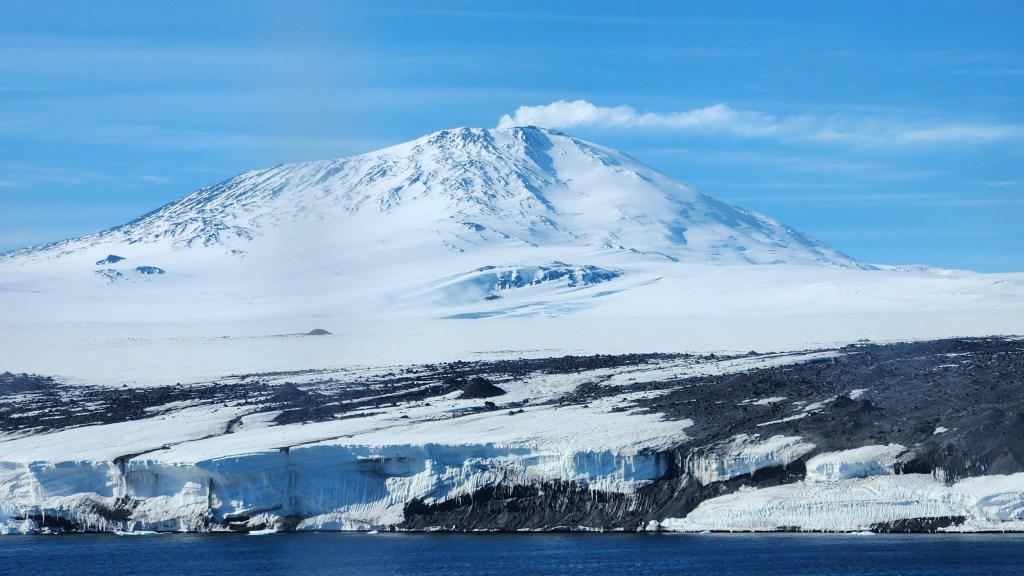
Mount Erberus, a major feature of Ross Island (remember him?), is the southernmost active volcano in the world here at 77 degrees S latitude. Note the steam issuing from the top.
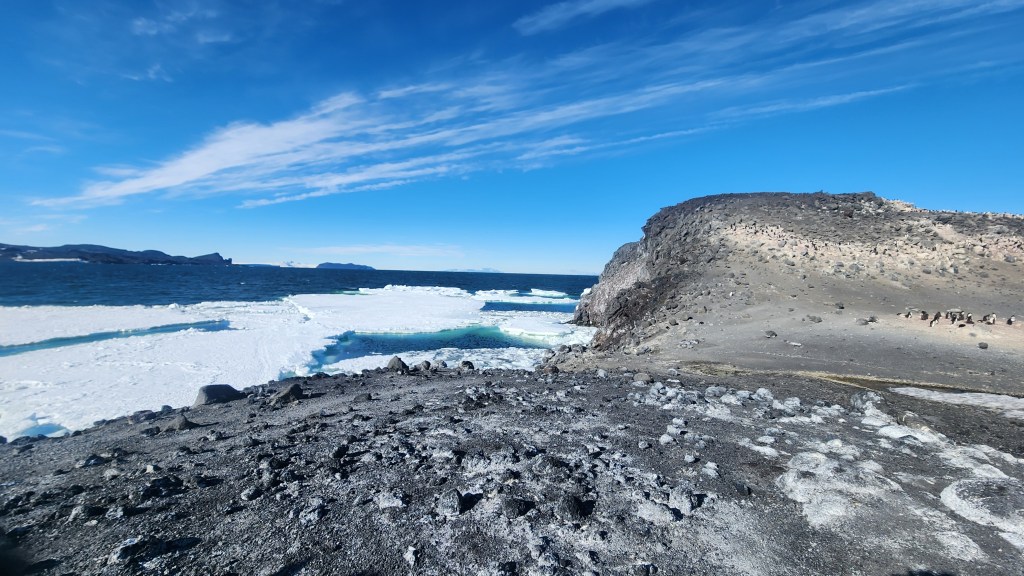
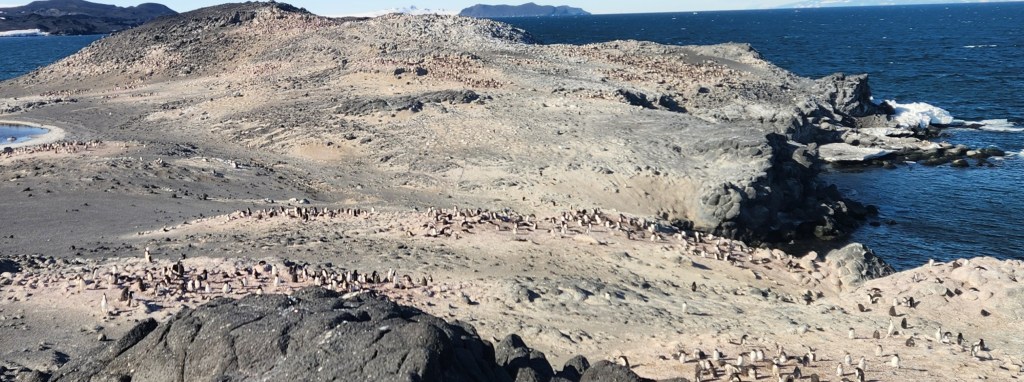
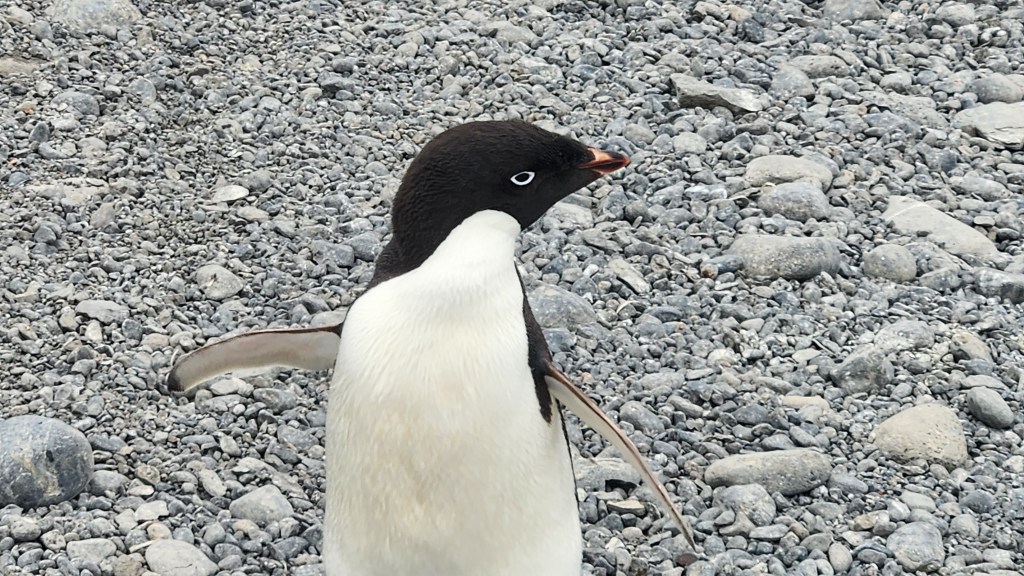
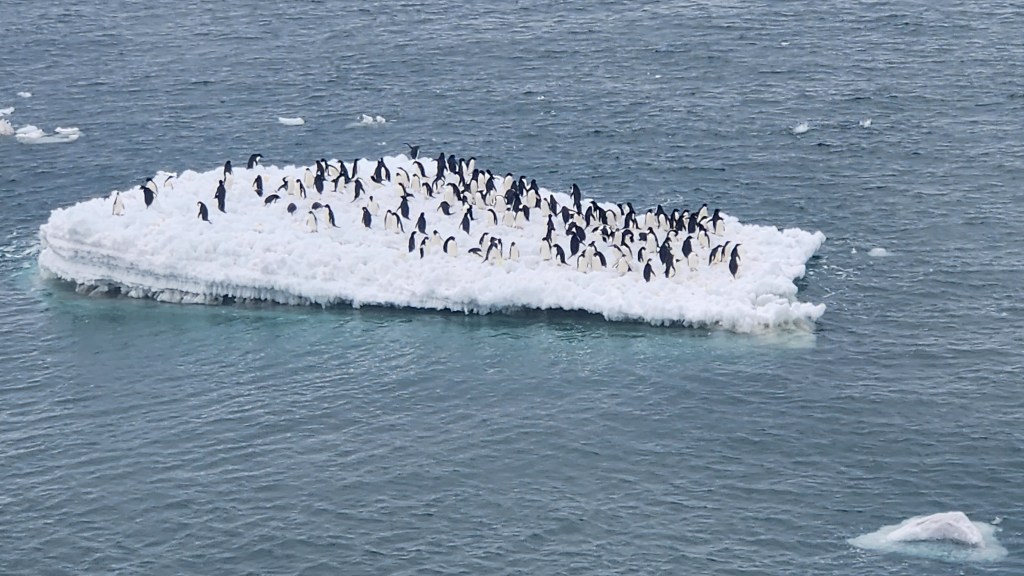
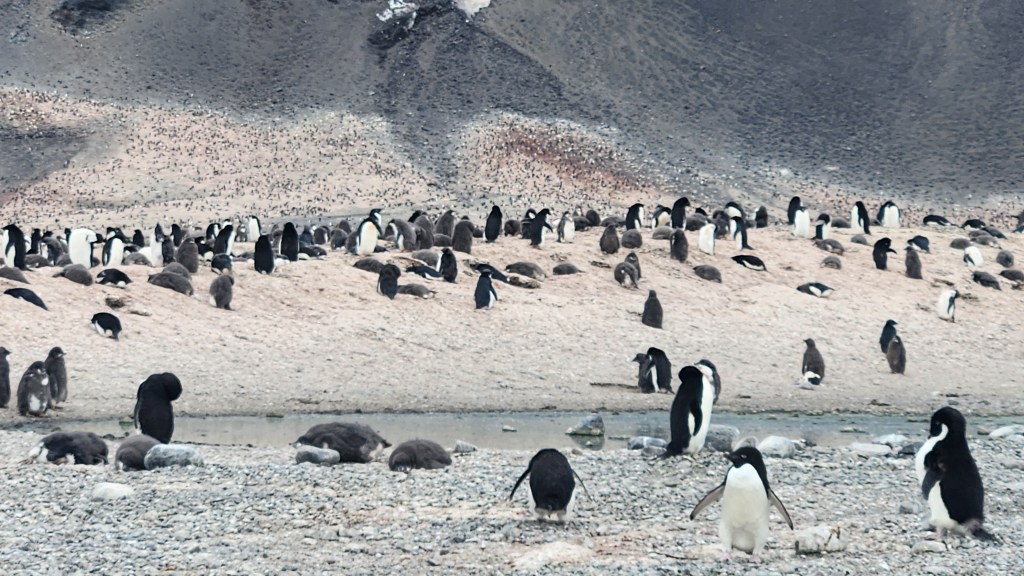
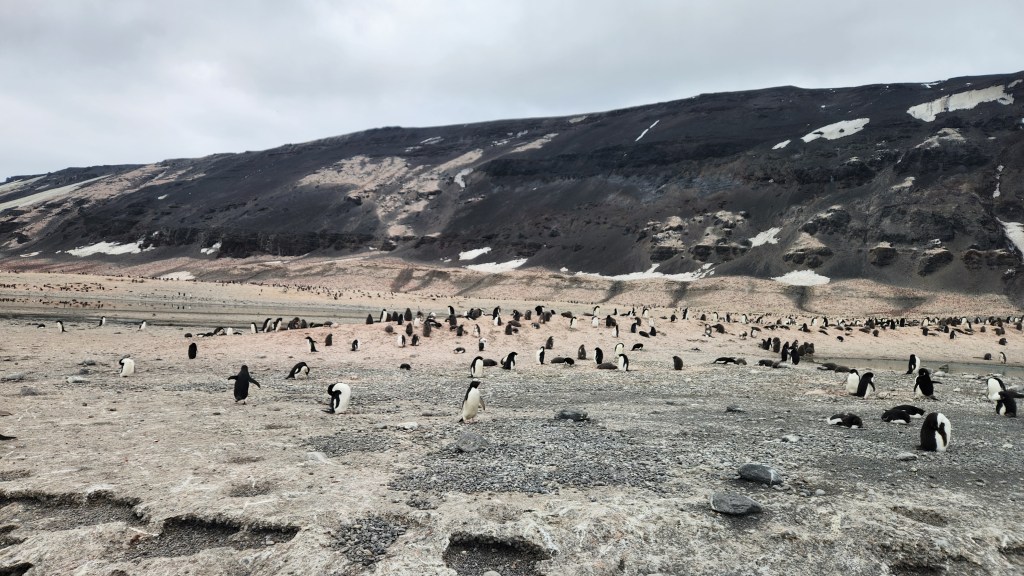
Of course we encountered a number of cute Adelie Penguins, although a fraction of the numbers found earlier.
Then it was back down to the landing area, into the Zodiac and back to the ship.
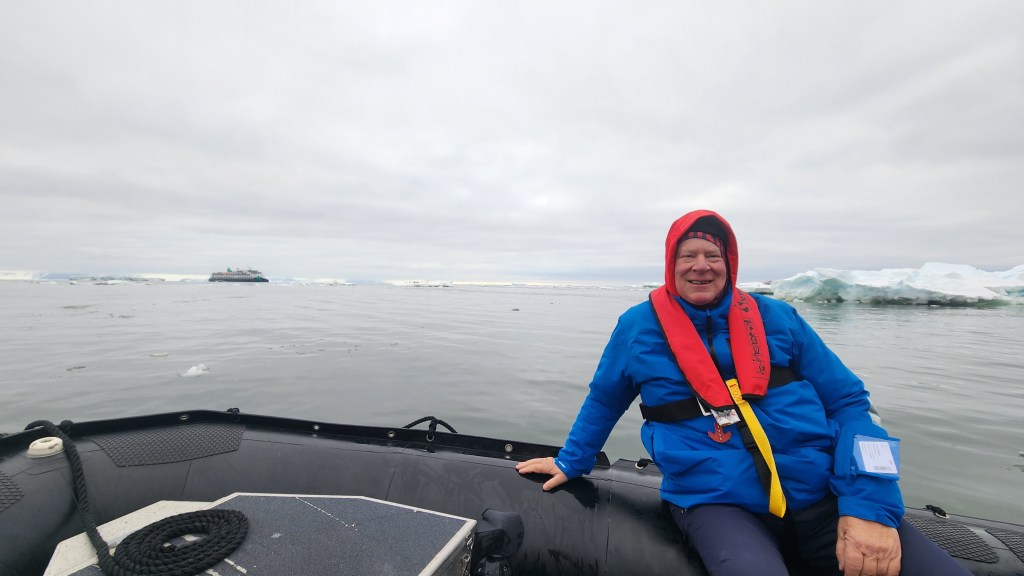
The steady 30 mph wind had whipped up the seas making for a bouncy ride back. We bucked into a big wave and the spray soaked all of us on the boat. Helpfully, a wave shot the boat up to deck level just as I was stepping off.
The zodiac ride really took the starch out me, so I’m foregoing the afternoon excursion into Robert Falcon Scott’s hut at Cape Evans.
Shackelton and Scott became bitter rivals. Scott had sent Shackelton back home part way through Scott’s 1901 Discovery expedition citing his illness from scurvy, and extracted a promise that Shackelton would not use McMurdo Sound as his base of operations on future expeditions. However, necessity forced Shackelton to use McMurdo, and Scott was furious.
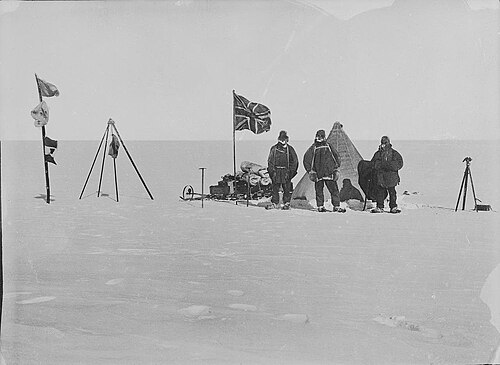
Shakelton got closer to the Pole, 88.5 degrees S latitude or about 287 miles from the target, than anyone before him before turning back while his team still had sufficient food to survive the return trip. Here they are on Christmas Day.
Douglas Mawson, after whom our ship is named, came along as expedition physicist. He was to lead Australia’s most famous expedition some years later.
Shakelton was a national hero and took to the lecture circuit. Of course, his most famous expedition was on the Endurance. Unlike Scott, Shakelton brought all of his men back alive from all of his trips.
Scott and three of his men died a miserable death in a freezing tent on their return trip from the Pole. They got there a few weeks after Roald Amundsen, a Norwegian, became the first to reach the Pole.
Late yesterday the Mawson hove to just off Cape Adare (which I misspelled “Adair” in an earlier post, and no wonder: Jerry Adair’s outstanding defensive play at second formed a key contribution to the astounding success of the 1967 Impossible Dream Red Sox).
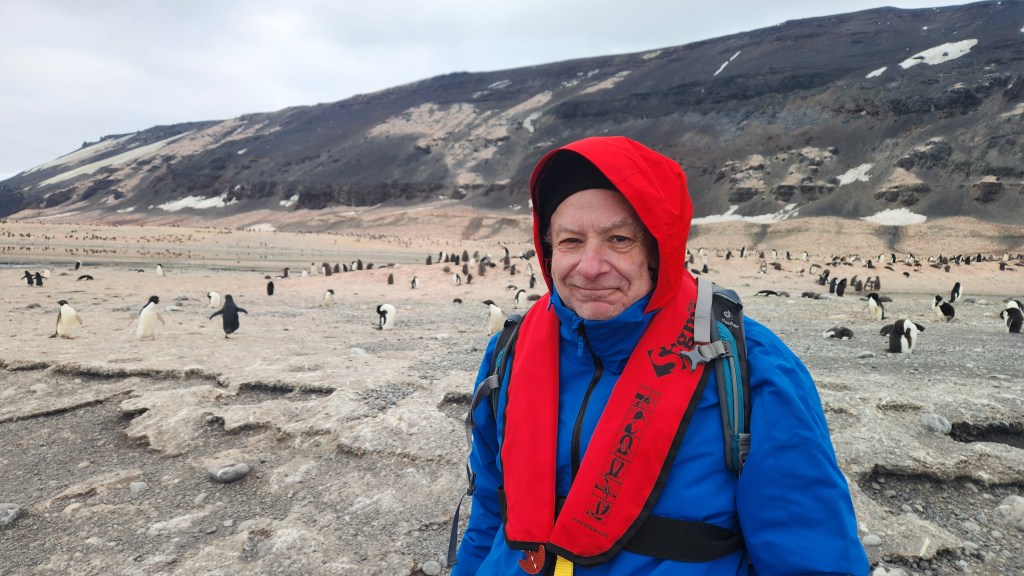
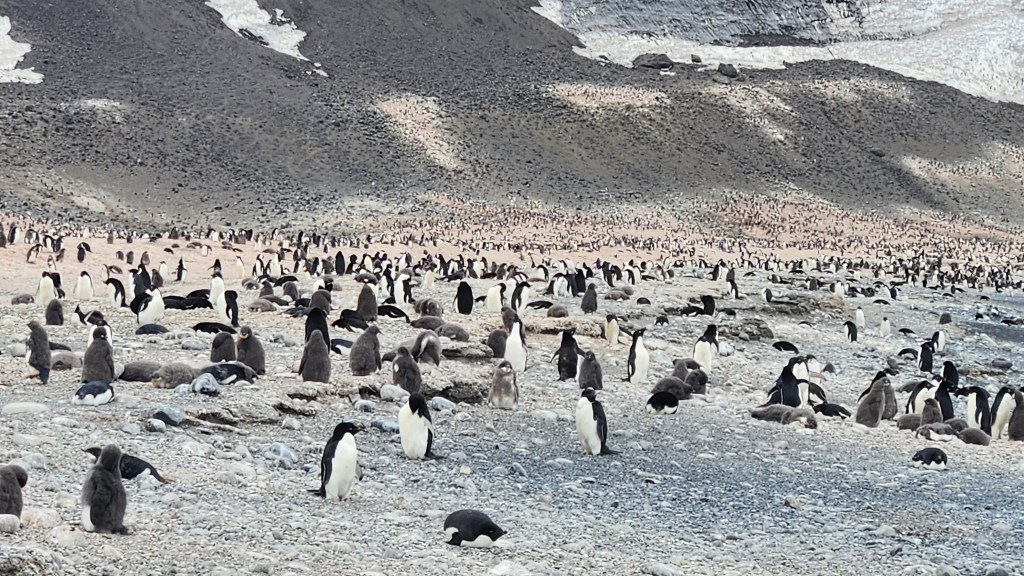
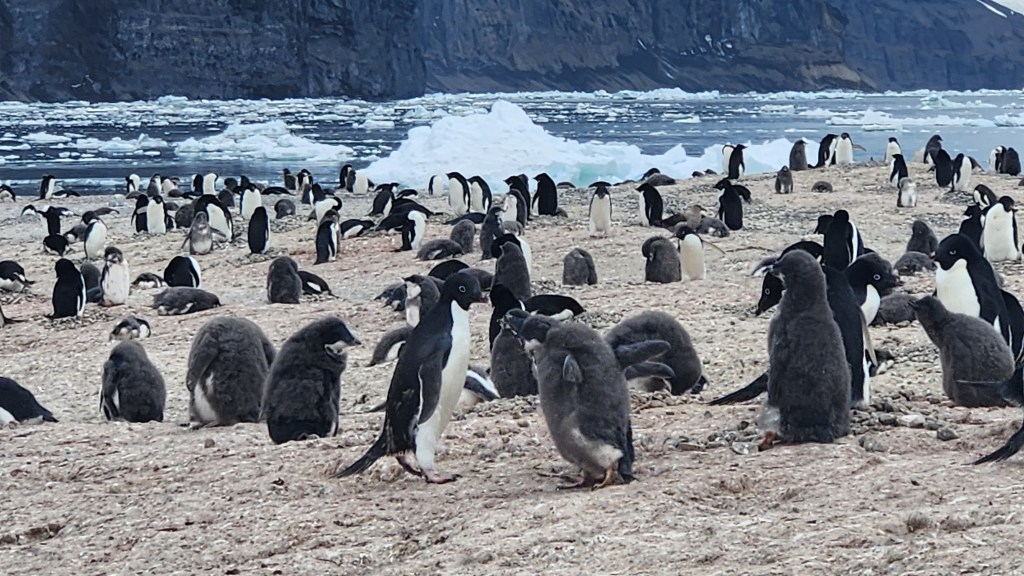
The Bird Lady we have on board delivered an outstanding lecture today on penguins and estimated that the colony of Adelie Penguins we visited, the largest Adelie colony in rhe world, had about 300,000 nesting pairs. Had we arrived a few weeks earlier there would have been another 100,000. Still, with chicks and associated stragglers we were among about 700,000 birds.
The Adelie (pronounced aDELee) was first identified by Jules D’Urville on his Antarctic expedition of 1840. He named them after his wife. They are on the small side as penguins go.
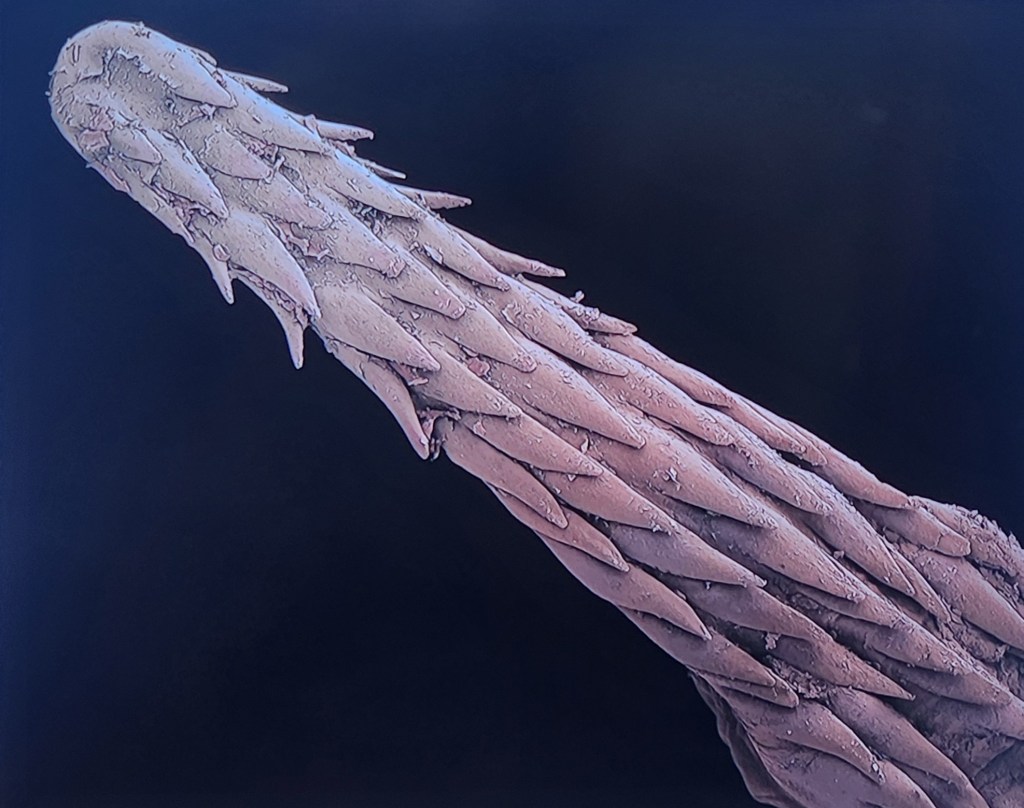
Today’s lecture included this amazing electronic microscope shot of a penguins tongue.
In we went on the zodiacs after cruising past icebergs where some were hanging out.
The scale of the colony beggars description.
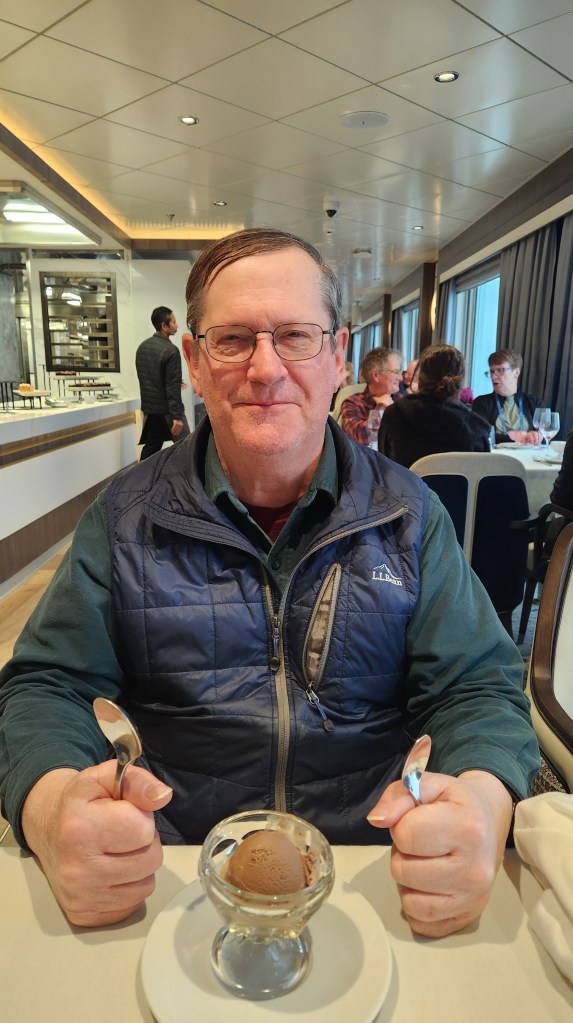
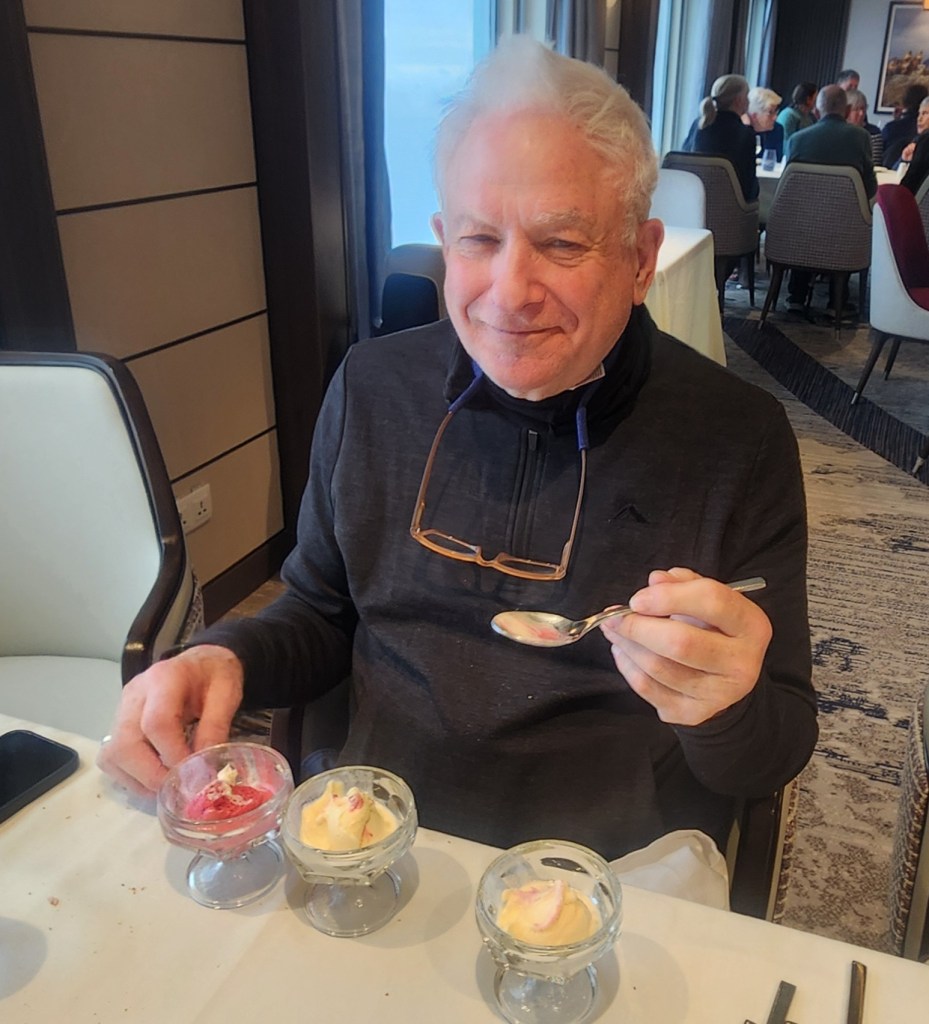
Anyway, returning to the ship we enjoyed another great dinner with L and L finishing up in a blaze of ice cream. “Three Scoops” Sussman took the prize.
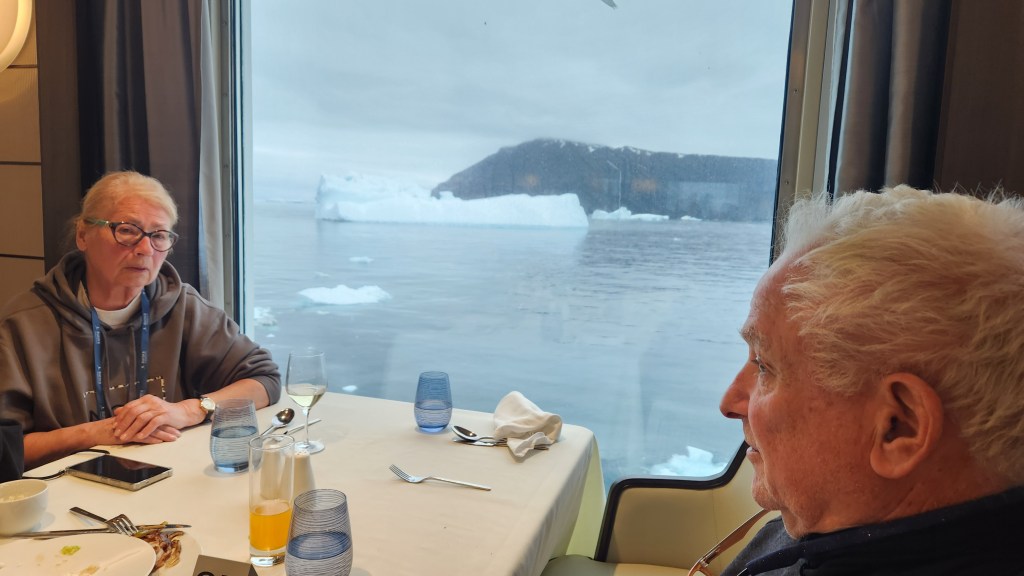
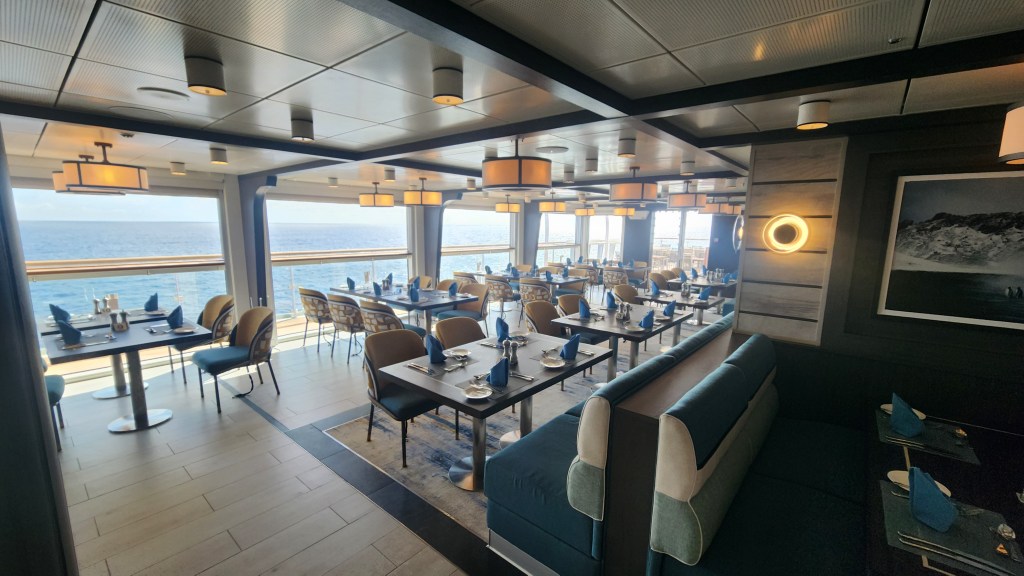
Nice views from the dining room on the Mawson.
We are now off to McMurdo Sound where tomorrow we are supposed to be visiting the huts left behind by Scott and Shackelton.
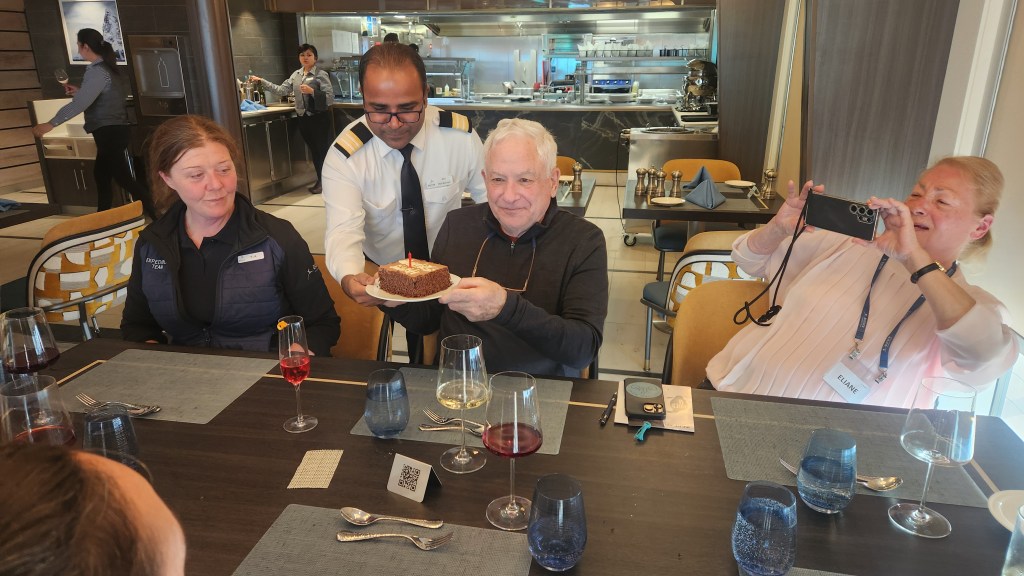
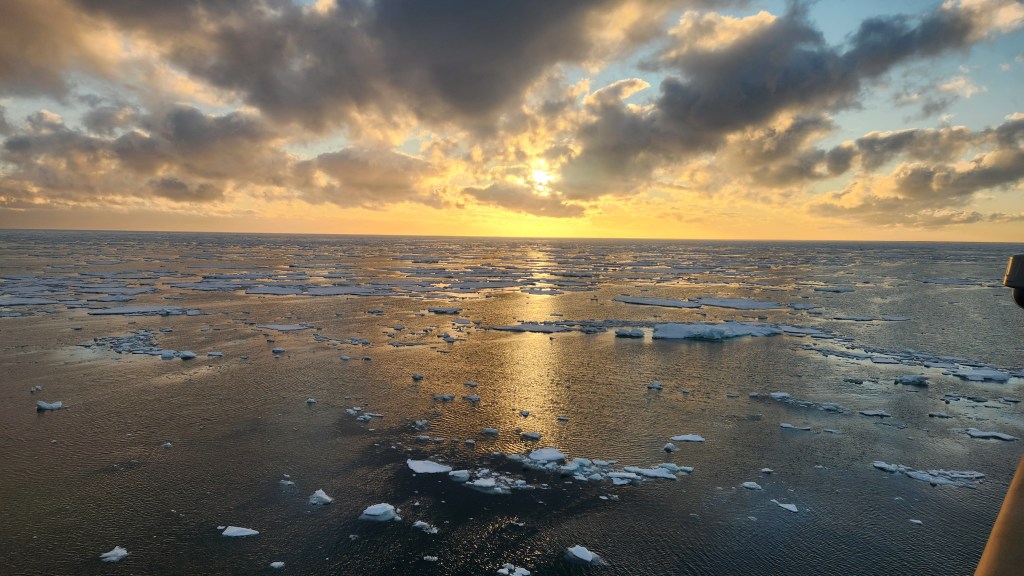
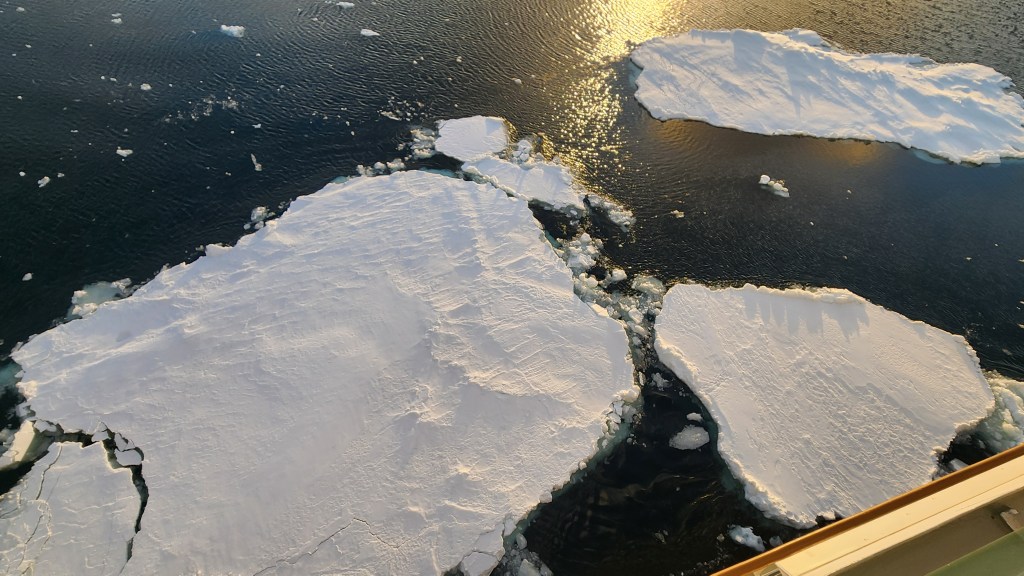
I know I said I would next be posting from Cape Adair, which is now hoving into view, but last evening’s foray through the pack ice after Leonard’s birthday party yielded a harvest of most interesting pics.
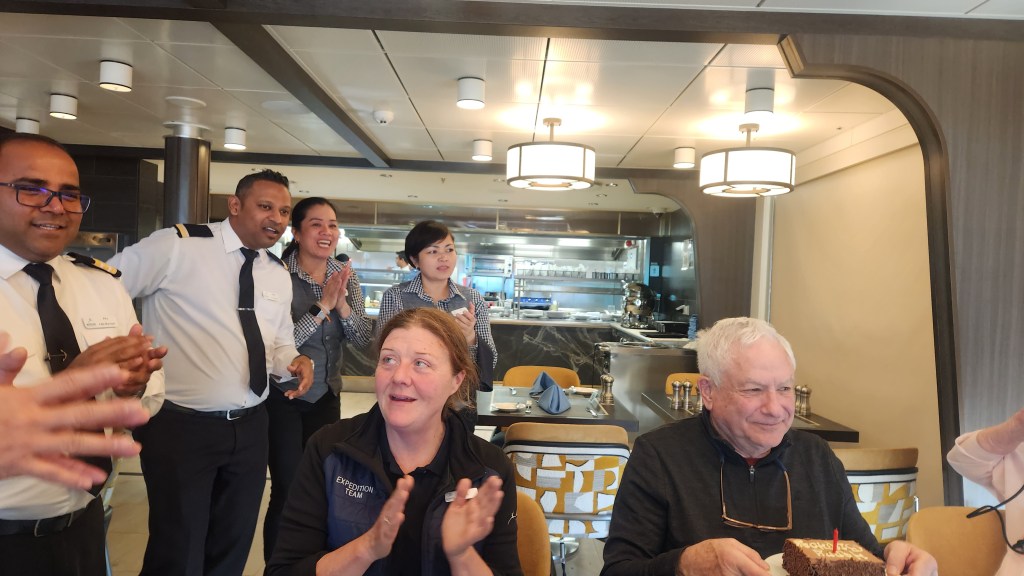
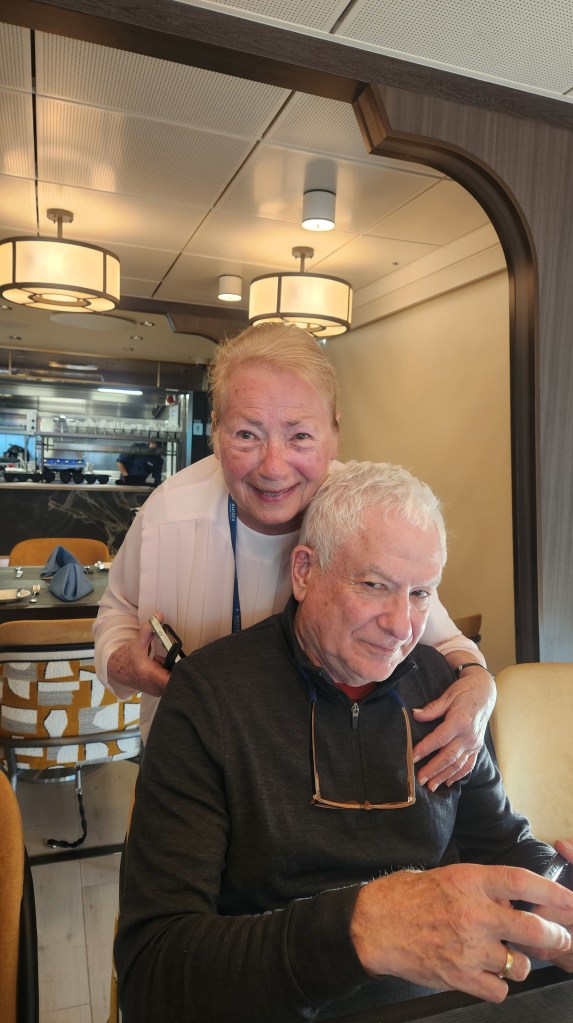
As usual on these trips, women fling themselves at Leonard while the rest of us look on and shake our heads. The blond lady here has a most charming French accent and organized a delightful birthday party for Leonard in the small restaurant on Deck 8.
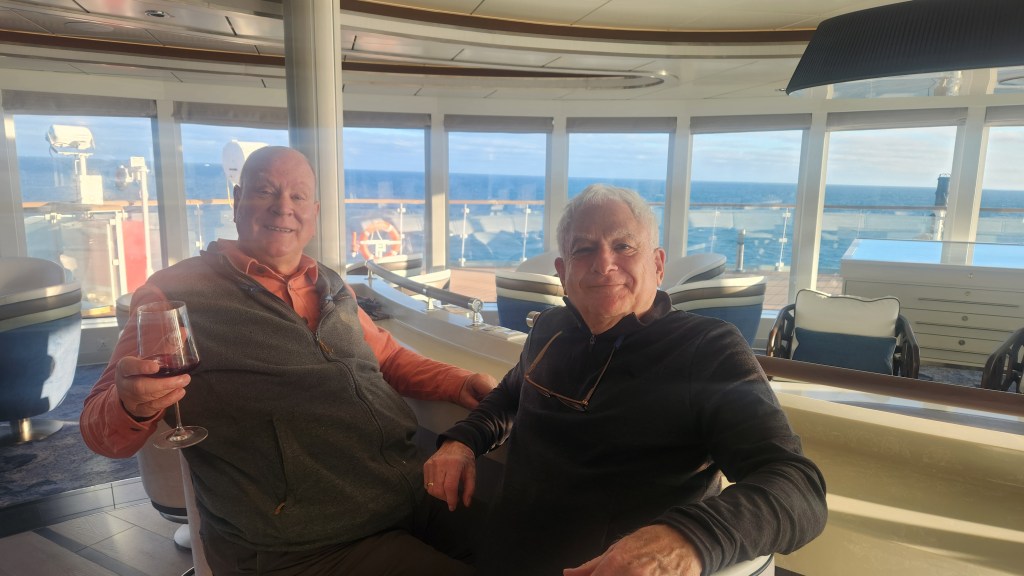
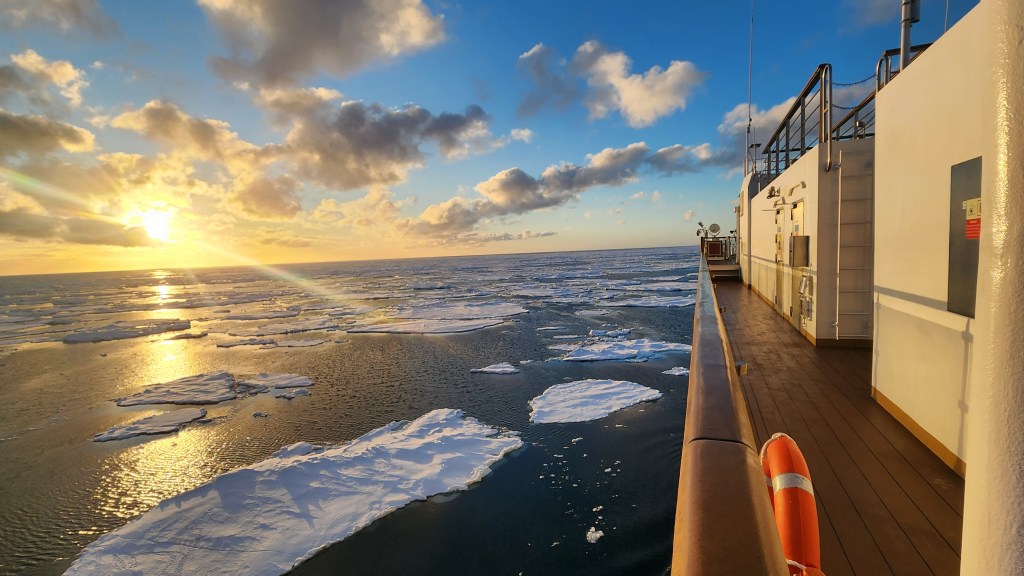
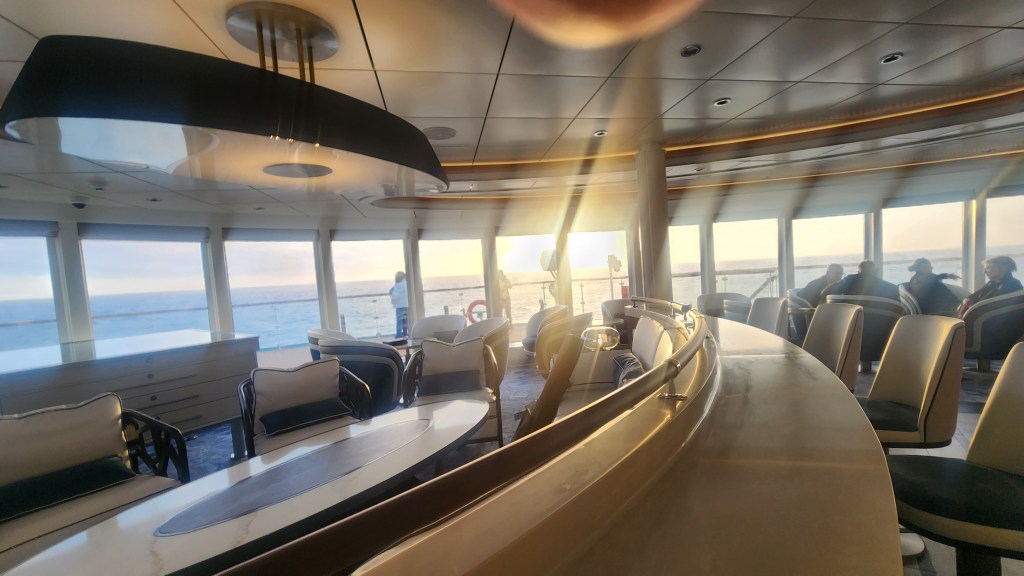
Thereafter we repaired to the Observation Lounge also up top and savored a cognac as we entered the pack ice.
As we are south of the Antarctic Circle the sun never dips below the horizon so one tends to stay up late enjoying the views. Around eleven I headed back down to our cabin on Deck Three and drifted off to sleep to the steady thumping of the pack ice off of the ship’s hull
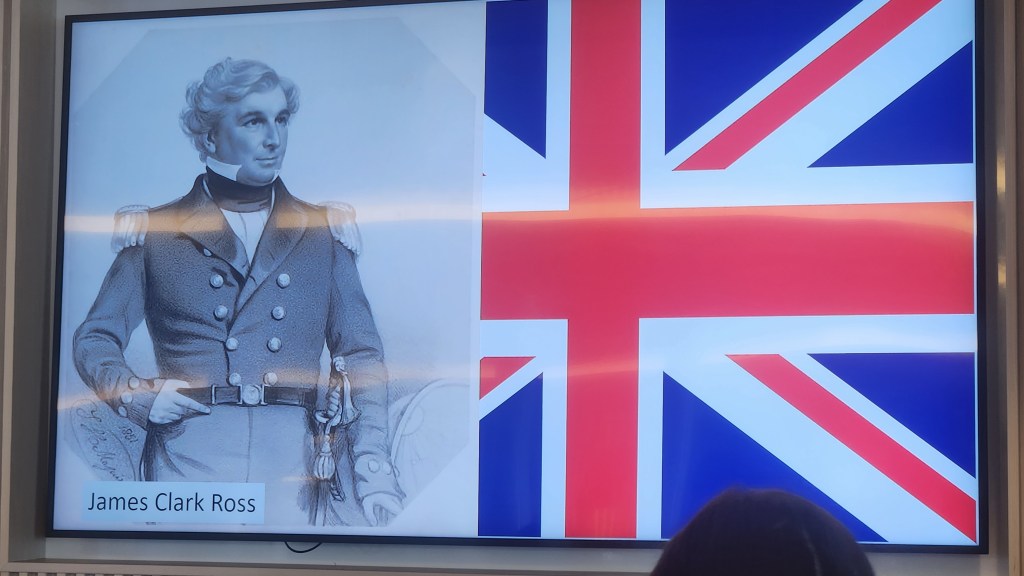
James Clark Ross, Rear Admiral of the Red of the Royal Navy, was the real McCoy. He warmed up (pardon the expression) for the Antarctic in a series of Arctic journeys, discovering the North magnetic pole in 1831. When it came time to send a British expedition to Antarctica he was the obvious choice. He sailed through the pack ice in January of 1841, and I mean sailed. Later explorers in steam-powered boats held Ross in awe as his accomplishments took place in the age of sail.
We have aboard the Mawson his great, great, great granddaughter, Phillipa, who delivered a most interesting lecture on her ancestor.
His branding likewise took the cake. We are now sailing into the Ross Sea towards Ross Island and the Ross Ice Shelf. Mt Erebus, an active volcano named after one of Ross’s ships, rises up from Ross Island.
Last night Lester and I began sighting good sized bergs from our 8th deck perch in the Mawson’s Observation Lounge, where, by the way, a nod to our most charming Indonesian hostess brings a rather nice glass of grappa.
We crossed the Antarctic Circle yesterday so it’s adios to darkness at night.
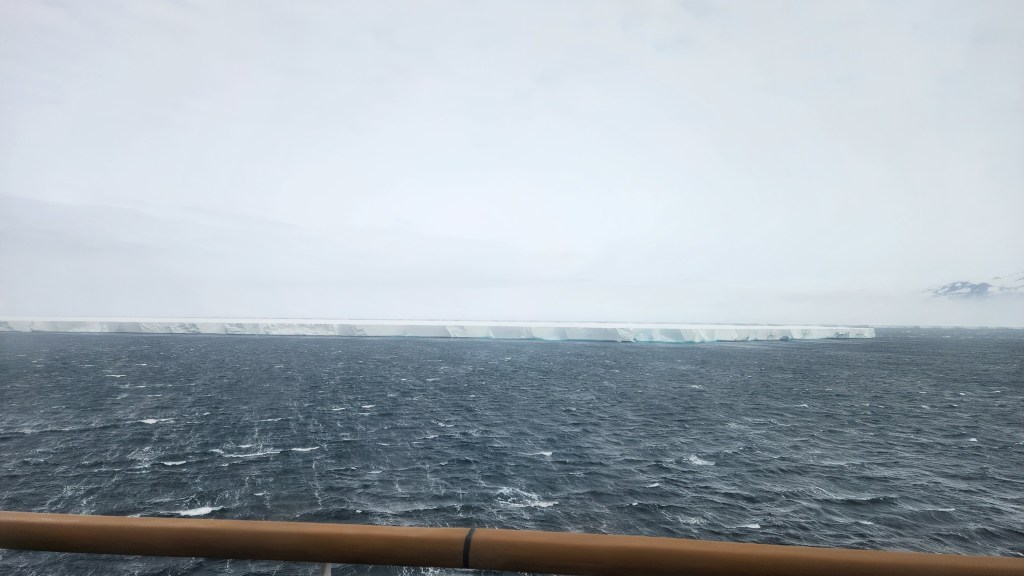
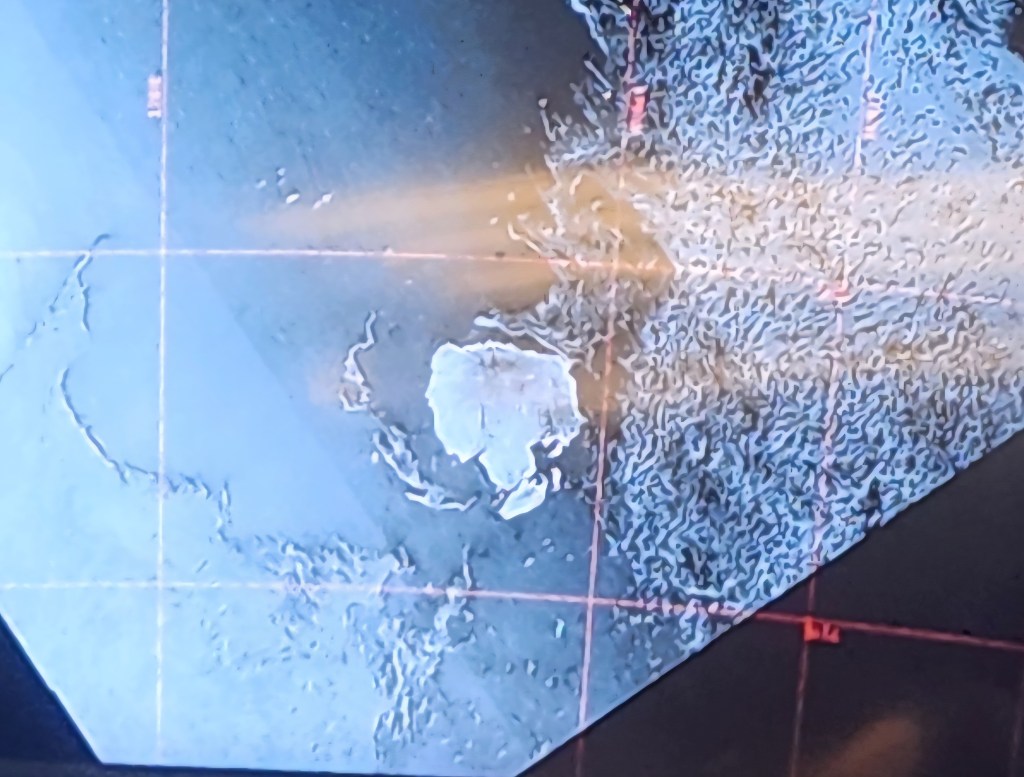
Our expedition leader came on the ship-wide intercom this morning while Lester and I were wrapping up another good night’s sleep to advise that we would be “hitting the big ice berg – oops, I mean passing the big berg” after noon today. He had earlier advised us that a berg 60 km across had busted off of Ross’s Ice Shelf and its position might allow an interestingly close passage between the berg and Cape Adair.
You can see it here on a satellite image.
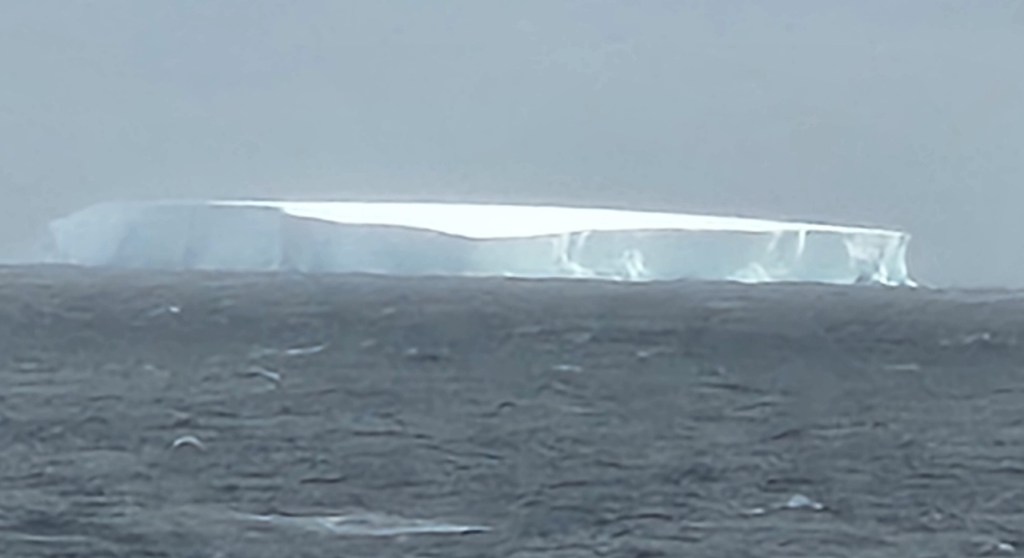
Sure enough, soon after I finished polishing off a bowl of first rate tomato bisque the Big Berg swam into our ken. It really is about 45 miles across, so no camera, even one set to panorama, could hope to capture it.
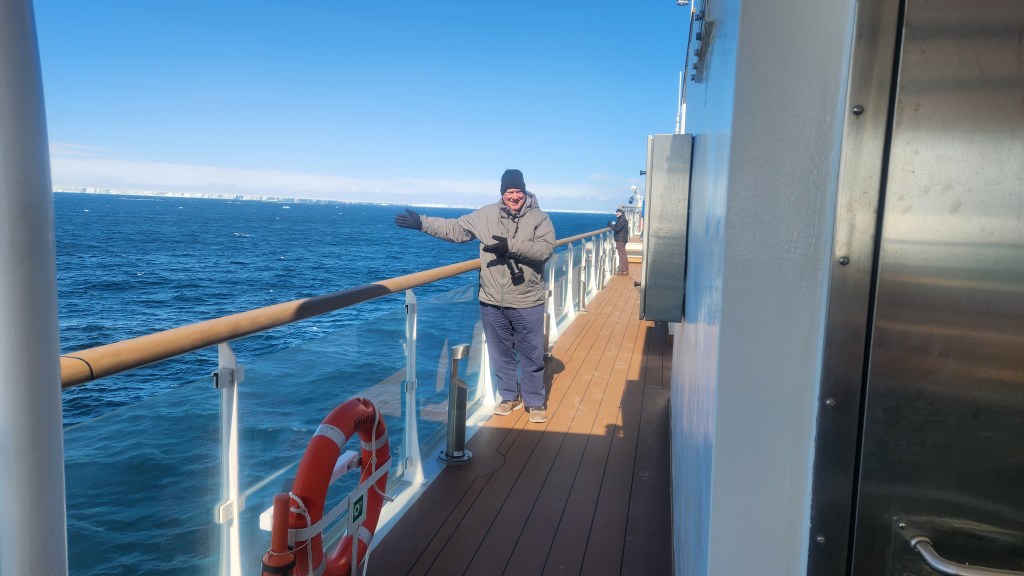
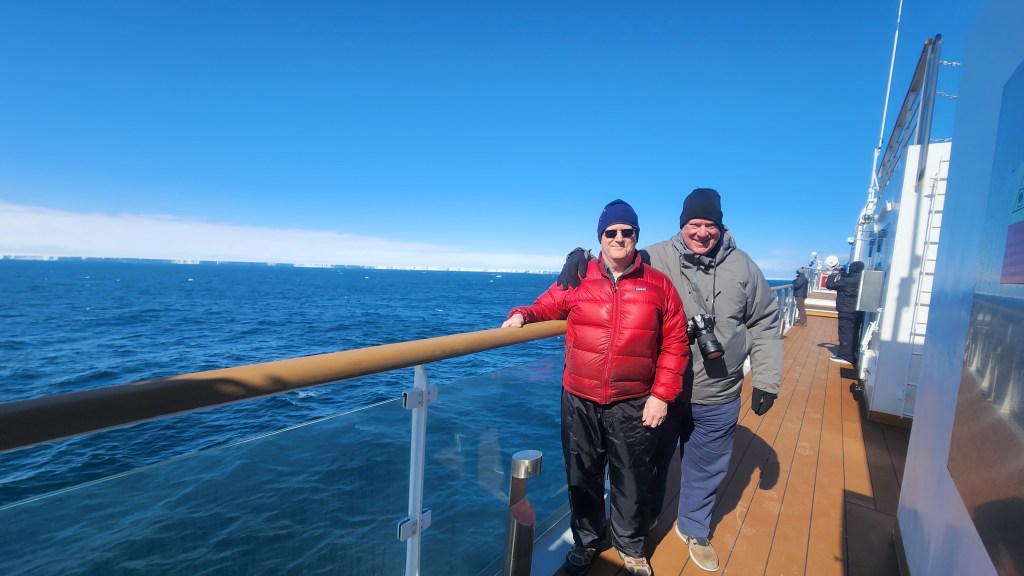
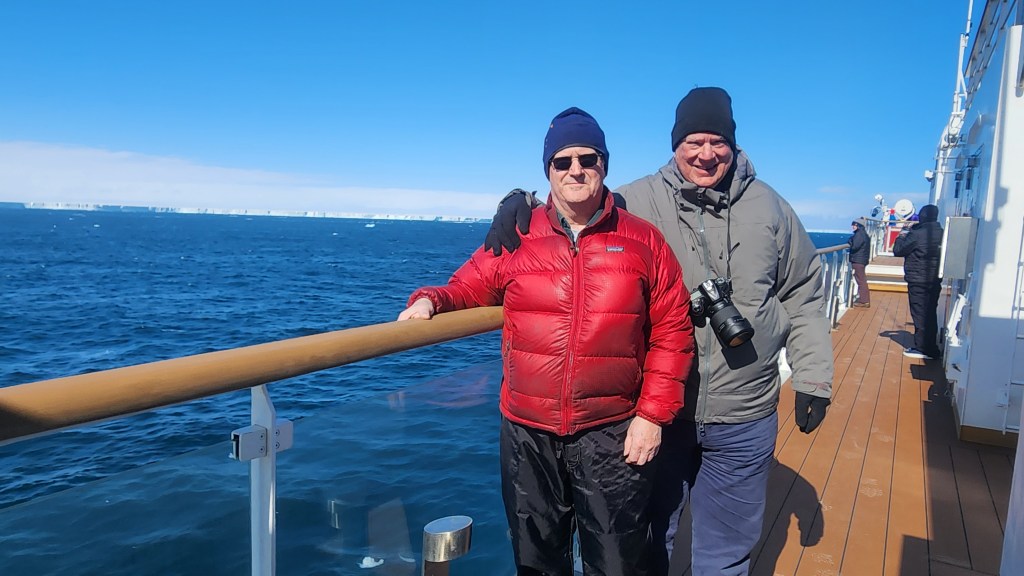
It’s about 30 F, but with a wind that about flays the flesh off you. Lester and I bundled up and took a turn around the deck.
Leonard turned 79 today and one of the ladies we’ve met is organizing a happy birthday dinner in the intime (pronounced “en teem”) dining room up on the 8th deck high above the Sea.
The expedition team is planning a Zodiac landing at Cape Adair for tomorrow afternoon, so the next post should have some pics of the Frozen Continent.
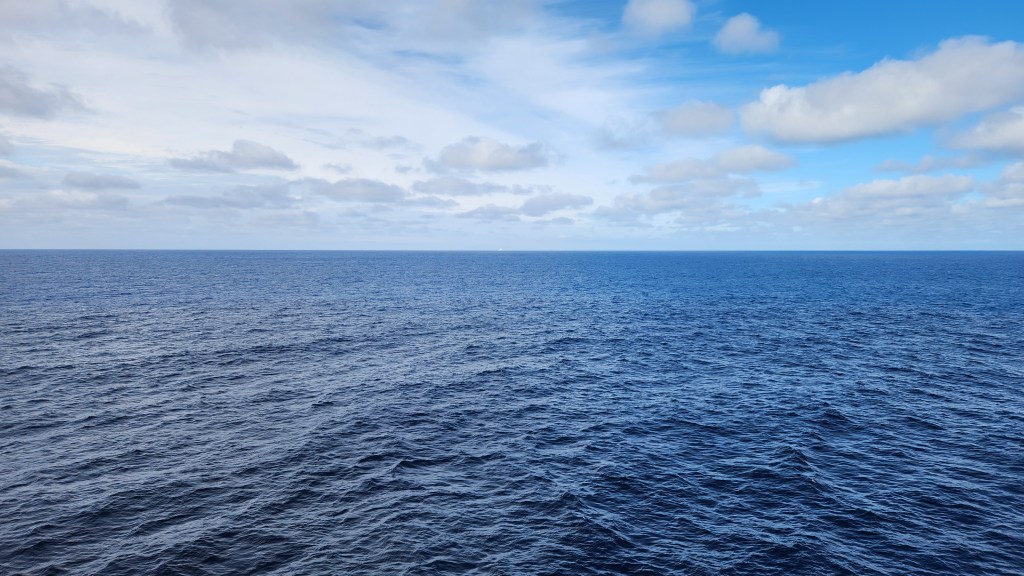
We are in the midst of about 3 days at sea crossing the Southern Ocean towards the Ross Sea.
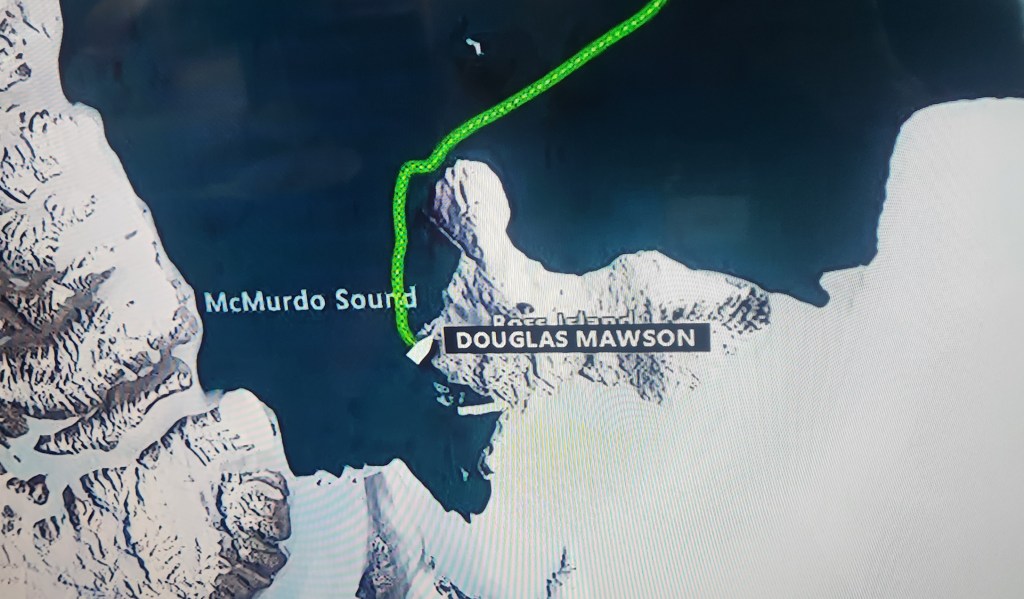
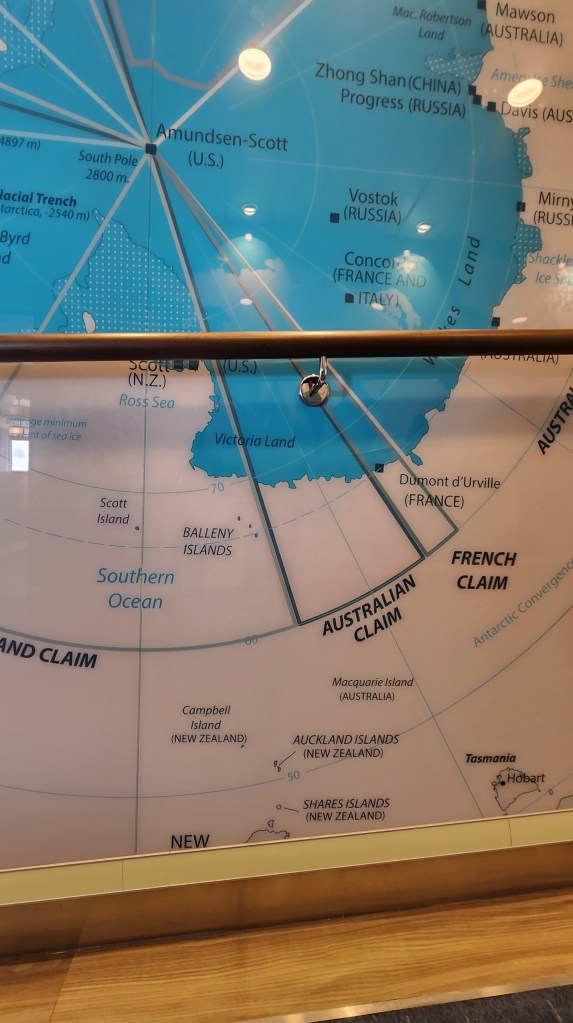
Here the map is bisected by one of the numerous handrails helpfully placed around the ship to steady one as the ship gently pitches and rolls on our southward course.
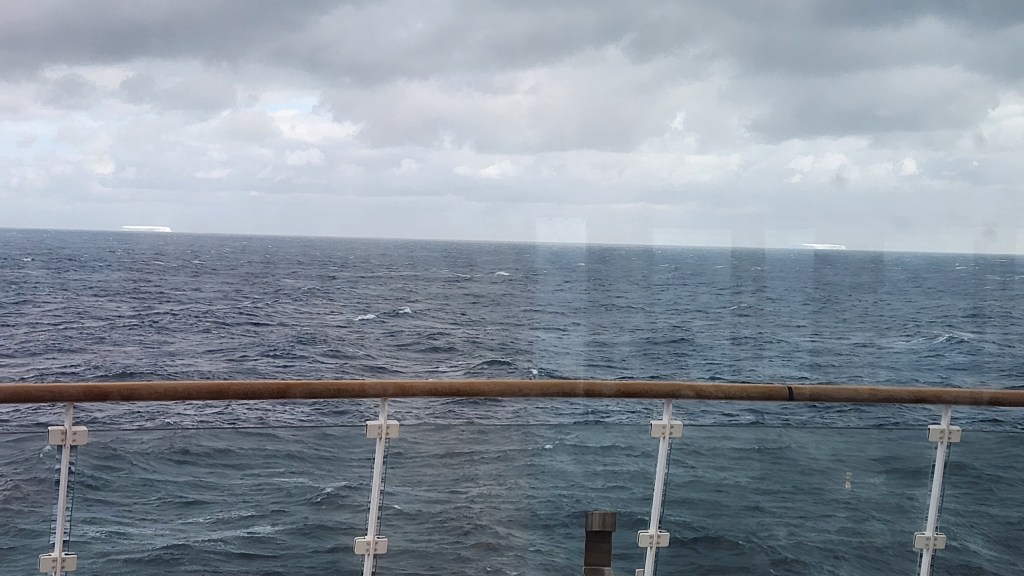
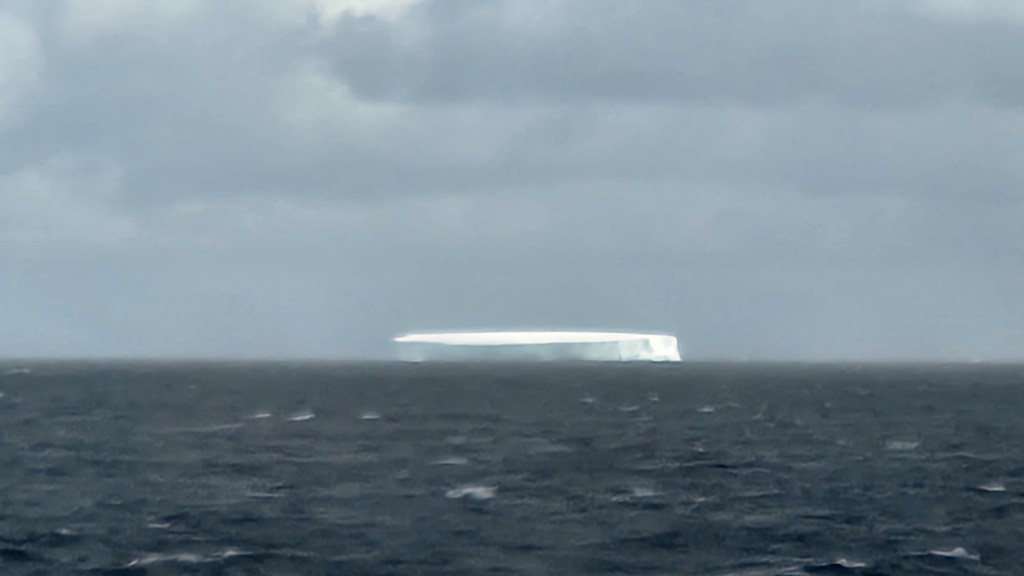
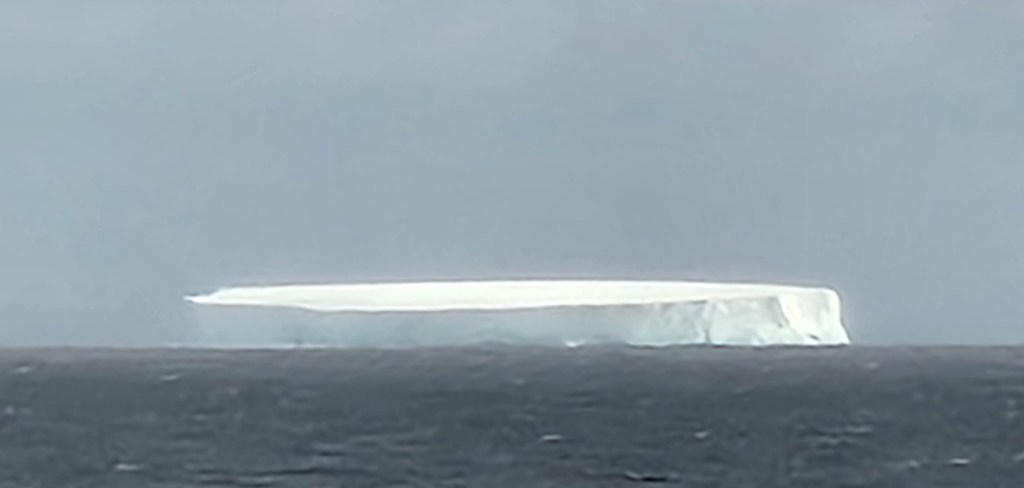
Today’s excitement: we spotted our first ice berg about 800 miles from Antarctica.
You’ll need to expand the photo to see it, I’m afraid.
We also heard interesting lectures on the climate of Antarctica and the history of the Southern Ocean. It seems that there existed a continuous land bridge from South America across Antarctica to Africa just a few hundred million years ago.
I took a turn around the deck this afternoon in bright sunshine, a stiff breeze and with temps in the 40s somewhere. Bracing.
(Sorry I posted the same picture twice. I gave up after spending 15 miserable minutes trying to delete it.)
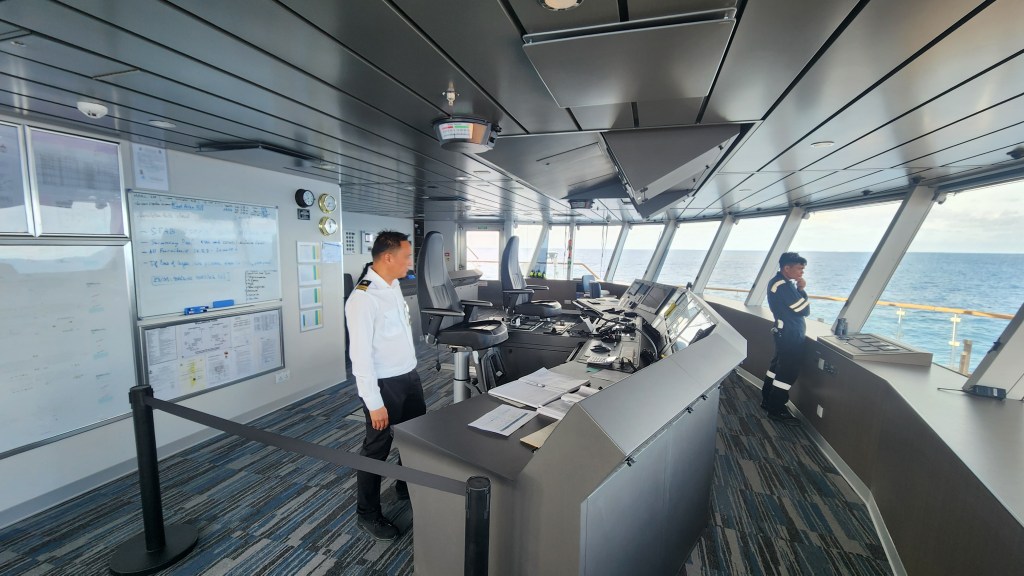
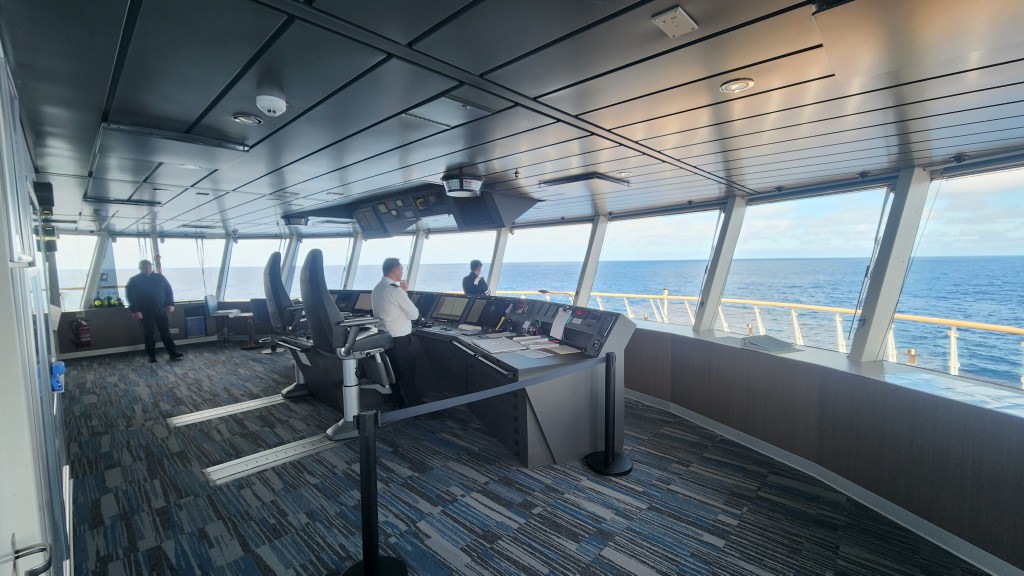
Passengers are invited to stop by the bridge, and I found it an island of calm tranquility high above the waves.
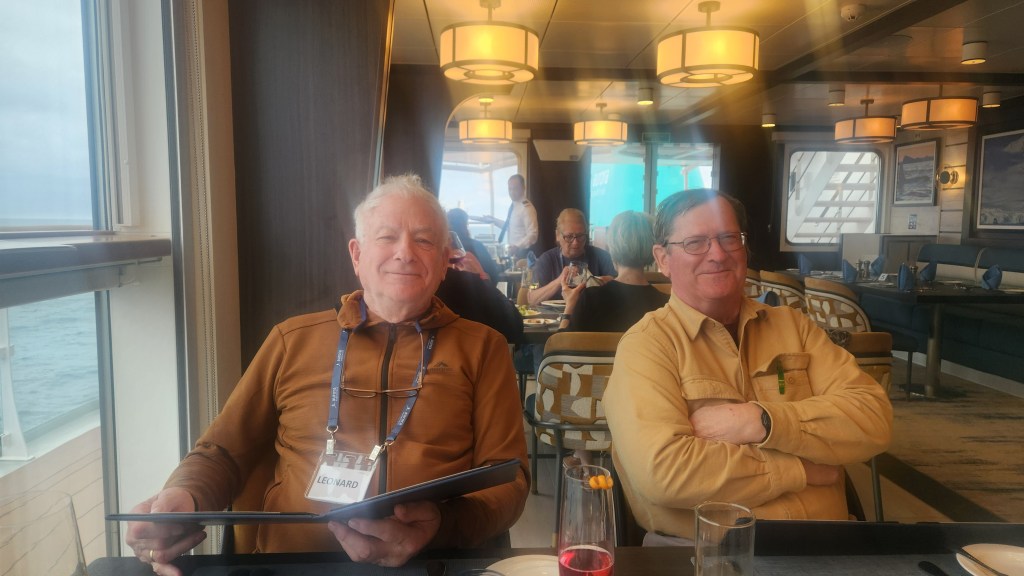
The ship has a small upper deck restaurant that Lester,Leonard and I repair to some evenings. We are seated with other guests affording opportunities to meet people. Nice view!
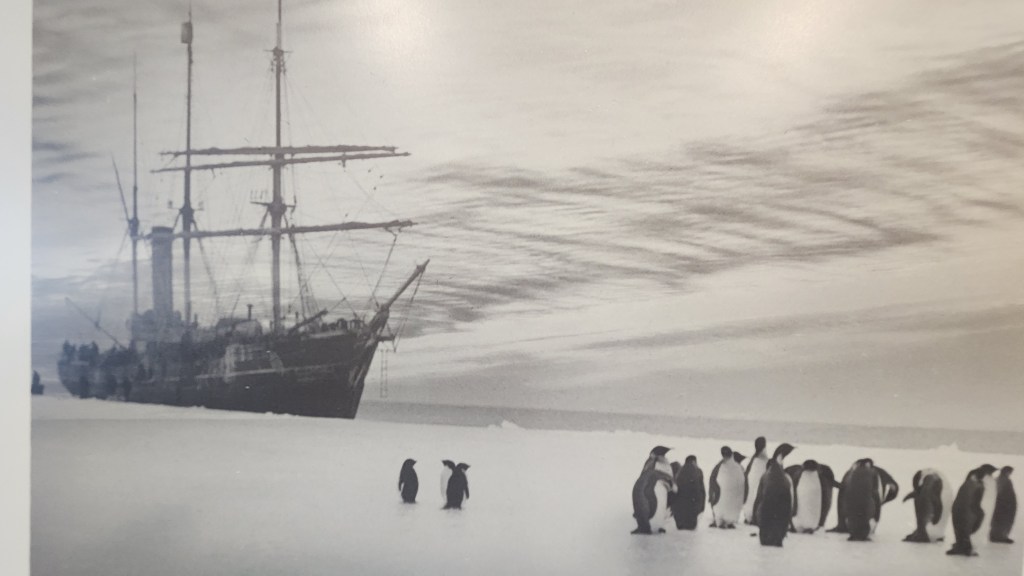
The ship has numerous interesting photos up on the walls. Here’s Douglas Mawson, his ship and a bunch of penguins from 1913.
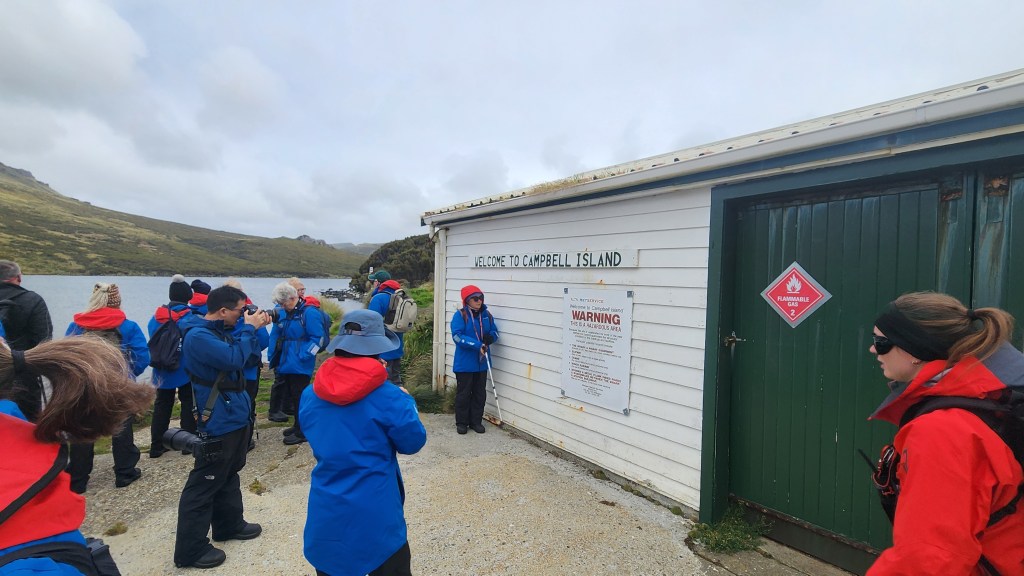
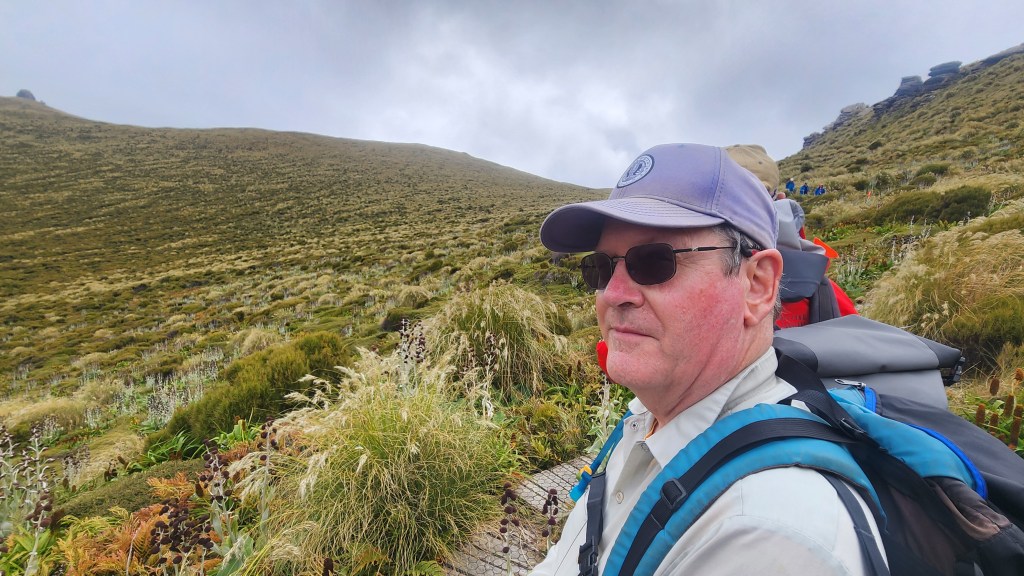
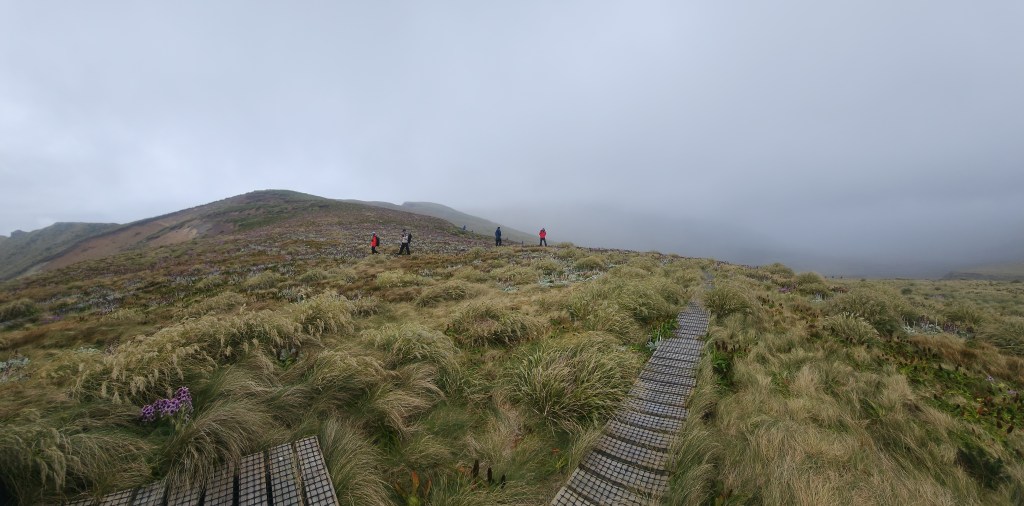
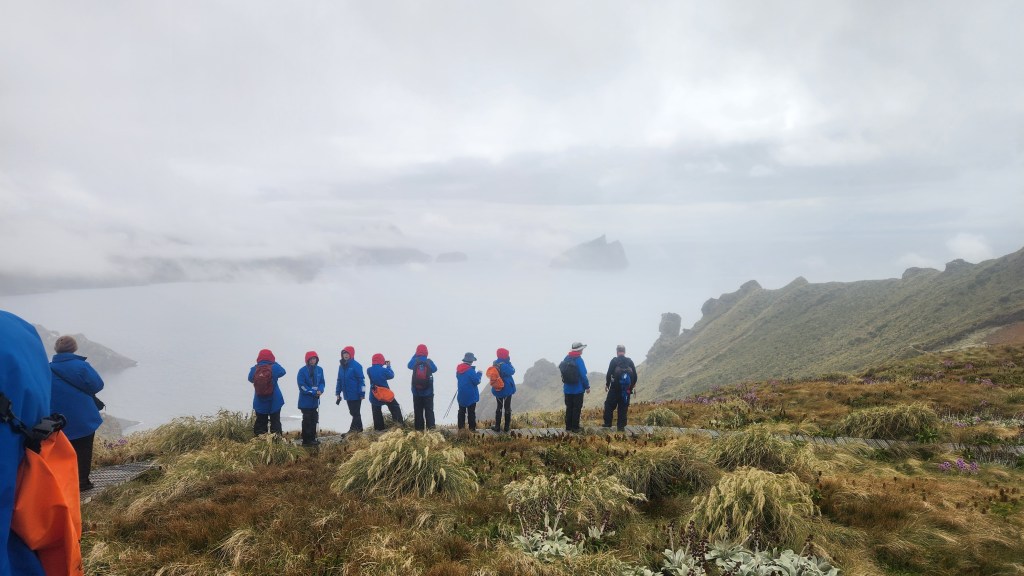
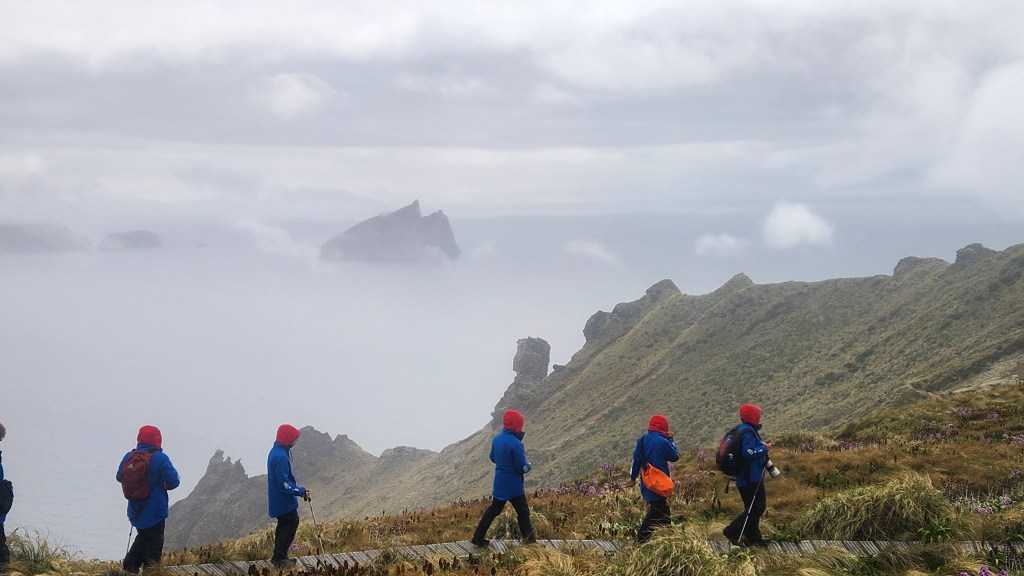
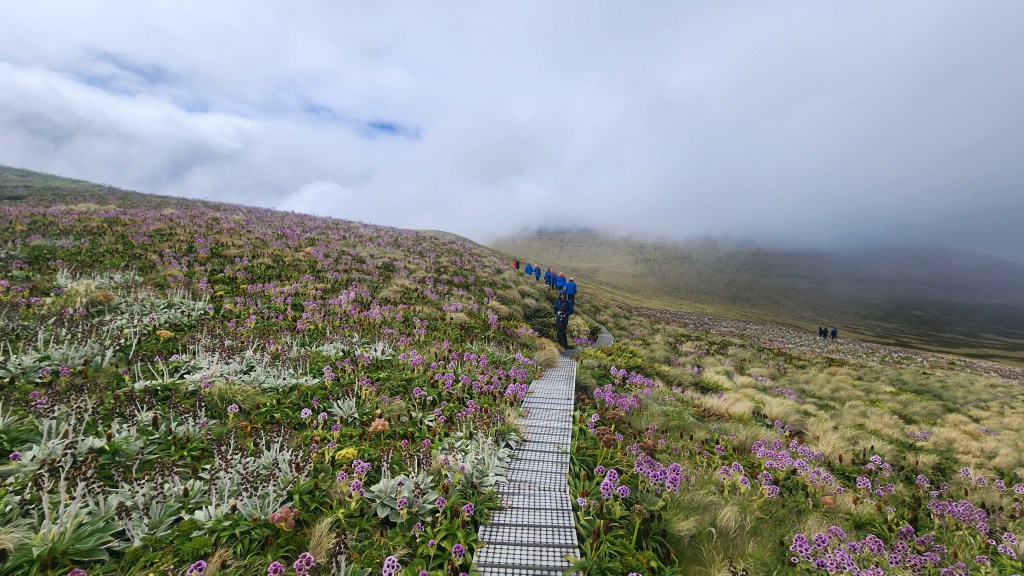
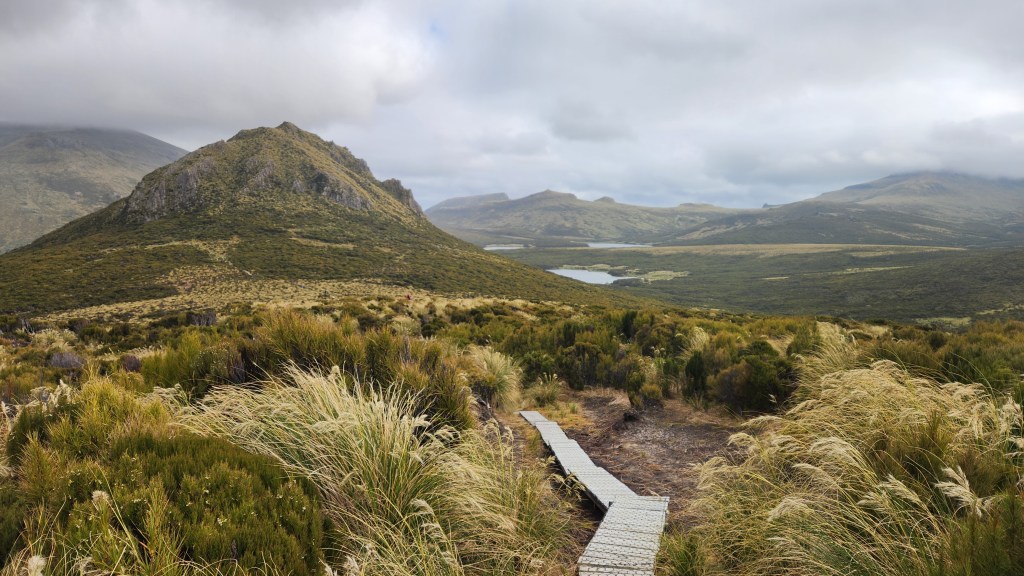
The ship upped anchor and headed for Campbell Island, another remote NZ possession about 400 miles south of the south end of New Zealand’s South Island. My sciatica had flared up so I skipped the morning Zodiac rides around the bend to see the Campbell Island albatrosses but was ready to go for the hike up Lyall Col. This was about 2 miles up and 2 back with about 750 feet elevation gain all on a narrow boardwalk. The views were most rewarding
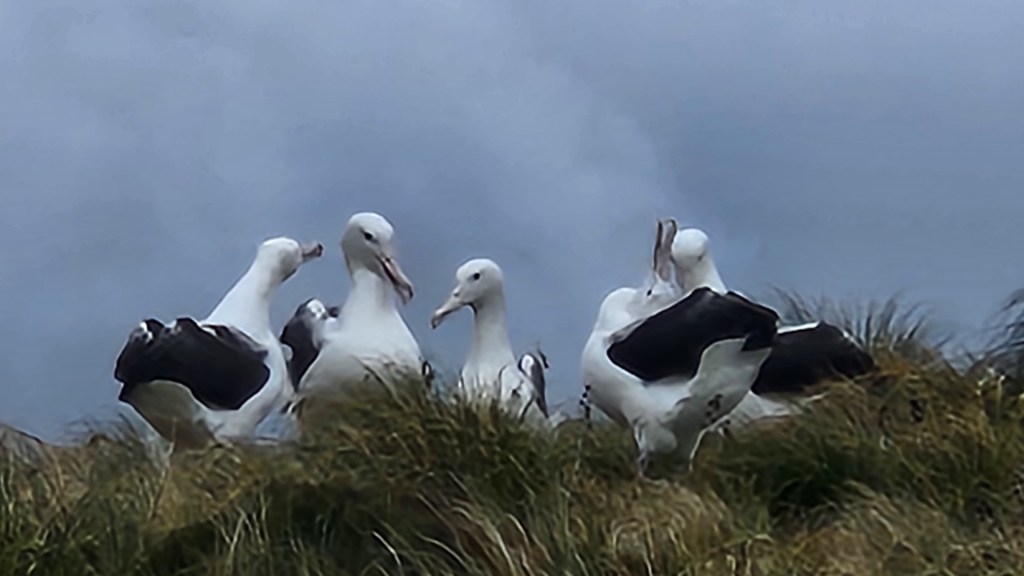
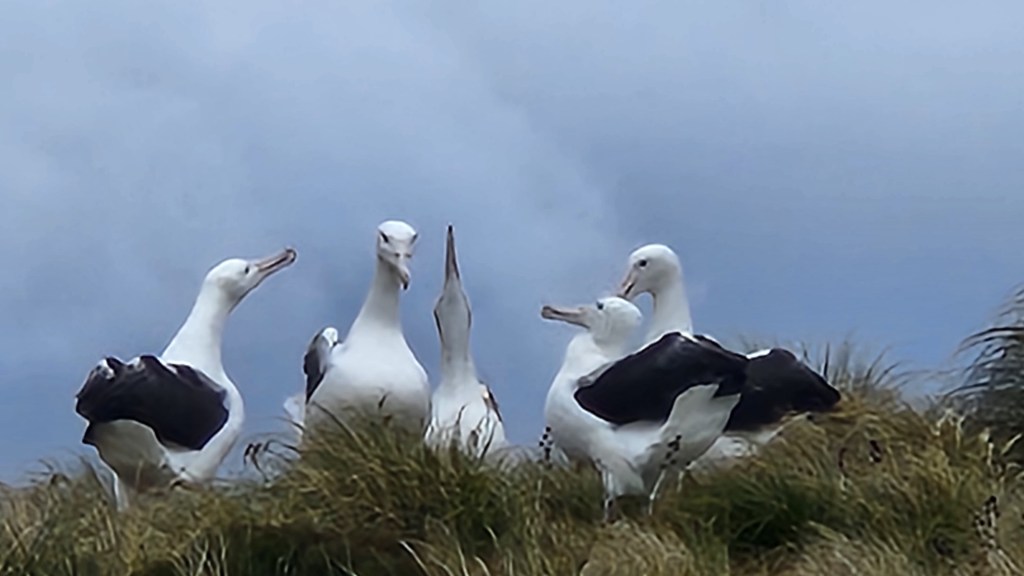
Several Royal Albatrosses were sitting on eggs right close to the trail and we were told not to stop for pics as the birds needed to concentrate on their eggs.
About halfway down we came upon a huddle of Royal Albatrosses fairly close to the trail
Then it was back to the ship, a hot shower and two beers.
I think we’ll now be at sea for a while until we hit the Ross Sea.

 Kenway Goes South