On January 28, 1841 James Clark Ross, mentioned in a few earlier posts, sited what we now call the Ross Ice Shelf, initially referred to as the Great Ice Barrier. Ross was trying to identify a water passage that would allow him to sail the Erebus and the Terror through to the Pole, but the Shelf stopped him cold. “It was an obstruction of such character as to leave no doubt upon my mind as to our future proceedings, for we might with equal chance of success try to sail through the Cliffs of Dover.”
The Shelf is in fact an enormous floating mass of ice the size of France, about 200,000 square miles and 600 miles long. You can see why his namesake Shelf put Ross in mind of Dover’s chalk-white Cliffs.
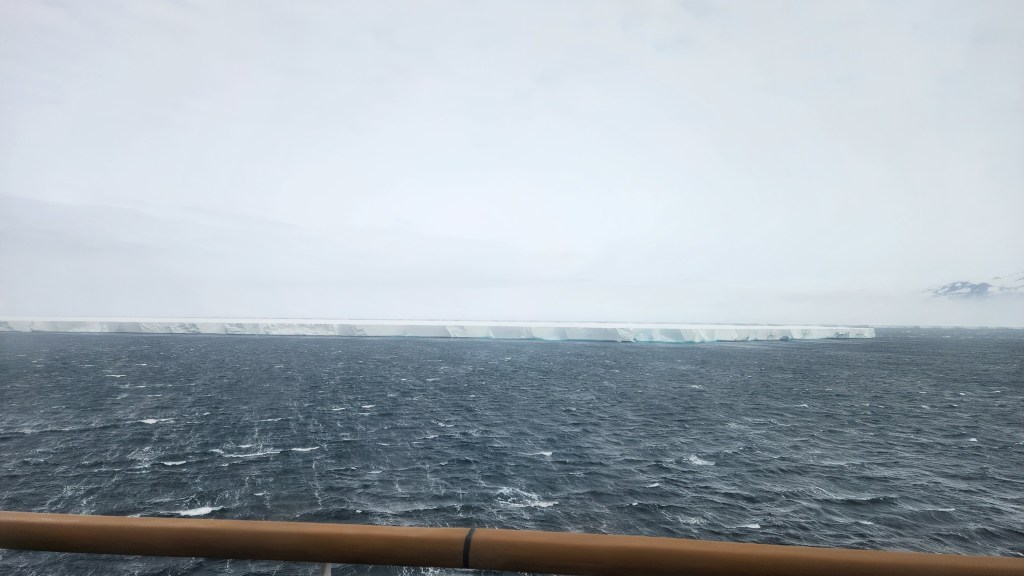
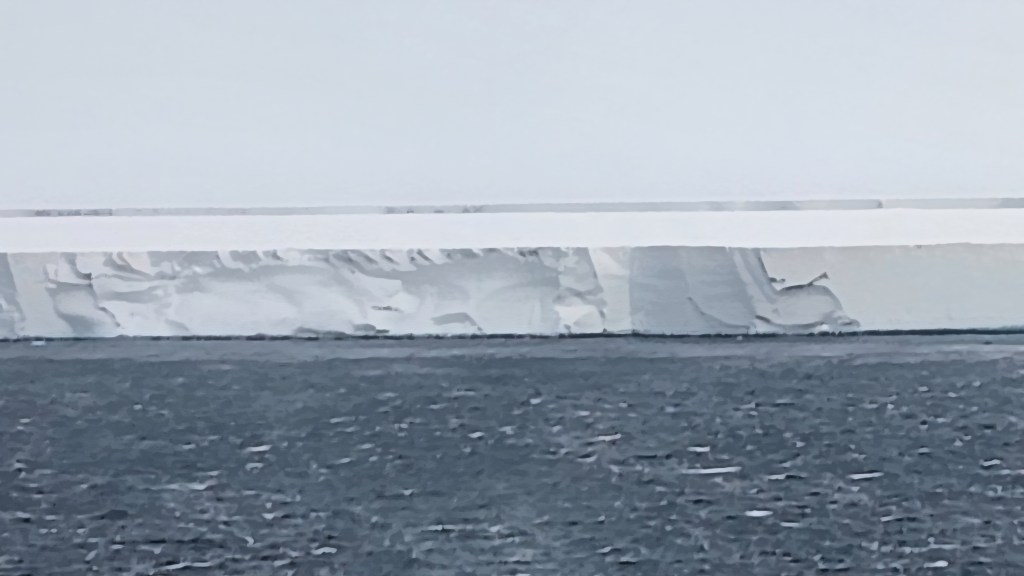
The Shelf is quite dynamic as it drains the west Antarctic Ice Sheet while moving out to sea at about 5 to 10 feet a day. A “calf” the size of Belgium busted off some years ago.
We’ve been taking this in from the Deck 8 Observation Lounge high above the water. An announcement over the PA aboard of a pod of Orcas at one o’clock brought a stampede up here, many with giant bazooka lenses.
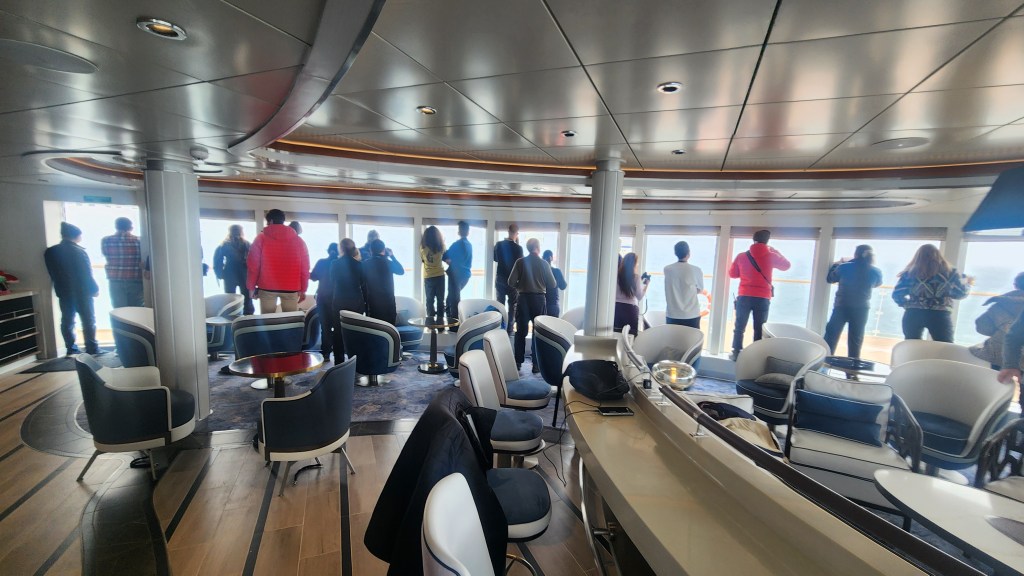
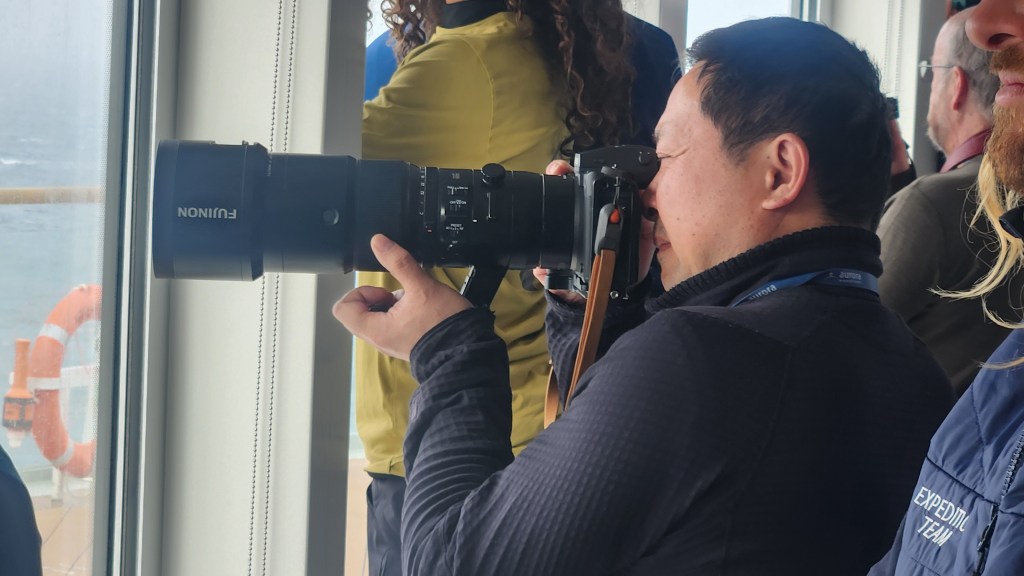
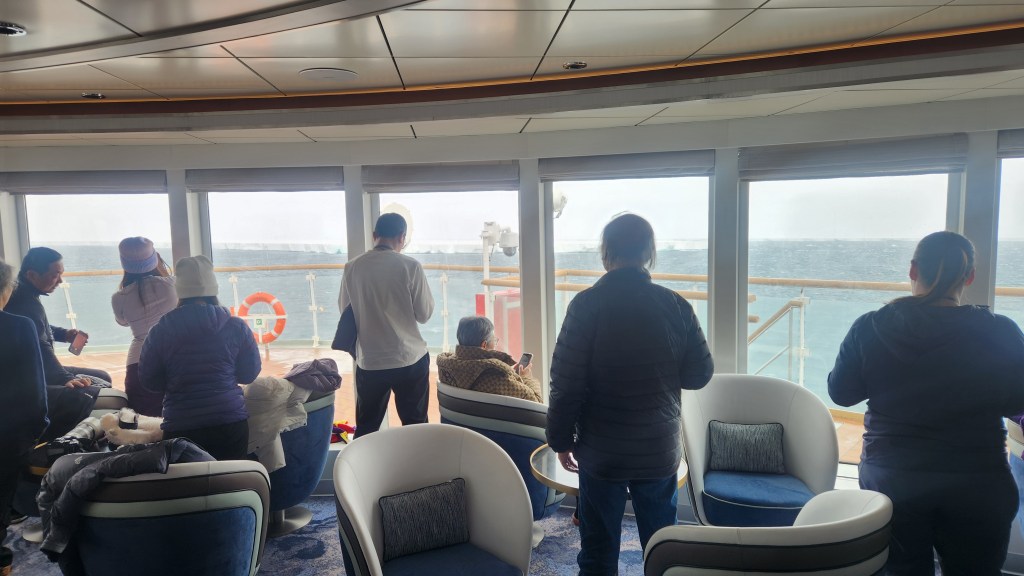
I saw a dorsal fin and several spouts but nothing that I could capture with the camera.
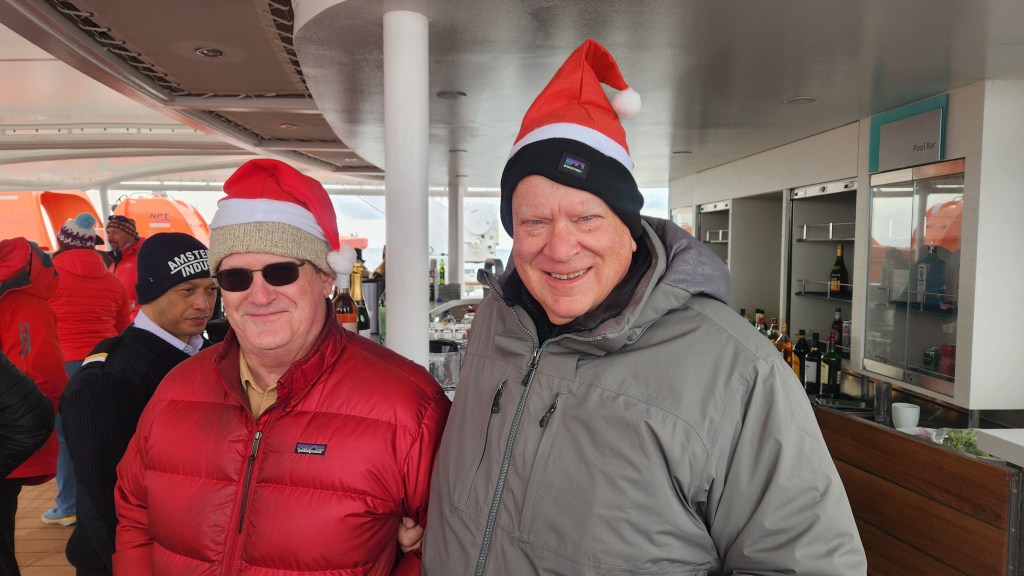
We had fairly calm seas midday and the Mawson organized a barbecue on the back deck. I slipped on my fleece pants, wind pants, fleece shirt, fleece jacket, down inner coat and a down outer coat and woofed down a salad and a hotdog with Lester. Blaring disco music drove us back indoors as soon as we finished.
By mid afternoon winds had freshened to 70, the captain closed the outside decks and the ship began to buck and roll. I wouldn’t have lasted 20 minutes in this on the Alison P.
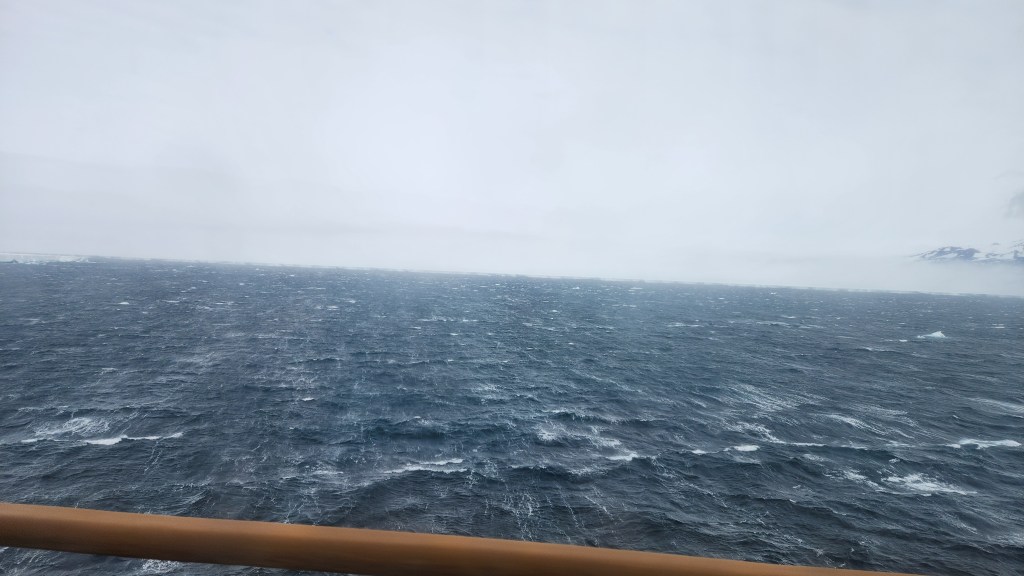

This marks our furthest distance south at about 77.5 S latitude – earlier today we were quite close to McMurdo Station.
We now begin our northerly return voyage.
 Kenway Goes South
Leave a comment